Issue · Technology

Technology

Every technology bill, vote, and legislator stance in United States, automatically classified by Maddy, our AI policy reader.

Total bills
1,435
119th Congress
Top supporter
Ami Bera
86% support rate
Top opponent
Alan Armstrong
14% support rate
Ranked legislators
10
5 support · 5 oppose
Key legislators

Who's moving technology in United States

Legislators moving technology in United States
Legislator Party Stance Support rate Decisive votes
Ami Bera
Ami Bera House · District 6
D
Strong +
86% 22
Chrissy Houlahan
Chrissy Houlahan House · District 6
D
Strong +
86% 22
Kim Schrier
Kim Schrier House · District 8
D
Strong +
86% 22
Mike Thompson
Mike Thompson House · District 4
D
Strong +
86% 22
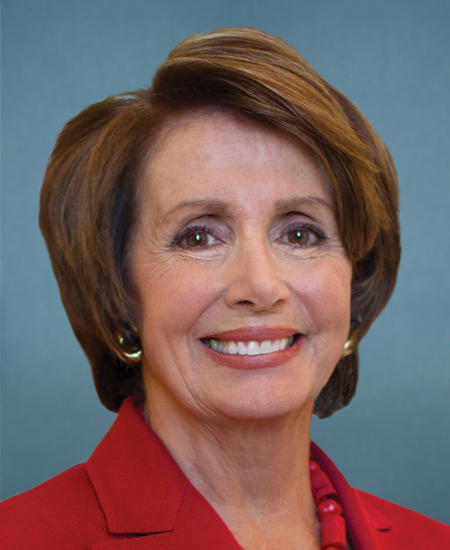
Nancy Pelosi
Nancy Pelosi House · District 11
D
Strong +
86% 22
AA
Alan Armstrong Senate
R
Strong −
14% 28
Scott Perry
Scott Perry House · District 10
R
Strong −
14% 21
Rand Paul
Rand Paul Senate
R
Strong −
16% 45
Josh Hawley
Josh Hawley Senate
R
Strong −
18% 44
Andy Harris
Andy Harris House · District 1
R
Strong −
18% 22
Showing 1,251–1,260 of 1,435 bills

All technology bills

in committee · United States · Senate Jan 12, 2026

S 3611: Blockchain Regulatory Certainty Act of 2026

This bill clarifies that non-controlling blockchain developers and service providers - those who create or maintain distributed ledger technology without unilaterally controlling user transactions - will not be classified as money transmitters under federal law. It exempts these entities from money transmission licensing requirements and related registration obligations solely based on their core development or infrastructure activities. Key provisions define "non-controlling" providers and explicitly state they won’t be treated as money transmitters under sections 5330 or 1960 of U.S. Code. The bill does not alter existing anti-money laundering rules, financial institution classifications, or state laws, ensuring it only modifies specific regulatory treatment for eligible developers.
Sub-Topics Emerging Technology
in committee · United States · House Jan 15, 2026

HRES 1005: Expressing the sense of the House of Representatives that creators and digital workers, as a distinct and growing class of small businesses and independent economic contributors, deserve fair treatment, transparency, and economic opportunity in the modern platform-based economy.

This non-binding resolution expresses the House's support for creators and digital workers (over 10 million Americans earning income via platforms) who face challenges like misclassification as independent contractors, opaque revenue terms, and limited access to benefits. It calls for transparent revenue-sharing agreements, portable health care and retirement options, clearer platform algorithm policies, and protections against unfair account actions. The resolution does not create new laws but urges platforms and policymakers to address these issues. It focuses on concrete concerns like income volatility and lack of labor protections for this growing workforce.
in committee · United States · Senate Oct 21, 2025

S 1492: Deploying American Blockchains Act of 2025

The Deploying American Blockchains Act of 2025 establishes a National Blockchain Deployment Advisory Committee under the Department of Commerce to advance U.S. competitiveness in blockchain technology. The committee, including private sector experts and federal agency representatives, will develop voluntary best practices for secure blockchain use in areas like supply chains, healthcare, and cybersecurity, while assessing federal agency adoption. It requires the Commerce Secretary to report annually to Congress on progress and emerging risks, with the committee dissolving after 7 years. The bill focuses on fostering industry collaboration and standardized guidelines without mandating private sector adoption or requiring companies to share information.
in committee · United States · House Apr 20, 2026

HR 7380: IRAN Act

HR 7380, the IRAN Act, aims to improve internet access for Iranian citizens by directing U.S. agencies to support secure connectivity tools. It requires the State Department to coordinate digital freedom efforts, update strategies to evaluate VPNs and Direct-to-Cell (DTC) technology, and ensure sanctions enforcement doesn’t block these tools for Iranians. The bill also mandates the FCC to prevent licensees from geo-blocking Iran’s satellite/DTC coverage (except for network security) and directs the State Department to report on coverage issues. Additionally, it authorizes $15 million annually for cybersecurity training and digital safety tools for Iranian journalists, activists, and civil society. The law explicitly states it does not override existing sanctions or require U.S. companies to sell services in Iran.
in committee · United States · House Nov 18, 2025

HR 6117: Patient Device Data Access Act of 2025

HR 6117, the Patient Device Data Access Act of 2025, requires medical device manufacturers to share patient-specific data recorded or transmitted by covered devices (like pacemakers or remote monitors) when a patient requests it. The bill mandates that manufacturers provide this data in understandable formats, publish device-specific data policies on their websites, and notify patients about how to access their information. It directly affects patients using covered devices and device manufacturers, while exempting data stored in inaccessible closed systems. The law focuses on enabling patient access to their own health data without requiring device redesigns or disclosing proprietary information.
in committee · United States · House May 21, 2025

HR 3539: Leadership in CET Act

The Leadership in CET Act creates a temporary program to fast-track patent reviews for applications in critical technology areas like artificial intelligence, semiconductors, and quantum computing. To qualify, applications must be new utility patents without domestic benefit claims and submitted by non-foreign entities of concern (as defined by national security law). The program will accept up to 15,000 applications or run for five years, whichever comes first, and requires the U.S. Patent Office to report on its effectiveness to Congress. This policy change aims to accelerate patent processing for strategic technologies to support U.S. innovation leadership.
passed · United States · House Jul 15, 2025

HR 1765: Promoting United States Wireless Leadership Act of 2025

HR 1765, the Promoting United States Wireless Leadership Act of 2025, requires the Assistant Secretary of Commerce for Communications and Information to enhance U.S. representation and leadership in international wireless standards bodies (like 3GPP, IEEE, and ISO) that set rules for 5G and future wireless networks. It mandates encouraging participation and offering technical expertise to U.S. companies and stakeholders in these bodies, while excluding entities deemed "not trusted" due to national security concerns (based on existing government determinations). The bill also requires the Assistant Secretary to brief relevant congressional committees within 60 days of enactment on implementation strategy. This directly affects U.S. technology companies and experts participating in global wireless standard-setting, aiming to strengthen U.S. influence in developing next-generation network standards.
Sub-Topics Telecommunications
in committee · United States · Senate Dec 3, 2025

S 3340: 21st Century STEM for Girls and Underrepresented Minorities Act

This bill creates a federal grant program to expand STEM (science, technology, engineering, and math) opportunities for girls and underrepresented minorities in K-12 schools. Qualified local school districts (those serving at least 40% students eligible for free/reduced lunch) can apply for competitive 4-year grants of $250,000 annually to fund specific activities. Key provisions include teacher training to address bias, mentorship programs, parental engagement, summer and after-school STEM activities, field trips to STEM workplaces, and support for advanced course enrollment. The program requires annual evaluations tracking student engagement and academic progress in STEM fields. It directly affects schools serving high-poverty communities with significant underrepresented student populations.
in committee · United States · Senate Jan 15, 2026

S 3680: Eliminating Bias in Algorithmic Systems Act of 2026

S 3680, the *Eliminating Bias in Algorithmic Systems Act of 2026*, requires federal agencies using or funding complex algorithms (like AI systems) to establish civil rights offices focused on bias. These offices must monitor and address algorithmic bias related to protected characteristics (e.g., race, gender, disability) that affect government programs or economic opportunities. Agencies must submit biennial reports to Congress detailing bias risks, mitigation steps, stakeholder engagement, and recommendations, and join an interagency working group on algorithmic fairness. The bill directly affects covered federal agencies, not private companies or the general public.
in committee · United States · Senate Feb 10, 2026

S 3360: FREEDOM Act

This bill requires the U.S. State Department, working with the FCC and Treasury, to submit a report to Congress within 120 days of enactment. The report must update previous assessments and specifically analyze: (1) using direct-to-cell wireless technology to expand internet access in Iran, (2) how drone-based systems and signal jamming might affect that technology, and (3) the ownership and foreign involvement of telecom providers operating in Iran. The report will assess the feasibility, security, and implications for communications freedom. It does not change U.S. law or policy but mandates a detailed study on internet access opportunities in Iran.
Showing 1,251 to 1,260 of 1,435 bills