Issue · Technology

Technology

Every technology bill, vote, and legislator stance in United States, automatically classified by Maddy, our AI policy reader.

Total bills
1,661
119th Congress
Top supporter
Ami Bera
86% support rate
Top opponent
Scott Perry
14% support rate
Ranked legislators
10
5 support · 5 oppose
Key legislators

Who's moving technology in United States

Legislators moving technology in United States
Legislator Party Stance Support rate Decisive votes
Ami Bera
Ami Bera House · District 6
D
Strong +
86% 22
Chrissy Houlahan
Chrissy Houlahan House · District 6
D
Strong +
86% 22
Kim Schrier
Kim Schrier House · District 8
D
Strong +
86% 22
Mike Thompson
Mike Thompson House · District 4
D
Strong +
86% 22
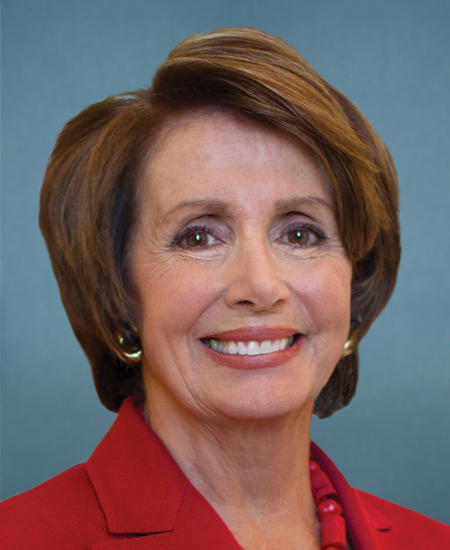
Nancy Pelosi
Nancy Pelosi House · District 11
D
Strong +
86% 22
Scott Perry
Scott Perry House · District 10
R
Strong −
14% 21
AA
Alan Armstrong Senate
R
Strong −
17% 29
Rand Paul
Rand Paul Senate
R
Strong −
17% 46
Josh Hawley
Josh Hawley Senate
R
Strong −
18% 45
Andy Harris
Andy Harris House · District 1
R
Strong −
18% 22
Showing 1,181–1,190 of 1,661 bills

All technology bills

in committee · United States · Senate Sep 10, 2025

S 2750: SANDBOX Act

The SANDBOX Act (S 2750) creates a federal program allowing AI companies to apply for temporary waivers from certain regulations to test new AI products, services, or development methods without facing enforcement of those regulations during the testing period. Businesses must submit detailed applications demonstrating how their testing will benefit consumers while mitigating potential health, safety, economic, or unfair practice risks, with oversight from the Office of Science and Technology Policy and relevant federal agencies. The program requires ongoing consumer disclosures, regular reporting on risks and benefits, and agency review of applications before approval. This 12-year program aims to foster AI innovation and job creation while maintaining public safety protections, with annual congressional reporting on its implementation.
in committee · United States · House Sep 26, 2025

HR 5605: Medical Device Nonvisual Accessibility Act of 2025

This bill requires home medical devices like blood pressure monitors and sleep apnea machines to include nonvisual accessibility features (such as screen readers or audio feedback) so blind or low-vision users can operate them independently and safely. It sets a standard that devices must be as effective for these users as for sighted individuals, applying to Class II/III devices cleared under FDA's 510(k) process for home use. The FDA must issue proposed regulations within one year and final rules within two years of enactment, with manufacturers needing to comply one year after the final rule takes effect. Devices may qualify for waivers only if compliance would cause a "fundamental alteration" or "undue hardship" for the manufacturer, though the bill emphasizes accessibility can often be integrated without extra cost during design.
Tags People with Disabilities
in committee · United States · Senate Oct 28, 2025

S 3063: LIFE with AI Act

The LIFE with AI Act establishes a "Golden Seal of Excellence in Student Data Privacy" for schools that implement robust parental notification systems for educational technology. It requires schools to use real-time consent systems ("instant verification technology") for parental approval of student data use, simplifies opt-out processes for directory information, and prohibits using student photos for facial recognition without consent. The bill also creates new requirements for schools to review third-party educational technology contracts for privacy compliance and establishes a Privacy Technical Assistance Center to help schools navigate data privacy rules. These changes primarily affect elementary and secondary schools, local educational agencies, and educational technology providers, with the goal of strengthening student data privacy protections while enabling responsible AI use in education.
in committee · United States · Senate Jul 10, 2025

S 2257: Legislative Branch Appropriations Act, 2026

This bill provides funding for the U.S. Legislative Branch for fiscal year 2026, appropriating over $3 billion in total to support operations across Congress. It allocates specific amounts for Senate leadership offices, committee operations, Capitol Police, Library of Congress, Government Accountability Office, and other legislative branch entities. The bill includes provisions on how funds may be used, such as prohibiting purchases of telecommunications equipment from Huawei or ZTE, requiring plastic waste reduction in food services, and restricting cost-of-living adjustments for Members of Congress. It also establishes specific spending limits and availability periods for different funding categories. This legislation is primarily a funding measure that ensures the continued operation of Congress and its supporting agencies for the 2026 fiscal year.
in committee · United States · Senate Jun 18, 2025

S 2135: Prototype to Production Act

This bill amends Defense Department contracting rules to streamline the transition from prototype testing to full-scale production. It creates a new "follow-on production" category for contracts over $100 million that have successfully demonstrated technology, and adds a provision allowing officials to bypass full competition for urgent, proven technologies ready for immediate deployment. The changes primarily affect Department of Defense contracting officers and defense contractors managing prototype-to-production projects. The law aims to accelerate fielding of tested capabilities for urgent military needs without requiring additional development.
in committee · United States · Senate May 22, 2025

S 1909: Western Balkans Democracy and Prosperity Act

This bill, the Western Balkans Democracy and Prosperity Act, aims to strengthen democratic institutions and economic prosperity across the seven Western Balkans countries: Albania, Bosnia and Herzegovina, Croatia, Kosovo, Montenegro, North Macedonia, and Serbia. It establishes concrete mechanisms including anti-corruption initiatives, regional economic development programs focused on reducing Russian energy dependence, cybersecurity support, and youth leadership development. The bill requires reports on Russian and Chinese malign influence operations in the region and codifies sanctions against those undermining democracy, while providing pathways for sanction termination. It emphasizes supporting European integration, promoting cross-cultural educational exchanges, and fostering regional trade and investment opportunities to address high poverty and youth out-migration in the region.
Sub-Topics Cybersecurity
in committee · United States · Senate Jul 10, 2025

S 2253: Unsubscribe Act of 2025

The Unsubscribe Act of 2025 protects consumers from unexpected charges by regulating "negative option" contracts, where services automatically renew unless the consumer actively cancels (e.g., free trials turning into paid subscriptions). It requires merchants to clearly disclose all terms before charging, obtain explicit consent (like a checkbox), and provide a simple cancellation method - such as a direct online link - before the first payment. For free-to-paid contracts, merchants must detail introductory pricing, future recurring costs, and total estimated charges before the first billing. The Federal Trade Commission and state attorneys general will enforce these rules, with penalties for violations, ensuring consumers have transparent choices and easy cancellation options.
in committee · United States · Senate May 13, 2025

S 1746: Quantum LEAP Act of 2025

The Quantum LEAP Act of 2025 establishes a 12-member Commission on American Quantum Information Science and Technology Dominance to examine U.S. quantum technology developments and recommend policies. The Commission will review global competitiveness, national security implications, workforce needs, and commercialization barriers in quantum information science, coordinating with agencies like the Department of Energy, National Institute of Standards and Technology, and Department of Defense. It must submit an interim report within one year and a final report within two years of its establishment, outlining recommendations for maintaining U.S. leadership. This bill directly affects federal agencies, quantum industry stakeholders, and national security planning by creating a structured process to assess and guide quantum technology strategy.
Sub-Topics Emerging Technology
in committee · United States · Senate Dec 11, 2025

S 3469: BIOSECURE Act of 2025

S 3469, the BIOSECURE Act of 2025, prohibits U.S. federal agencies from contracting with or using biotechnology equipment/services from companies identified as "biotechnology companies of concern" (primarily those linked to foreign adversaries like China that pose national security risks, such as through unauthorized collection of genetic data). It directly affects federal agencies, contractors, and grant recipients by banning purchases or contracts involving such companies' products, with exceptions for intelligence activities, overseas health care for military personnel, and public health emergencies. Key mechanisms include a defined list of prohibited companies (updated annually), waiver options for national security needs (requiring congressional notice), and strict rules for identifying risks related to multiomic data (genomic, proteomic, etc.). The law aims to prevent U.S. citizens' biological data from being exploited by foreign adversaries through federal contracts.
introduced · United States · Senate Oct 8, 2025

S 2983: Extending Expired Cybersecurity Authorities Act

This bill extends the expiration date for cybersecurity information sharing authorities under the 2015 law from September 30, 2025, to September 30, 2035. It directly affects organizations and government entities that share cybersecurity threat information under the existing framework. The key provision amends Section 111(a) of the Cybersecurity Information Sharing Act of 2015 to update the deadline, with retroactive effect starting October 1, 2025. The bill also updates the law's title to "Protecting America from Cyber Threats Act" for consistency.
Sub-Topics Cybersecurity
Showing 1,181 to 1,190 of 1,661 bills