Issue · Technology

Technology

Every technology bill, vote, and legislator stance in United States, automatically classified by Maddy, our AI policy reader.

Total bills
1,447
119th Congress
Top supporter
Ami Bera
86% support rate
Top opponent
Scott Perry
14% support rate
Ranked legislators
10
5 support · 5 oppose
Key legislators

Who's moving technology in United States

Legislators moving technology in United States
Legislator Party Stance Support rate Decisive votes
Ami Bera
Ami Bera House · District 6
D
Strong +
86% 22
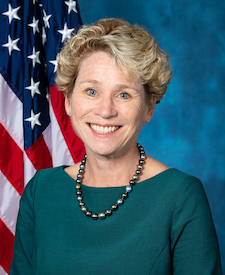
Chrissy Houlahan
Chrissy Houlahan House · District 6
D
Strong +
86% 22
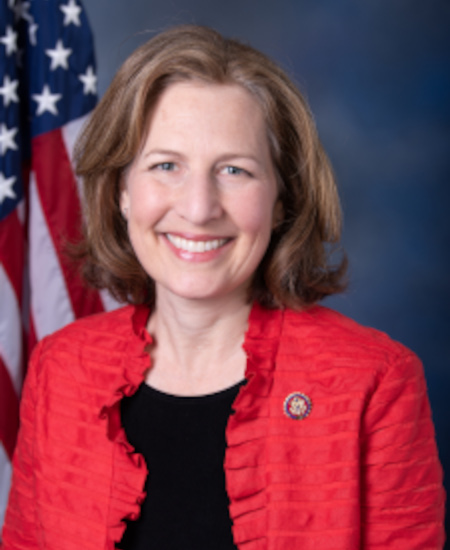
Kim Schrier
Kim Schrier House · District 8
D
Strong +
86% 22
Mike Thompson
Mike Thompson House · District 4
D
Strong +
86% 22
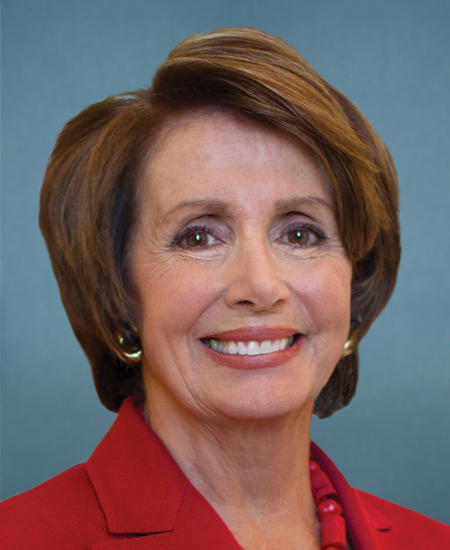
Nancy Pelosi
Nancy Pelosi House · District 11
D
Strong +
86% 22
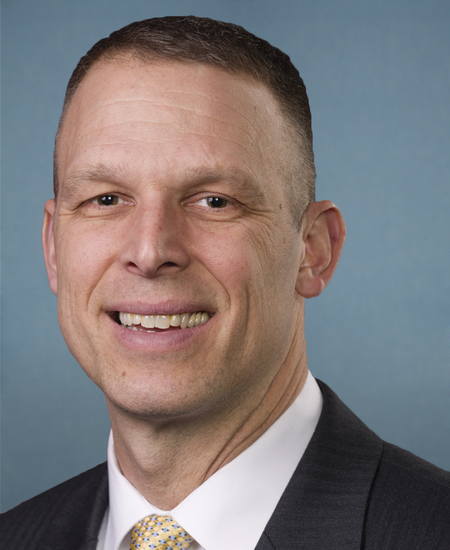
Scott Perry
Scott Perry House · District 10
R
Strong −
14% 21
AA
Alan Armstrong Senate
R
Strong −
17% 29
Rand Paul
Rand Paul Senate
R
Strong −
17% 46
Josh Hawley
Josh Hawley Senate
R
Strong −
18% 45
Andy Harris
Andy Harris House · District 1
R
Strong −
18% 22
Showing 1,021–1,030 of 1,447 bills

All technology bills

in committee · United States · House Jun 11, 2025

HR 3919: Advanced AI Security Readiness Act

The Advanced AI Security Readiness Act requires the National Security Agency to develop an AI Security Playbook to protect advanced AI systems that pose national security risks if stolen. The playbook must identify vulnerabilities in AI infrastructure, critical components (like models or training insights) that could be exploited, and strategies to prevent cyber threats from nation-state actors. It mandates both a classified version for government use and an unclassified version for sharing security best practices with private sector AI developers. The NSA must submit an initial report within 90 days and a final report within 270 days after the bill's enactment to Congress.
in committee · United States · House May 19, 2025

HR 3479: SECURE American Telecommunications Act

The SECURE American Telecommunications Act establishes new licensing requirements for submarine and terrestrial telecommunications cables connecting the United States to foreign countries. It prohibits issuing licenses for cables connecting to "foreign adversaries" or using equipment on a specific FCC list, and shifts licensing authority from the President to the Federal Communications Commission. The bill requires cable operators to report cybersecurity incidents within 24 hours and follow minimum physical and cybersecurity standards for cables and landing stations. It also creates a study on establishing submarine cable protection zones and increases penalties for damaging submarine cables, with violations potentially resulting in up to 25 years in prison.
passed · United States · House Jul 15, 2025

HR 2037: Open RAN Outreach Act

HR 2037, the Open RAN Outreach Act, requires the Commerce Department's Assistant Secretary for Communications and Information to provide outreach and technical assistance to small communications network providers. The bill focuses on raising awareness about Open RAN networks - standardized wireless networks using multi-vendor equipment that follow open industry standards - and directing providers to the Wireless Supply Chain Innovation Grant Program. It does not create new regulations but offers support to help small providers understand the benefits, challenges, and grant opportunities related to Open RAN technology. This assistance is intended to help small providers navigate adopting open network architectures.
Sub-Topics Telecommunications
passed · United States · House May 21, 2025

HR 1223: ANCHOR Act

The ANCHOR Act requires the National Science Foundation to develop a plan within 18 months to improve cybersecurity and telecommunications for the U.S. Academic Research Fleet - comprising university- and lab-operated oceanographic research vessels. The plan must assess each vessel's specific needs for internet speed, data transfer, telemedicine, and remote expert access during missions, alongside cost estimates for upgrades like satellite equipment and staff training. It also mandates evaluating shared solutions to reduce costs and outlining funding strategies involving NSF, Navy research offices, and vessel operators. The bill directly affects research vessels conducting ocean science, aiming to modernize their digital infrastructure without altering scientific methods.
in committee · United States · House Apr 10, 2025

HRES 328: Expressing support for the staff of public, school, academic, and special libraries in the United States and the essential services those libraries provide to communities, recognizing the need for funding commensurate with the broad scope of social service and community supports provided by libraries, preserving the right of all citizens of the United States to freely access information and resources in their communities, supporting a strong union voice for library workers, and defending the civil rights of library staff.

HRES 328 is a non-binding House resolution expressing support for library staff and the essential services libraries provide to communities across the United States. It recognizes libraries as critical infrastructure for community access to information, internet, social services, and safe spaces - especially for underserved groups - and calls for full federal, state, and local funding to sustain these services. The resolution reaffirms the public’s right to free access to information, supports library workers’ rights to unionize and collectively bargain, and defends staff from threats like book bans or intimidation for upholding library missions. It specifically endorses National Library Week and urges protection of civil rights for library workers. (Note: As a procedural resolution, it does not create new law but formally expresses congressional support.)
in committee · United States · Senate Sep 10, 2025

S 2750: SANDBOX Act

The SANDBOX Act (S 2750) creates a federal program allowing AI companies to apply for temporary waivers from certain regulations to test new AI products, services, or development methods without facing enforcement of those regulations during the testing period. Businesses must submit detailed applications demonstrating how their testing will benefit consumers while mitigating potential health, safety, economic, or unfair practice risks, with oversight from the Office of Science and Technology Policy and relevant federal agencies. The program requires ongoing consumer disclosures, regular reporting on risks and benefits, and agency review of applications before approval. This 12-year program aims to foster AI innovation and job creation while maintaining public safety protections, with annual congressional reporting on its implementation.
in committee · United States · House Sep 26, 2025

HR 5605: Medical Device Nonvisual Accessibility Act of 2025

This bill requires home medical devices like blood pressure monitors and sleep apnea machines to include nonvisual accessibility features (such as screen readers or audio feedback) so blind or low-vision users can operate them independently and safely. It sets a standard that devices must be as effective for these users as for sighted individuals, applying to Class II/III devices cleared under FDA's 510(k) process for home use. The FDA must issue proposed regulations within one year and final rules within two years of enactment, with manufacturers needing to comply one year after the final rule takes effect. Devices may qualify for waivers only if compliance would cause a "fundamental alteration" or "undue hardship" for the manufacturer, though the bill emphasizes accessibility can often be integrated without extra cost during design.
Tags People with Disabilities
in committee · United States · Senate Oct 28, 2025

S 3063: LIFE with AI Act

The LIFE with AI Act establishes a "Golden Seal of Excellence in Student Data Privacy" for schools that implement robust parental notification systems for educational technology. It requires schools to use real-time consent systems ("instant verification technology") for parental approval of student data use, simplifies opt-out processes for directory information, and prohibits using student photos for facial recognition without consent. The bill also creates new requirements for schools to review third-party educational technology contracts for privacy compliance and establishes a Privacy Technical Assistance Center to help schools navigate data privacy rules. These changes primarily affect elementary and secondary schools, local educational agencies, and educational technology providers, with the goal of strengthening student data privacy protections while enabling responsible AI use in education.
in committee · United States · Senate Jul 10, 2025

S 2257: Legislative Branch Appropriations Act, 2026

This bill provides funding for the U.S. Legislative Branch for fiscal year 2026, appropriating over $3 billion in total to support operations across Congress. It allocates specific amounts for Senate leadership offices, committee operations, Capitol Police, Library of Congress, Government Accountability Office, and other legislative branch entities. The bill includes provisions on how funds may be used, such as prohibiting purchases of telecommunications equipment from Huawei or ZTE, requiring plastic waste reduction in food services, and restricting cost-of-living adjustments for Members of Congress. It also establishes specific spending limits and availability periods for different funding categories. This legislation is primarily a funding measure that ensures the continued operation of Congress and its supporting agencies for the 2026 fiscal year.
in committee · United States · Senate Jun 18, 2025

S 2135: Prototype to Production Act

This bill amends Defense Department contracting rules to streamline the transition from prototype testing to full-scale production. It creates a new "follow-on production" category for contracts over $100 million that have successfully demonstrated technology, and adds a provision allowing officials to bypass full competition for urgent, proven technologies ready for immediate deployment. The changes primarily affect Department of Defense contracting officers and defense contractors managing prototype-to-production projects. The law aims to accelerate fielding of tested capabilities for urgent military needs without requiring additional development.
Showing 1,021 to 1,030 of 1,447 bills