Issue · Labor & Employment

Labor & Employment (Labor Standards)

Every labor & employment bill, vote, and legislator stance in United States, automatically classified by Maddy, our AI policy reader.

Total bills
38
119th Congress
Top supporter
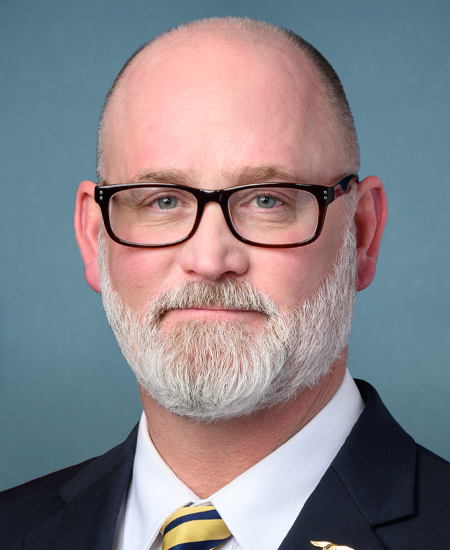
Derrick Van Orden
100% support rate
Top opponent
Julie Fedorchak
33% support rate
Ranked legislators
10
5 support · 5 oppose
Key legislators

Who's moving labor standards in United States

Legislators moving labor standards in United States
Legislator Party Stance Support rate Votes
Derrick Van Orden
Derrick Van Orden House · District 3
R
Strong +
100% 3
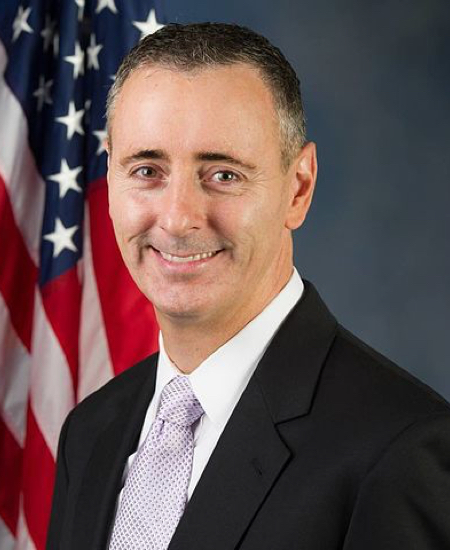
Brian K. Fitzpatrick
Brian K. Fitzpatrick House · District 1
R
Strong +
86% 7
Christopher H. Smith
Christopher H. Smith House · District 4
R
Strong +
86% 7
Jefferson Van Drew
Jefferson Van Drew House · District 2
R
Strong +
86% 7
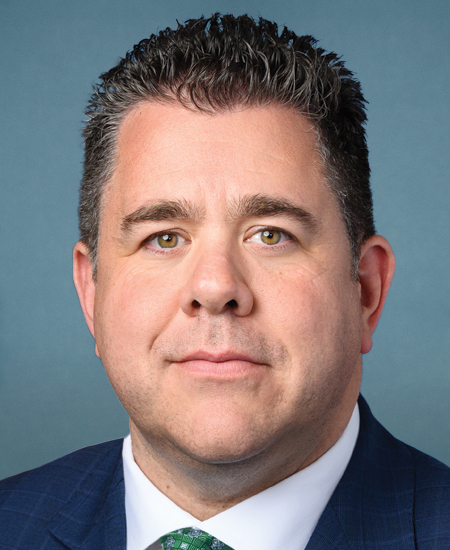
Nick LaLota
Nick LaLota House · District 1
R
Strong +
86% 7
Julie Fedorchak
Julie Fedorchak House · District At-Large
R
Oppose
33% 6
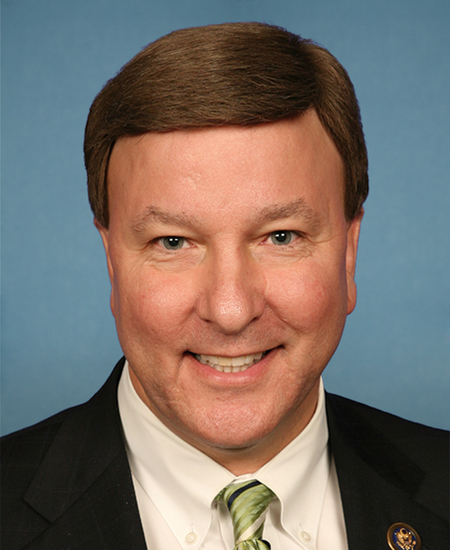
Mike Rogers
Mike Rogers House · District 3
R
Oppose
33% 6
Russ Fulcher
Russ Fulcher House · District 1
R
Oppose
33% 6
Gregory F. Murphy
Gregory F. Murphy House · District 3
R
Oppose
33% 3
Wesley Hunt
Wesley Hunt House · District 38
R
Oppose
33% 3
Showing 1–10 of 38 bills

All labor & employment bills

in committee · United States · House May 21, 2026

HR 8736: Restoration of Employment Choice for Adults with Disabilities Act

This bill modifies federal rules to allow adults with disabilities aged 18 and older to work for employers at wages below the standard minimum rate, whereas the previous law restricted this option to individuals under 24. It requires these employers to make documented efforts to find suitable jobs for their employees at regular intervals and permits the use of subminimum wages only if state agencies fail to provide necessary job counseling and referrals. Additionally, the bill mandates that employers must provide copies of these job search records to the individuals they employ. These changes aim to expand employment opportunities for adults with disabilities while maintaining specific oversight to ensure they are not denied access to regular competitive employment.
Sub-Topics Child Labor Labor Standards Minimum Wage Tags People with Disabilities
in committee · United States · Senate Apr 29, 2026

S 4427: Heat Workforce Standards Act of 2026

The Heat Workforce Standards Act of 2026 prevents the Occupational Safety and Health Administration from finalizing or enforcing a specific proposed rule regarding heat injury prevention in workplaces. This legislation directly affects the Department of Labor and businesses by blocking the implementation of detailed requirements such as mandatory rest breaks and written safety plans. The bill argues that these specific rules are too burdensome and fail to account for unique industry and geographic conditions. By stopping this rule, the act leaves the proposed heat safety standards in a suspended state without changing existing regulations.
in committee · United States · Senate Apr 30, 2026

S 4477: Davis-Bacon Repeal Act

The Davis-Bacon Repeal Act would eliminate federal wage requirements that currently mandate contractors on government-funded construction projects pay workers at least the prevailing local wage rate. By repealing the relevant section of the U.S. Code, the bill removes the legal basis for these minimum wage standards on future contracts. The law includes a transition period that protects existing contracts and those with outstanding bids for 30 days after enactment, ensuring no immediate disruption to ongoing projects. This change would directly affect construction firms and workers involved in federally funded building work by removing the obligation to adhere to specific local wage floors.
in committee · United States · House Apr 14, 2026

HR 8272: To classify qualified locum tenens professionals and advanced care practitioners as independent contractors for the purposes of the Fair Labor Standards Act of 1938 and the National Labor Relations Act.

This bill classifies certain temporary healthcare professionals, including qualified locum tenens professionals and advanced care practitioners, as independent contractors. This classification applies specifically for the purposes of the Fair Labor Standards Act and the National Labor Relations Act. To qualify, these individuals must provide temporary physician or advanced care practitioner services for up to one continuous year at a single site, under a written contract acknowledging their independent contractor status. Eligible professionals include physicians, nurse practitioners, physician's assistants, and certified registered nurse anesthetists.
in committee · United States · House Jul 21, 2026

HR 8347: RURAL Healthcare Act

The RURAL Healthcare Act proposes to reclassify certain temporary healthcare professionals as independent contractors for the purposes of federal labor laws. It specifies that qualified locum tenens professionals and advanced care practitioners, such as physicians, nurse practitioners, and physician's assistants, would not be considered employees under the Fair Labor Standards Act or the National Labor Relations Act. This reclassification applies if they provide temporary services for up to one continuous year at a site and operate under a written contract stating they are not employees. The bill directly affects these healthcare providers and the facilities that contract for their temporary services.
in committee · United States · Senate Mar 3, 2026

S 3963: Rural Emergency Response Support Act

This bill would allow employers of emergency medical technicians and paramedics in rural areas to avoid paying overtime wages under certain conditions. It specifically exempts public agencies in communities with fewer than 100,000 residents and private contractors serving those areas from overtime requirements for these workers. The changes would be made to the Fair Labor Standards Act of 1938, which currently sets federal overtime pay rules. The legislation aims to address staffing challenges in rural emergency medical services by providing flexibility in compensation for these essential workers.
Sub-Topics Labor Standards
in committee · United States · Senate Mar 26, 2026

SJRES 152: A joint resolution providing for congressional disapproval under chapter 8 of title 5, United States Code, of the rule submitted by the Department of Labor relating to the Adverse Effect Wage Rate Methodology.

This bill seeks to overturn a Department of Labor rule that changes how the Adverse Effect Wage Rate is calculated for H-2A temporary agricultural workers. If passed, it would cancel the new methodology, restoring the previous approach used to determine minimum wage requirements for these temporary workers. The measure directly affects the Employment and Training Administration, which administers the H-2A visa program, and employers who hire foreign agricultural labor. It is a procedural action that requires approval from both the House and Senate to take effect.
in committee · United States · House Apr 1, 2025

HR 2572: Worker Enfranchisement Act

The Worker Enfranchisement Act (HR 2572) changes how unions gain exclusive representation rights under labor law. It requires that a union must be chosen by at least two-thirds of all eligible employees voting in a secret ballot election, rather than a simple majority. This applies to all new union representation elections occurring six months after the bill becomes law. The change directly affects workers and unions by raising the threshold for establishing a union as the sole bargaining representative.
in committee · United States · House Feb 25, 2026

HR 7686: Rural and Underserved Health Care Staffing Act

This bill clarifies that temporary medical staff (locum tenens physicians and advanced practitioners) working in rural or underserved areas are treated as independent contractors - not employees - by federal programs for key purposes. It specifically affects how these temporary workers are classified under the Fair Labor Standards Act, Civil Rights Act, Medicare, Medicaid, and other federal health programs, ensuring they aren’t deemed employees of the healthcare facility they temporarily serve. The bill requires a written agreement between the temporary staff and the facility, with an exception for cases where an explicit employer-employee contract is signed. It explicitly does not change tax treatment, state licensing rules, or eligibility for Medicare/Medicaid benefits.
in committee · United States · House Feb 12, 2026

HR 2870: Working Families Flexibility Act of 2025

HR 2870, the Working Families Flexibility Act of 2025, allows private sector employees to earn compensatory time off (instead of overtime pay) at a 1.5:1 ratio for hours worked beyond 40 in a week. Employees must agree in writing to this option before work begins, have worked at least 1,000 hours with the employer in the past year, and cannot accrue more than 160 hours of compensatory time. Employers must pay employees for unused compensatory time by January 31 each year (or a chosen 12-month period), at the higher of their regular pay rate when the time was earned or their final rate. The bill applies only to private employers (not government workers), includes penalties for employers who pressure employees about the option, and expires after five years.
Showing 1 to 10 of 38 bills
1 2 3 4 Next