Issue · Labor & Employment

Labor & Employment (Child Labor)

Every labor & employment bill, vote, and legislator stance in United States, automatically classified by Maddy, our AI policy reader.

Total bills
71
119th Congress
Top supporter
Brian K. Fitzpatrick
100% support rate
Top opponent
Adam Gray
33% support rate
Ranked legislators
10
5 support · 5 oppose
Key legislators

Who's moving child labor in United States

Legislators moving child labor in United States
Legislator Party Stance Support rate Votes
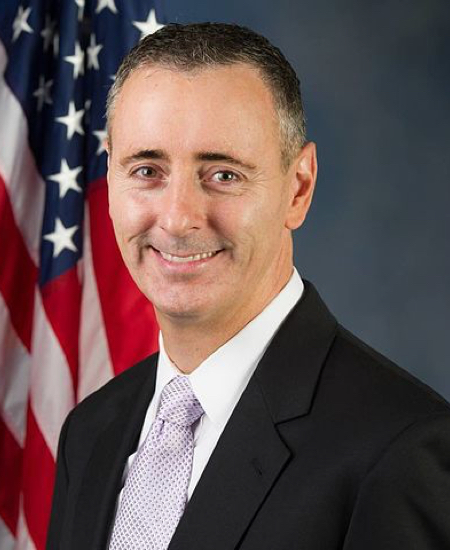
Brian K. Fitzpatrick
Brian K. Fitzpatrick House · District 1
R
Strong +
100% 3
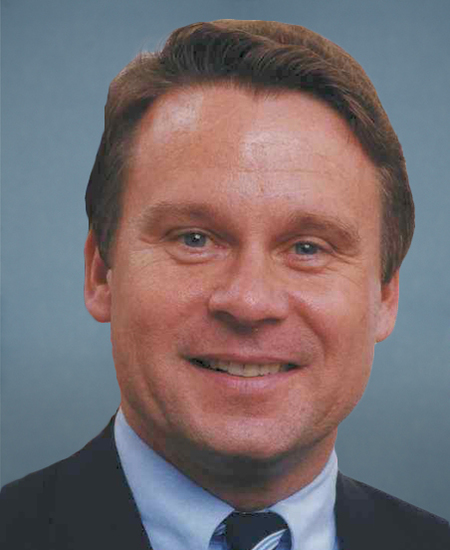
Christopher H. Smith
Christopher H. Smith House · District 4
R
Strong +
100% 3
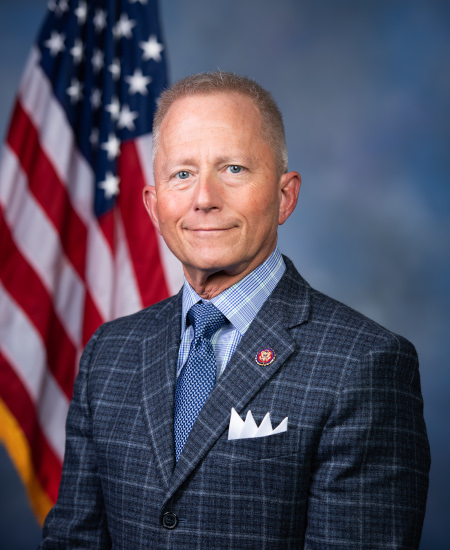
Jefferson Van Drew
Jefferson Van Drew House · District 2
R
Strong +
100% 3
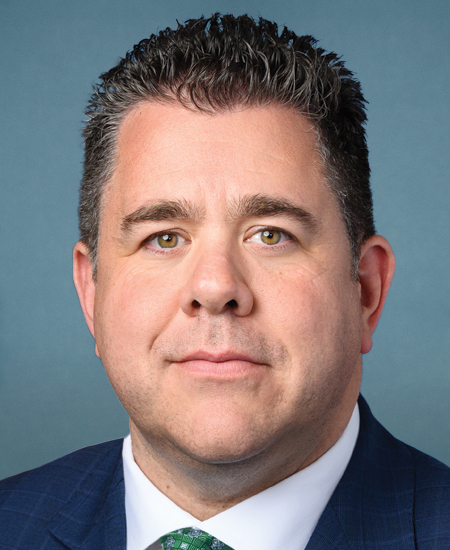
Nick LaLota
Nick LaLota House · District 1
R
Strong +
100% 3
Riley M. Moore
Riley M. Moore House · District 2
R
Strong +
100% 3
Adam Gray
Adam Gray House · District 13
D
Oppose
33% 3
Adam Smith
Adam Smith House · District 9
D
Oppose
33% 3
Adelita S. Grijalva
Adelita S. Grijalva House · District 7
D
Oppose
33% 3
Adriano Espaillat
Adriano Espaillat House · District 13
D
Oppose
33% 3
Al Green
Al Green House · District 9
D
Oppose
33% 3
Showing 41–50 of 71 bills

All labor & employment bills

in committee · United States · House Mar 4, 2025

HR 1826: Child Care Workforce Act

This bill establishes a federal pilot program to increase wages for child care workers through competitive grants to states and tribes. It requires grant recipients to use funds directly to supplement wages for eligible workers in licensed child care centers or home-based settings, paid quarterly, with up to 10% of funds allowed for administrative costs. The program must track impacts on worker retention, well-being, care quality, and affordability, and report results to Congress within two years. It targets low-wage workers in underserved areas, including those serving infants, toddlers, children with disabilities, or during nontraditional hours.
Sub-Topics Child Labor
in committee · United States · Senate Mar 31, 2025

S 1211: AID Youth Employment Act

The AID Youth Employment Act creates new federal grant programs to provide subsidized summer and year-round employment opportunities for eligible youth aged 14-24 who are in-school, out-of-school, or unemployed. The bill allocates $1.8 billion for summer employment programs and $2.4 billion for year-round programs, with specific requirements to serve marginalized youth (including those who are homeless, in foster care, involved in justice systems, or living in underserved communities). It requires eligible entities to form partnerships with schools, workforce agencies, and community organizations to develop programs that provide work readiness skills, mentorship, and support services like transportation and child care. The program includes performance metrics to track outcomes like employment rates and educational progress after program completion, with annual reports to Congress on program effectiveness.
failed · United States · House Jan 13, 2026

HR 2262: Flexibility for Workers Education Act

Flexibility for Workers Education Act This bill modifies the definition of hours worked under the Fair Labor Standards Act to exclude certain voluntary training that occurs outside an employee's regular working hours. Such training does not count as hours worked even if it is offered by the employer, provided that an employee's working conditions are not adversely affected by choosing not to participate and the employee does not perform any work for the employer during the training.
in committee · United States · House Apr 9, 2025

HR 2764: Tax Cut for Workers Act of 2025

This bill expands the Earned Income Tax Credit (EITC) for low-income workers by lowering the minimum age to claim the credit from 25 to 19 (with exceptions for students, former foster youth, and homeless youth), removing the maximum age limit of 65, and doubling the credit percentage from 7.65% to 15.3%. It also increases the income thresholds for eligibility, raising the phaseout starting point from $4,220 to $9,820 for single filers and $5,280 to $11,610 for joint returns. The credit amounts and income limits will now adjust annually for inflation using specific Consumer Price Index (CPI) benchmarks. Additionally, taxpayers can elect to use their prior year’s earned income to calculate the credit if it was higher than the current year’s, effective for 2026 tax returns.
in committee · United States · House Dec 3, 2025

HR 6413: Workforce Flexibility Act

The Workforce Flexibility Act amends the Workforce Innovation and Opportunity Act (WIOA) by removing a specific eligibility requirement for youth programs. It eliminates the "out-of-school priority," which previously limited certain workforce services to youth not enrolled in school. This change directly affects youth programs under WIOA, allowing them to serve a broader group of young people without that prior restriction. The bill makes a technical adjustment to program eligibility rules, not a major policy shift.
in committee · United States · Senate Mar 31, 2025

S 1210: Helping to Encourage Real Opportunities (HERO) for Youth Act of 2025

S 1210, the HERO for Youth Act of 2025, expands tax credits for employers hiring qualifying youth. It modifies the Work Opportunity Tax Credit to cover year-round employment (September 16-April 30) for students attending secondary school part-time (≤20 hours/week), not just summer jobs. The bill also creates a new credit for employers hiring "disconnected youth" - individuals aged 16-25 who haven’t attended school or worked regularly for six months, or foster youth aged 16-21. The credit amount is increased, and the changes apply to hires after the bill's enactment. This directly affects employers in states with designated local agencies administering the program.
in committee · United States · House Feb 18, 2025

HR 1434: Strengthening Communities through Summer Employment Act

HR 1434 authorizes $200 million to $240 million annually (2026-2030) to fund summer youth employment programs for participants under 25, primarily targeting high-unemployment and high-crime communities. It provides competitive grants to states, local governments, or nonprofits to create or expand programs that include subsidized jobs (minimum wage, 4+ weeks), mentoring, career counseling, and post-program support - aimed at improving high school graduation, college enrollment, employment, and reducing crime rates. The bill prioritizes programs serving underserved youth (including rural/suburban areas) and requires grantees to implement specific elements like job training, digital literacy, and employer matching. An Advisory Board oversees grant reviews, evaluates program impact, and maintains a database of outcomes to ensure evidence-based improvements.
in committee · United States · House Mar 4, 2025

HR 1827: Child Care Availability and Affordability Act

HR 1827, the Child Care Availability and Affordability Act, increases tax benefits for families with child care needs and employers providing child care. It raises the employer child care credit from 25% to 50% of expenses with a maximum credit of $500,000 (up from $150,000), and creates a new household and dependent care credit allowing families to claim up to 50% of eligible child care expenses, with the credit amount reduced as income increases, up to $8,000 for multiple children. The bill directly affects working parents with children under 13 or dependents needing care, as well as employers offering child care benefits. Key provisions include expanded credit amounts, new definitions for qualifying care, and special rules for small businesses.
in committee · United States · House Oct 31, 2025

HR 5884: TASK Act

HR 5884, the TASK Act, amends the Fair Labor Standards Act to exclude certain vocational students from being classified as "employees." It specifically exempts students performing work required by their postsecondary vocational program to earn a recognized credential (as defined by federal education law) from FLSA protections like minimum wage. This means schools can assign these training tasks without paying students the federal minimum wage. The bill directly affects students in structured vocational programs at colleges or institutions covered under the Higher Education Act.
in committee · United States · House Aug 12, 2025

HR 4949: Apprenticeships for Small Businesses Act of 2025

This bill creates a new tax credit for small businesses to support workforce training. It allows eligible small businesses to claim a credit equal to 50% of qualified wages paid to employees under 21 or enrolled in approved apprenticeships, community college programs, or career training related to the business, plus qualified workmen’s compensation expenses, capped at $10,000 per year. The credit applies to taxable years beginning after December 31, 2025, and is designed to directly benefit small businesses seeking to train young workers through structured educational programs. It does not change existing labor laws but provides a financial incentive to invest in employee development.
Showing 41 to 50 of 71 bills
Previous 1 4 5 6 8 Next