Issue · Labor & Employment

Labor & Employment (Labor Standards)

Every labor & employment bill, vote, and legislator stance in United States, automatically classified by Maddy, our AI policy reader.

Total bills
257
119th Congress
Top supporter
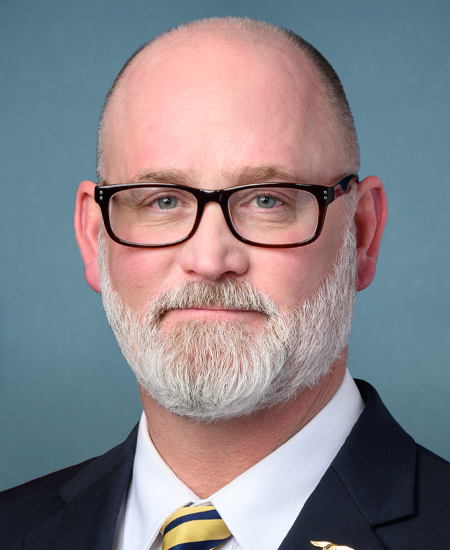
Derrick Van Orden
100% support rate
Top opponent
Julie Fedorchak
33% support rate
Ranked legislators
10
5 support · 5 oppose
Key legislators

Who's moving labor standards in United States

Legislators moving labor standards in United States
Legislator Party Stance Support rate Votes
Derrick Van Orden
Derrick Van Orden House · District 3
R
Strong +
100% 3
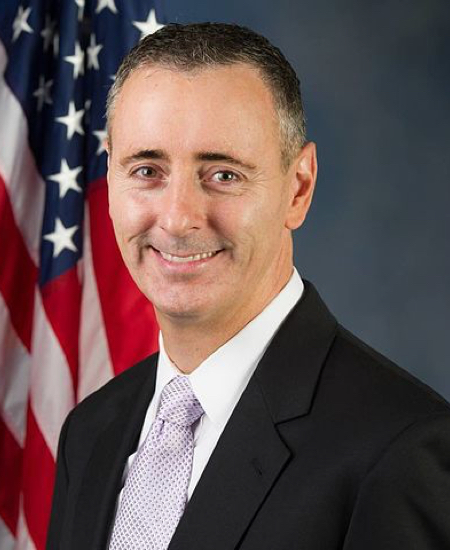
Brian K. Fitzpatrick
Brian K. Fitzpatrick House · District 1
R
Strong +
86% 7
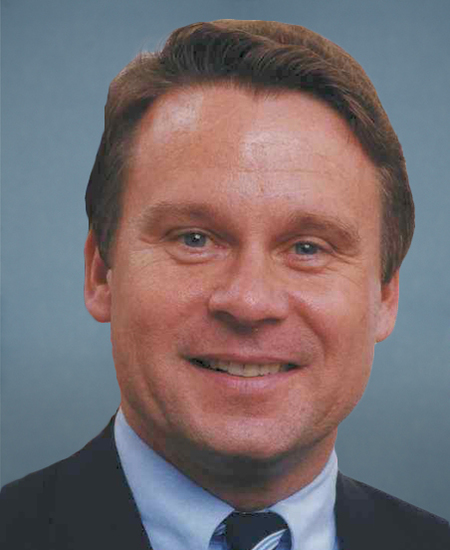
Christopher H. Smith
Christopher H. Smith House · District 4
R
Strong +
86% 7
Jefferson Van Drew
Jefferson Van Drew House · District 2
R
Strong +
86% 7
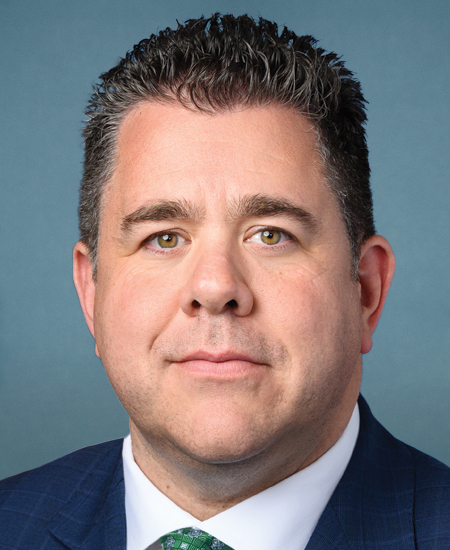
Nick LaLota
Nick LaLota House · District 1
R
Strong +
86% 7
Julie Fedorchak
Julie Fedorchak House · District At-Large
R
Oppose
33% 6
Mike Rogers
Mike Rogers House · District 3
R
Oppose
33% 6
Russ Fulcher
Russ Fulcher House · District 1
R
Oppose
33% 6
Gregory F. Murphy
Gregory F. Murphy House · District 3
R
Oppose
33% 3
Wesley Hunt
Wesley Hunt House · District 38
R
Oppose
33% 3
Showing 41–50 of 257 bills

All labor & employment bills

in committee · United States · Senate May 18, 2026

S 4551: Restoring Overtime Pay Act of 2026

This bill, titled the Restoring Overtime Pay Act of 2026, raises the minimum salary required for employees to be exempt from federal overtime pay rules, directly affecting workers classified as executive, administrative, or professional staff. It establishes a specific salary schedule that starts at $45,000 per week and increases annually to $75,000 by 2029, after which the threshold will automatically adjust to match the 55th percentile of national earnings for full-time salaried workers. Additionally, the legislation modifies the criteria for determining job duties, requiring that at least 20 percent of an employee's time be spent on executive or administrative tasks rather than the previous 40 percent standard. The law also mandates that the Bureau of Labor Statistics regularly publish earnings data and requires the Department of Labor to provide public notice before implementing any updated salary thresholds.
in committee · United States · House Apr 28, 2026

HR 8541: Long-Term Care Workforce Support Act

The Long-Term Care Workforce Support Act aims to address the severe shortage and low wages of direct care professionals who support older adults and people with disabilities by increasing Medicaid funding, expanding training grants, and establishing new federal labor protections. To improve compensation and retention, the bill allows states to receive additional Medicaid funds if they implement specific workforce improvements, such as raising wages, providing paid leave, and ensuring stable scheduling, while also creating a national strategy to calculate fair labor costs. The legislation introduces comprehensive worker rights, including a requirement for written employment agreements, fair scheduling with advance notice, paid sick time, and a federal standard to prevent workplace violence. Furthermore, the bill establishes multiple grant programs to fund training, career advancement, and diversity initiatives, alongside a new commission to develop national training standards and a technical assistance center to address inequities within the workforce.
in committee · United States · House May 21, 2026

HR 8956: Border Patrol Supervisors Retention Act

The Border Patrol Supervisors Retention Act modifies federal overtime pay rules to include supervisors within the U.S. Border Patrol. Specifically, it expands eligibility for higher rates of regularly scheduled overtime pay to agents classified at grades GS-12 through GS-15, rather than limiting it to only those at the GS-12 level. This change directly affects supervisory staff who currently manage border operations and ensures they receive the same overtime compensation as their lower-grade counterparts. By updating the relevant section of the U.S. Code, the bill aims to standardize pay structures for these specific roles without altering other aspects of their employment or duties.
Sub-Topics Labor Standards
in committee · United States · Senate Apr 21, 2026

S 4357: Hazard Pay for Health Care Heroes Act

The Hazard Pay for Health Care Heroes Act establishes a federal grant program to provide extra pay and safety resources to essential health care workers during declared emergencies or disasters. This legislation directly affects medical staff, janitorial workers, and other non-remote roles in health facilities who face hazardous working conditions or dangerous commutes. Under the bill, eligible workers could receive up to $13 per hour in additional compensation, with a yearly cap of $25,000, while facilities can also use funds for protective equipment and alternative transportation. The program is funded through emergency grants authorized to public and private nonprofit health care organizations when a specific emergency is declared by the President or local authorities.
in committee · United States · House Apr 28, 2026

HR 8555: Living Wage For All Act

The Living Wage For All Act raises the federal minimum wage in a tiered schedule, requiring large corporations to reach $25 per hour by 2031 while giving smaller businesses a longer timeline to catch up. Once the standard is met, the law automatically indexes the minimum wage to two-thirds of the national median hourly wage to ensure it keeps pace with economic changes. The bill also eliminates the lower minimum wage for tipped employees and youth workers, phasing them out until they match the general standard, and extends similar protections to incarcerated workers. Additionally, the legislation restricts the issuance of special minimum wage certificates for workers with disabilities and mandates that employers provide technical assistance during the transition period.
in committee · United States · House Jul 21, 2026

HR 8775: Ending Predator Access to Union Power Act

The Ending Predator Access to Union Power Act prohibits individuals convicted of certain sex offenses against minors from holding office in labor unions. This change expands the list of disqualifying crimes under the Labor-Management Reporting and Disclosure Act of 1959 to include these specific offenses. The bill takes effect 30 days after it is signed into law.
in committee · United States · Senate Apr 27, 2026

S 4386: ADVICE Act

The ADVICE Act creates a new advisory committee within the Department of Labor to improve how apprenticeship data is collected and shared. This committee will include representatives from state agencies, industries, labor organizations, and educational institutions to develop specific recommendations for better data integration. Their primary goal is to standardize apprenticeship records so they can be easily combined with other workforce and education data systems, while also reducing the reporting burden on program sponsors. After the committee submits its report, the Secretary of Labor must create a policy plan and request funding to help states implement these improvements.
in committee · United States · Senate Apr 28, 2026

S 4413: Protecting America’s Workers Act

The Protecting America's Workers Act expands workplace safety protections by including public employees and voluntary emergency responders under federal safety laws, while also strengthening whistleblower safeguards against retaliation. Key provisions require employers to report serious work-related injuries and deaths, mandate the posting of employee rights, and establish a process for victims and families to participate in enforcement proceedings. The bill also increases civil and criminal penalties for safety violations, improves oversight of state safety plans, and authorizes additional funding for training and hazard evaluations.
in committee · United States · House May 15, 2026

HR 8868: Restoring Overtime Pay Act of 2026

The Restoring Overtime Pay Act of 2026 raises the minimum salary required for certain employees to be exempt from federal overtime pay rules, starting at $45,000 per year and increasing annually until it reaches $75,000 by 2029. The bill also mandates that this threshold automatically updates each year to match the 55th percentile of weekly earnings for full-time salaried workers nationwide, with adjustments taking effect based on Bureau of Labor Statistics data. Additionally, the law modifies the duties test for exemption, requiring that at least 20 percent of an employee's time be spent on executive or administrative tasks rather than the current 40 percent standard. These changes directly affect employers and workers covered by the Fair Labor Standards Act by redefining eligibility for overtime exemptions and establishing a new mechanism for adjusting salary requirements over time.
in committee · United States · House May 21, 2026

HR 9008: Worker Rights and Support Act

The Worker Rights and Support Act amends the Fair Labor Standards Act to require employers to provide specific break times for employees, directly affecting workers covered under federal wage and hour laws. Under the new rules, employees must receive at least a 30-minute meal break for every six hours worked, along with a 10-minute break or time to use a restroom for every four hours, and up to 20-minute breaks for medical needs. While meal breaks can be unpaid if the employee is fully relieved of work, any break where the employee remains on duty or cannot leave the site must be paid at a rate of at least one and a half times their regular wage. The bill also allows employees to voluntarily waive meal breaks but prohibits employers from forcing them to do so, and it ensures that existing collective bargaining agreements or state laws offering better protections remain in effect.
Showing 41 to 50 of 257 bills
Previous 1 4 5 6 26 Next