Issue · Labor & Employment

Labor & Employment (Labor Standards)

Every labor & employment bill, vote, and legislator stance in United States, automatically classified by Maddy, our AI policy reader.

Total bills
38
119th Congress
Top supporter
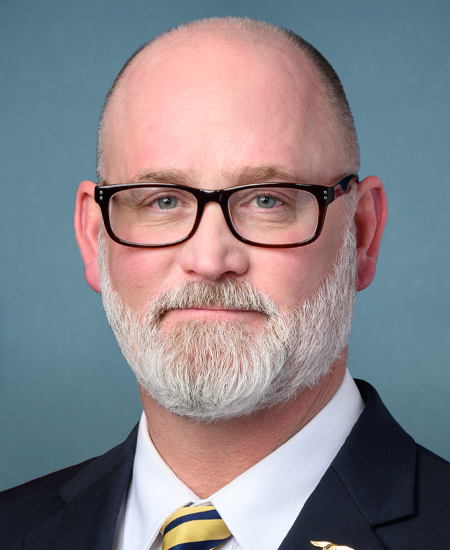
Derrick Van Orden
100% support rate
Top opponent
Julie Fedorchak
33% support rate
Ranked legislators
10
5 support · 5 oppose
Key legislators

Who's moving labor standards in United States

Legislators moving labor standards in United States
Legislator Party Stance Support rate Votes
Derrick Van Orden
Derrick Van Orden House · District 3
R
Strong +
100% 3
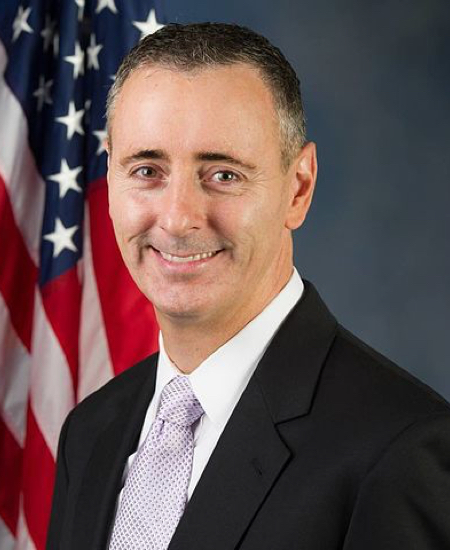
Brian K. Fitzpatrick
Brian K. Fitzpatrick House · District 1
R
Strong +
86% 7
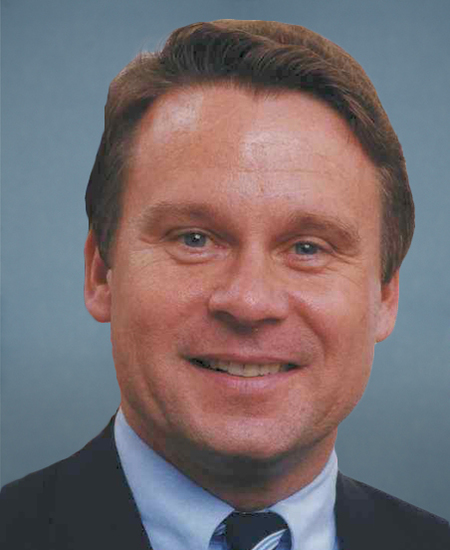
Christopher H. Smith
Christopher H. Smith House · District 4
R
Strong +
86% 7
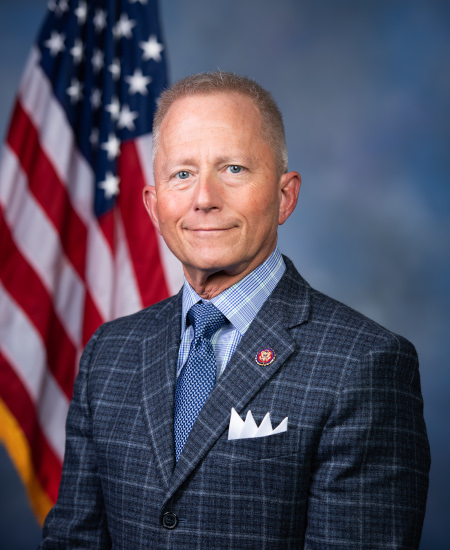
Jefferson Van Drew
Jefferson Van Drew House · District 2
R
Strong +
86% 7
Nick LaLota
Nick LaLota House · District 1
R
Strong +
86% 7
Julie Fedorchak
Julie Fedorchak House · District At-Large
R
Oppose
33% 6
Mike Rogers
Mike Rogers House · District 3
R
Oppose
33% 6
Russ Fulcher
Russ Fulcher House · District 1
R
Oppose
33% 6
Gregory F. Murphy
Gregory F. Murphy House · District 3
R
Oppose
33% 3
Wesley Hunt
Wesley Hunt House · District 38
R
Oppose
33% 3
Showing 31–38 of 38 bills

All labor & employment bills

in committee · United States · House Jan 13, 2026

HR 2270: Empowering Employer Child and Elder Care Solutions Act

This bill amends the Fair Labor Standards Act to exclude the value of employer-provided child or dependent care services from overtime pay calculations. It directly affects employers who offer such care benefits, allowing them to exclude the cost of these services when determining overtime wages for eligible employees. The key change adds a new exclusion (paragraph (9)) to the overtime calculation rules, meaning the value of childcare or elder care provided by an employer is no longer counted toward an employee's regular rate for overtime purposes. The change applies to overtime pay required for workweeks beginning after the bill's enactment date.
in committee · United States · Senate Feb 11, 2025

S 509: Future Logging Careers Act

This bill amends the Fair Labor Standards Act to create a specific exemption for 16- and 17-year-olds working in family-owned logging operations. It defines "logging operation" to include mechanized equipment (like skidders and processors) but explicitly excludes manual chainsaw work and cable skidders. The exemption allows teens to work in these family businesses without applying standard child labor restrictions for hazardous occupations, provided the employer is their parent or legal guardian. This change directly affects young workers in small, family-run logging operations across the logging industry.
in committee · United States · House Jul 21, 2026

HR 6213: Heat Workforce Standards Act of 2025

HR 6213, the Heat Workforce Standards Act of 2025, prohibits the U.S. Department of Labor from finalizing, implementing, or enforcing OSHA's proposed "Heat Injury and Illness Prevention" standard (published August 30, 2024). This bill directly blocks the specific regulatory proposal targeting heat safety in both outdoor and indoor work settings. It does not create new requirements or affect workers; it solely prevents the implementation of the existing OSHA proposal. The bill is procedural, focusing on halting a regulatory action rather than establishing new policy.
in committee · United States · House Apr 8, 2025

HR 2676: No Union Time on the Taxpayer’s Dime Act

This bill amends Title 5 of the U.S. Code to eliminate "official time" for federal employees engaging in union activities. It requires employees to perform all union-related work during non-duty time (e.g., personal time, not paid work hours), directly affecting federal workers who are union members. The key provision changes Section 7131 to state that any labor organization business must occur when employees are in a non-duty status. This policy shift removes the previous allowance for using paid work time for union duties, making it a concrete change to federal employment rules.
in committee · United States · Senate Nov 6, 2025

S 3115: NLRB Stability Act

The NLRB Stability Act (S 3115) amends the National Labor Relations Act to clarify court procedures for labor disputes. It requires that National Labor Relations Board (NLRB) cases involving alleged unfair labor practices be filed in the specific U.S. Court of Appeals for the circuit where the alleged violation occurred, or in the D.C. Circuit. The bill also adds a provision stating that NLRB orders must not conflict with decisions from the relevant federal appeals court. This changes venue rules to simplify where cases are heard, directly affecting employers, unions, and the NLRB in labor practice disputes.
in committee · United States · Senate Jul 31, 2025

S 2568: Protecting American Jobs Act

This bill amends the National Labor Relations Act to shift labor dispute resolution from the National Labor Relations Board (NLRB) to federal courts. It eliminates the NLRB’s authority to investigate unfair labor practice charges or file complaints, requiring workers or unions to instead file civil lawsuits in federal court for issues like retaliation or union interference. The NLRB’s rulemaking power is also restricted to internal operations, prohibiting it from creating rules affecting workers’ or employers’ substantive rights. This directly affects workers, unions, and employers involved in labor disputes, as it changes how allegations of unfair labor practices are addressed. The bill also mandates the NLRB to review and revise existing regulations within six months to align with these changes.
in committee · United States · Senate Oct 8, 2025

S 2984: Employee Rights Act

The Employee Rights Act (S 2984) amends key labor laws to change union representation processes and worker classification. It requires secret ballot elections for collective bargaining (Section 2), prohibits non-lawfully-status employees from voting in union elections (Section 3), and establishes privacy protections for employee information used in organizing efforts (Section 4). The bill also changes how workers are classified as employees versus independent contractors (Section 5) and creates a new "independent negotiating" option for workers who leave unions (Section 7). These changes directly affect union representation processes, employee classification, and privacy protections for workers across various industries.
in committee · United States · Senate Nov 19, 2025

S 3215: Putting American Workers First Act

S 3215, the "Putting American Workers First Act," amends the National Labor Relations Act to prohibit employers from hiring unauthorized workers (individuals without legal work status) and labor organizations from representing them in collective bargaining. It makes these actions unfair labor practices, unless the employer or labor organization used a good-faith verification system like E-Verify to confirm the individual’s legal status. The bill directly affects employers and labor unions by requiring proof of work authorization before hiring or representing workers. Key provisions clarify that using the existing immigration verification system (Section 274A of the Immigration and Nationality Act) satisfies the good-faith requirement for avoiding penalties. The bill does not ban hiring unauthorized workers outright but mandates verification to avoid unfair labor practice claims.
Showing 31 to 38 of 38 bills
Previous 1 2 3 4