Issue · Labor & Employment

Labor & Employment (Collective Bargaining)

Every labor & employment bill, vote, and legislator stance in United States, automatically classified by Maddy, our AI policy reader.

Total bills
88
119th Congress
Top supporter
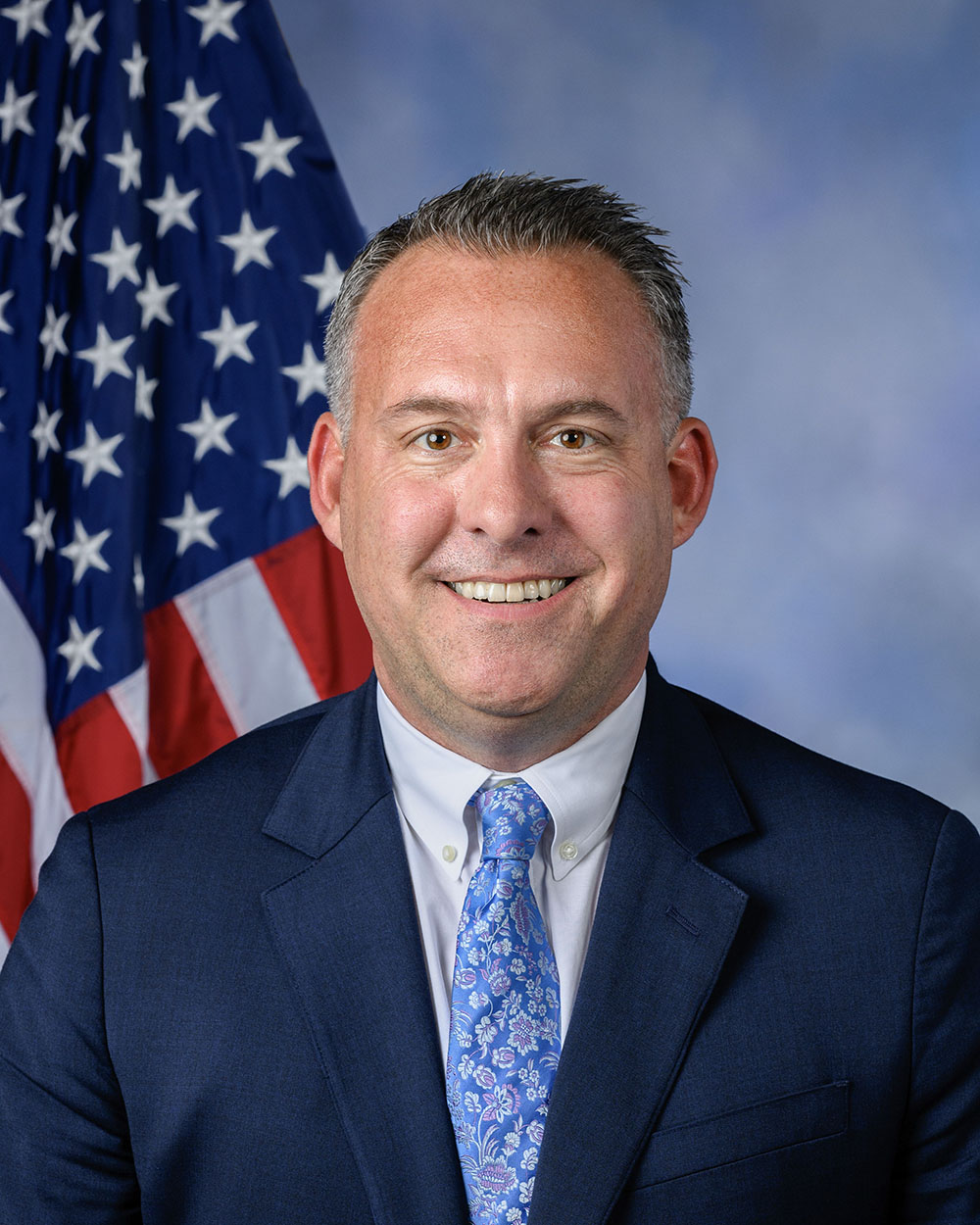
Adam Gray
100% support rate
Top opponent
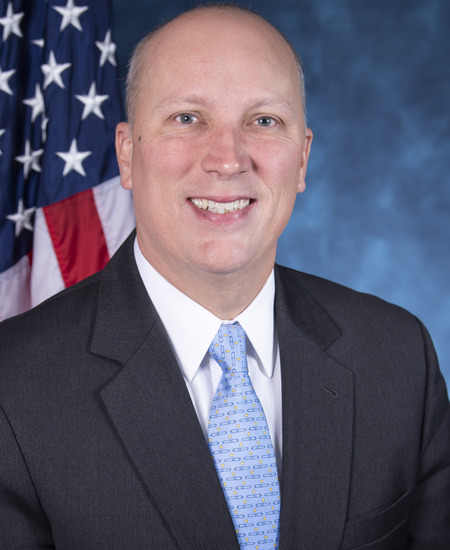
Chip Roy
0% support rate
Ranked legislators
10
5 support · 5 oppose
Key legislators

Who's moving collective bargaining in United States

Legislators moving collective bargaining in United States
Legislator Party Stance Support rate Votes
Adam Gray
Adam Gray House · District 13
D
Strong +
100% 7
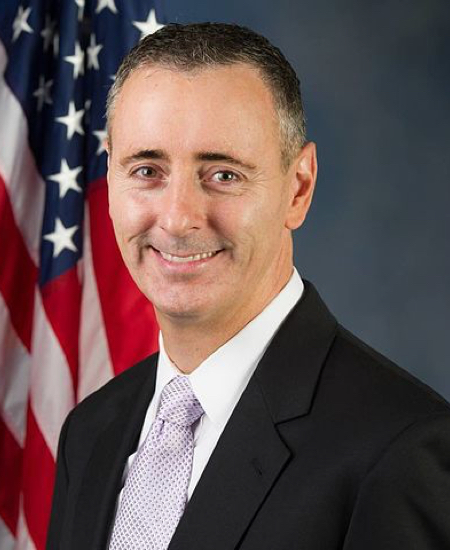
Brian K. Fitzpatrick
Brian K. Fitzpatrick House · District 1
R
Strong +
100% 7
Brittany Pettersen
Brittany Pettersen House · District 7
D
Strong +
100% 7
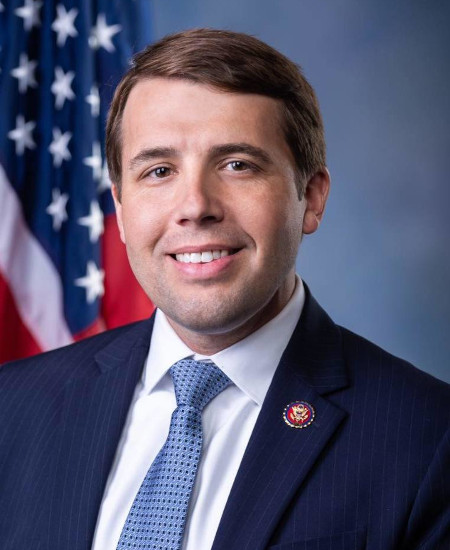
Chris Pappas
Chris Pappas House · District 1
D
Strong +
100% 7
Christopher H. Smith
Christopher H. Smith House · District 4
R
Strong +
100% 7
Chip Roy
Chip Roy House · District 21
R
Strong −
0% 7
Eric Burlison
Eric Burlison House · District 7
R
Strong −
0% 7
Scott Perry
Scott Perry House · District 10
R
Strong −
0% 7
Tom McClintock
Tom McClintock House · District 5
R
Strong −
0% 7
Celeste Maloy
Celeste Maloy House · District 2
R
Strong −
0% 6
Showing 21–30 of 88 bills

All labor & employment bills

in committee · United States · House Sep 30, 2025

HR 5664: Living Wage for Musicians Act of 2025

HR 5664, the Living Wage for Musicians Act of 2025, requires music streaming services to add a $4-$10 fee per subscription (50% of the subscription cost) to fund a new royalty program. This fee is collected from subscribers and deposited into the Artist Compensation Royalty Fund, which then distributes 90% of funds to featured artists based on their share of qualifying streams and 10% to a union fund for non-featured artists like session musicians. The bill directly affects streaming platforms (service providers) and musicians, including those not prominently featured on recordings. It creates a mandatory payment mechanism tied to streaming activity, with funds distributed quarterly after service providers submit required revenue data.
in committee · United States · House Feb 2, 2026

HR 6635: Bus Operator Safety and Security Act

HR 6635, the Bus Operator Safety and Security Act, requires new fixed-route buses over 30 feet long (with a 10+ year lifespan) purchased using federal transit funds to have physical barriers at the driver's workstation. These barriers must extend from floor to ceiling, fully enclose the workstation to block entry of people or objects, and not obstruct the driver's view. Transit agencies must install these barriers within two years of the law's enactment, unless the labor union representing bus drivers agrees to waive the requirement. The rule applies only to new buses bought with federal funds (excluding those from rural transportation programs) and directly affects transit agencies and bus drivers operating large fixed-route vehicles.
in committee · United States · House May 20, 2026

HR 7314: Advancing Commonsense Policies Act

# Summary of Legislative Document This document appears to be a comprehensive legislative act containing numerous provisions across various policy areas. The key sections include: ## Retirement and Employee Benefit Provisions (Sections 401-450) - Amendments to retirement plans including Roth IRA provisions, hardship withdrawal rules for 403(b) plans, and limitations on elective deferrals - New provisions allowing penalty-free withdrawals for domestic abuse victims - Rules for employer matching contributions treated as Roth contributions - Amendments to simplify retirement plan administration and allow retroactive benefit increases ## Veterans and Military Programs (Section 501) - Establishment of the "Boots to Business Program" to provide entrepreneurship training to veterans, military members, and their families ## Criminal Justice Provisions (Sections 601-602) - Increased penalties for human trafficking and coercion in school zones or near educational institutions ## Museum Creation (Sections 701-703) - Establishment of a commission to study creating a National Museum of Asian Pacific American History and Culture - Requirements for the commission's composition, duties, and reporting ## Semiconductor Industry Initiatives (Sections 801-804) - Findings about semiconductor supply chain importance - Coordination requirements with state economic development organizations - Reporting requirements on foreign direct investment in semiconductor manufacturing ## Equipment Approval (Section 901) - Amendments to Homeland Security Act regarding review process for equipment not meeting consensus standards ## NASA Real Property (Section 1001-1002) - Extension of NASA's authority to use enhanced use leasing for underutilized properties ## Congressional Rules (Sections 1101-1201) - Requirements for committee hearings on implementation - New rules for protecting whistleblowers' identities ## Maritime Port Study (Section 1301) - Mandate for study on foreign ownership of major U.S. container ports ## Budget and Appropriations (Sections 1401-1601) - Budgetary effects determination - Amendments to Federal Credit Union Act regarding board meeting frequency - Specific appropriations for various departments including Health and Human Services, Agriculture, State, Defense, Homeland Security, and Energy The document represents a complex legislative package with provisions affecting retirement planning, national security, veterans' benefits, cultural institutions, and multiple federal agency operations.
in committee · United States · House Feb 17, 2026

HR 7600: Postal Supervisors, Managers, and Postmasters Fairness Act of 2026

HR 7600, the Postal Supervisors, Managers, and Postmasters Fairness Act of 2026, requires the U.S. Postal Service to formally negotiate pay and benefits changes with unions representing supervisors, managers, and postmasters. Specifically, it mandates that the Postal Service provide written proposals to these unions 60 days before existing pay decisions expire or after new collective bargaining agreements affect these roles. The bill also shortens the dispute resolution timeline, requiring binding decisions from panels within 15 days after recommendations. This bill directly affects the Postal Service, the supervisors’ organization, and the postmasters’ organization by standardizing their negotiation process for pay and benefits.
in committee · United States · House Sep 2, 2025

HR 5088: Union Participation for All Act

HR 5088, the "Union Participation for All Act," repeals a provision in the 1959 Labor-Management Reporting and Disclosure Act (LMRDA) that barred individuals convicted of certain crimes (like bribery or fraud) from holding union leadership positions. This change directly affects union members with specific criminal convictions who previously could not serve in union offices. The bill removes Section 504 of the LMRDA, eliminating the ban on their eligibility for union leadership roles. It does not alter other union governance rules or create new requirements.
in committee · United States · Senate May 8, 2025

S 1697: RAISE Act of 2025

The RAISE Act of 2025 creates a refundable tax credit for K-12 teachers and early childhood educators based on their school's student poverty rate, with a base $1,000 credit plus potential additional amounts up to $14,000 for K-12 teachers and $9,000 for early childhood educators without bachelor's degrees. It also increases the deductible expense limit for teachers from $250 to $500 per year and establishes mandatory funding for school districts that maintain or increase teacher salaries, reserving 20% of funds over $2.2 billion for teacher salary incentive grants. The bill includes provisions to prevent employers from using the tax credit in collective bargaining or changing teacher assignments to avoid providing the credit. Eligibility requires specific teaching credentials and employment in qualifying schools with high poverty rates. These changes would apply to taxable years beginning after the bill's enactment date.
in committee · United States · House Nov 20, 2025

HR 1559: Postal Employee Appeal Rights Amendment Act of 2025

This bill amends federal law to expand appeal rights for certain postal employees to the Merit Systems Protection Board (MSPB). It specifically applies to postal workers in supervisory, professional, technical, clerical, administrative, or managerial roles who are not represented by a union under Section 1203 of federal labor law. The key change clarifies that these employees can now directly appeal personnel decisions (like discipline or termination) to the MSPB, rather than relying solely on internal postal processes. This modifies eligibility criteria for MSPB appeals under Title 39 of the U.S. Code.
in committee · United States · House Nov 20, 2025

HR 6015: VA Care and Benefits Accountability Act

This bill (HR 6015) ensures existing labor agreements between the Department of Veterans Affairs (VA) and employee unions remain in full effect through their scheduled terms. It also cancels two executive orders (14251 and 14343) that previously excluded VA from standard federal labor-management programs. The bill directly affects VA employees and their unions by preserving current collective bargaining rights and requiring VA to follow standard federal labor rules. It does not change veterans' benefits or healthcare access; it only modifies VA's internal labor relations procedures. This is a procedural bill focused on labor-management processes, not direct policy changes for veterans.
in committee · United States · House Mar 6, 2025

HR 932: Protecting VA Employees Act

HR 932, the Protecting VA Employees Act, repeals separate processes for removing, demoting, or suspending certain Department of Veterans Affairs (VA) employees and replaces them with a single, consolidated procedure. It also restores disciplinary and grievance procedures for Veterans Health Administration (VHA) staff to their pre-2017 state, as they existed before the VA Accountability and Whistleblower Protection Act of 2017. These changes directly affect VA employees, particularly VHA personnel, by altering how disciplinary actions are conducted under the agency's rules.
in committee · United States · House Nov 19, 2025

HR 6141: Fair Access to Justice for Union Members Act

This bill removes a requirement that union members must first exhaust internal union procedures (including waiting up to four months) before taking legal action against their union or its officers. It directly affects union members who wish to sue their union for grievances or violations of rights. The key change amends the Labor-Management Reporting and Disclosure Act to eliminate this pre-litigation step, allowing members to pursue court cases more quickly. The amendment takes effect 18 months after the bill is enacted.
Showing 21 to 30 of 88 bills
Previous 1 2 3 4 9 Next