Issue · Housing

Housing (Homeownership)

Every housing bill, vote, and legislator stance in United States, automatically classified by Maddy, our AI policy reader.

Total bills
157
119th Congress
Top supporter
Adam B. Schiff
100% support rate
Top opponent
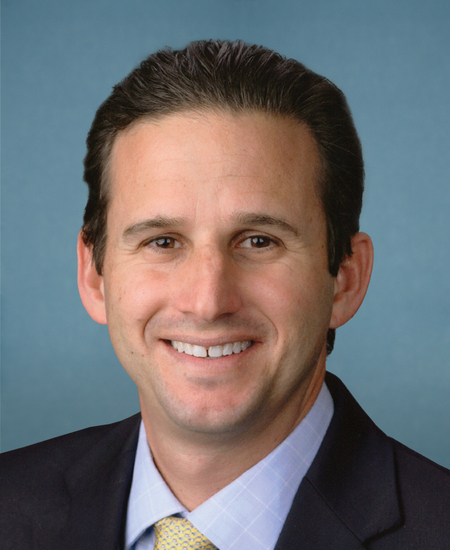
Brian Schatz
0% support rate
Ranked legislators
10
5 support · 5 oppose
Key legislators

Who's moving homeownership in United States

Legislators moving homeownership in United States
Legislator Party Stance Support rate Votes
Adam B. Schiff
Adam B. Schiff Senate
D
Strong +
100% 3
Alex Padilla
Alex Padilla Senate
D
Strong +
100% 3
Amy Klobuchar
Amy Klobuchar Senate
D
Strong +
100% 3
Andy Kim
Andy Kim Senate
D
Strong +
100% 3
Angela D. Alsobrooks
Angela D. Alsobrooks Senate
D
Strong +
100% 3
Brian Schatz
Brian Schatz Senate
D
Strong −
0% 3
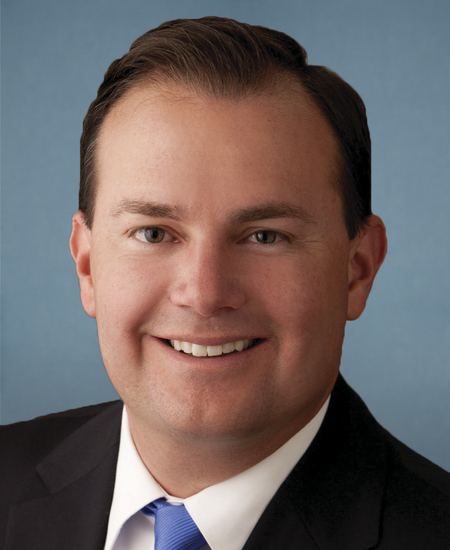
Mike Lee
Mike Lee Senate
R
Strong −
0% 3
Rand Paul
Rand Paul Senate
R
Strong −
0% 3
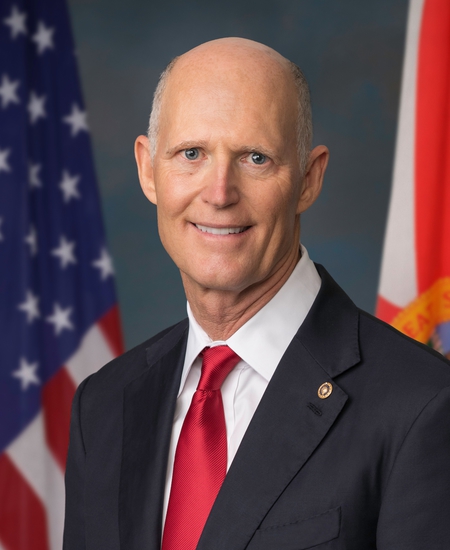
Rick Scott
Rick Scott Senate
R
Strong −
0% 3
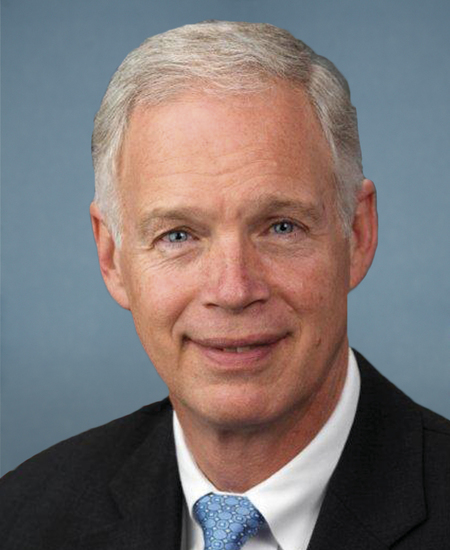
Ron Johnson
Ron Johnson Senate
R
Strong −
0% 3
Showing 81–90 of 157 bills

All housing bills

in committee · United States · House Feb 17, 2026

HR 7596: Improving Housing Access Act

HR 7596, the Improving Housing Access Act, requires the Comptroller General to study barriers to housing for elderly and disabled people within one year of the bill's enactment. The study will specifically examine potential improvements to two federal housing programs: supportive housing for the elderly (under Section 202 of the 1959 Housing Act) and supportive housing for people with disabilities (under Section 811 of the Cranston-Gonzalez Act). It focuses on identifying ways to improve access, including options for providing financial support to these programs. The bill does not create new benefits but mandates a review to inform future policy decisions.
Sub-Topics Affordable Housing Homeownership Housing Finance Tags People with Disabilities Seniors
in committee · United States · House Apr 17, 2025

HR 2928: Mortgage Relief for Disaster Survivors Act

HR 2928, the Mortgage Relief for Disaster Survivors Act, provides temporary payment relief for homeowners and renters with federally backed mortgages in areas affected by federally declared disasters. Borrowers with damaged or destroyed properties can request an 180-day pause on mortgage payments (extendable by another 180 days) from their loan servicer by submitting written requests and proof of property damage. During this relief period, no fees, penalties, or additional interest accrue beyond what would have been due under the original loan terms. This applies to loans backed by Fannie Mae, Freddie Mac, or similar programs, including both single-family and multifamily residential properties.
in committee · United States · House Feb 26, 2025

HR 1607: HEIR Act of 2025

This bill modifies disaster recovery and mitigation programs to help homeowners with "heir property" access aid. It requires HUD to create a standardized affidavit form and accept alternative documents (like school or benefit letters) for proving ownership, instead of traditional deeds. The affidavit cannot require notarization and must be available in multiple languages at application. It directly affects residents in Presidentially declared disaster areas who own property inherited through intestacy (without a will) as tenants in common.
Sub-Topics Homeownership
in committee · United States · House Feb 4, 2026

HR 7009: Home Affordability for Guard and Reserve Act

This bill expands eligibility for VA home loans to certain reserve component members and National Guard personnel who previously did not qualify as veterans. It creates a new category for individuals with at least 14 days of qualifying service (including inactive duty training, annual training, or full-time National Guard duty) who complete entry-level training. These members gain access to guaranteed home loans but must pay an additional 1% loan fee. The VA must notify qualifying members after they finish training, and the changes apply retroactively to service since September 11, 2001.
in committee · United States · House Sep 1, 2026

HR 5402: Credit Access and Inclusion Act of 2026

HR 5402, the Credit Access and Inclusion Act of 2025, allows utility and telecommunications companies to report consumers' on-time payment history for services like electricity, gas, and internet to credit bureaus. This directly affects consumers who lack traditional credit histories (e.g., renters or those without credit cards), potentially helping them build credit through consistent utility payments. The bill permits reporting only for payment activity (not usage data), requires companies to honor payment plans without reporting late payments, and gives consumers the right to opt out. It also mandates a GAO study within two years to assess the impact of this reporting on consumer credit scores and access to credit.
in committee · United States · Senate Jan 16, 2025

S 127: Whole-Home Repairs Act of 2025

The Whole-Home Repairs Act of 2025 establishes a federal pilot program to fund repairs that improve accessibility, safety, and energy efficiency in homes owned by low-income individuals or rented as affordable housing. It directly affects eligible homeowners (with income at or below 80% of area median income who occupy their primary residence) and eligible landlords (small-scale owners of affordable rental properties with specific income and ownership criteria). The program provides grants to homeowners and forgivable loans to landlords for repairs covering accessibility modifications, habitability fixes, and energy efficiency upgrades, with landlords required to maintain affordability for three years and cap rent increases. Administered by local or state entities using up to $25 million in existing HUD funds, the pilot runs until 2030 and mandates coordination with other housing programs to avoid duplication.
in committee · United States · House Feb 5, 2026

HR 7400: Making Homeownership Affordable Again Act

HR 7400, the "Making Homeownership Affordable Again Act," removes the current $250,000 ($500,000 for married couples) limit on tax-free profit when selling a primary residence and extends this exclusion to sales involving first-time homebuyers. It directly affects homeowners selling their current home and first-time homebuyers purchasing a home. The key provision eliminates the dollar cap on capital gains exclusion under tax code Section 121 and defines "first-time homebuyer" as someone without home ownership in the past three years. This policy change applies to home sales occurring after the bill's enactment.
in committee · United States · House Oct 1, 2025

HR 5387: Saving the American Dream Act

This bill requires five federal agencies (Housing and Urban Development, Agriculture, Veterans Affairs, Treasury, and the Federal Housing Finance Agency) to coordinate housing data sharing and jointly propose policy solutions. Within one year of enactment, the agencies must establish a shared agreement and submit a report to Congress addressing mortgage costs, housing construction barriers, local regulations, insurance availability, down payment assistance, and disaster resilience. The report will outline specific proposals to improve housing affordability and market efficiency. This is a procedural bill focused on interagency coordination, not direct policy changes or benefits for homeowners.
in committee · United States · Senate Apr 2, 2025

S 1260: Rural Housing Service Reform Act of 2025

The Rural Housing Service Reform Act of 2025 establishes a permanent housing preservation and revitalization program to maintain affordable multifamily housing projects financed under sections 514, 515, and 516 of the Housing Act of 1949, authorizing $200 million annually for fiscal years 2026-2030 to support loan restructuring, rental assistance renewal, and technical assistance for owners. The bill creates a $50 million annual set-aside for Native community development financial institutions to increase homeownership opportunities for Indian Tribes, Alaska Native communities, and Native Hawaiian communities. Additionally, it modifies Section 504 loans to reserve 60% for very low-income applicants and increases the loan cap from $7,500 to $15,000, while adjusting rural housing voucher processes to allow more frequent recalculation based on changing household circumstances.
Sub-Topics Community Development Homeownership Property Development Tags Rural Communities Tribal Nations
in committee · United States · House Dec 18, 2025

HR 6900: American Affordability Act of 2025

# Summary of Proposed Tax Code Amendment This document is a comprehensive proposal for tax code amendments, primarily focused on extending, modifying, and creating new tax credits related to clean energy, energy efficiency, and environmental initiatives. The key components include: ## Housing and Residential Credits - **First-Time Homebuyer Tax Credit**: A refundable credit for first-time homebuyers (Section 13001) - **Renter Tax Credit**: A refundable credit for renters paying more than 30% of their adjusted gross income in rent (Section 13002) ## Clean Energy Credits (Sections 21001-21007) - Extended clean energy production credit with a new phase-out date (2032 or when greenhouse gas emissions reach 25% of 2022 levels) - Extended clean electricity investment credit for wind and solar facilities - Restored credit for wind and solar leasing arrangements - Extended clean hydrogen production credit (construction date reverted to 2033) - Extended residential clean energy credit (termination date moved to 2034) - Reinstated special rate for sustainable aviation fuel (35 cents/ gallon for certain facilities) ## Energy Efficiency Credits (Sections 22001-22004) - Restored product identification number requirement for energy-efficient home improvements - Extended new energy efficient home credit (acquisition date moved to 2032) - Repealed termination of new energy efficient commercial buildings deduction - Restored cost recovery for energy property ## Electric Vehicle and Charging Infrastructure Credits (Sections 23001-23005) - Extended previously-owned vehicle credit (acquisition date moved to 2032) - Extended clean vehicle credit (placement in service date moved to 2032) - Extended commercial clean vehicles credit (termination date moved to 2032) - Extended alternative fuel vehicle refueling property credit (termination date moved to 2032) - Created a new credit for electric bicycles (30% of cost, up to $5,000 per bicycle) ## Clean Infrastructure and Resiliency Credits (Sections 24001-24007) - Created qualifying water reuse project credit (30% of qualified investment) - Created recycling property investment credit (30% of qualified investment with phase-out) - Excluded amounts received from State-based catastrophe loss mitigation programs from gross income - Expanded exclusion for certain emergency agricultural assistance - Created credit for disaster mitigation expenditures (30% of qualifying mitigation activities) - Created qualifying electric power transmission line credit (30% of qualified investment) - Created qualifying advanced battery project credit (30% of qualified investment with $3 billion cap) The proposed amendments generally extend existing credits through 2032-2037, with some credits having phase-out schedules and others having specific termination dates. The document also includes numerous conforming amendments to other sections of the tax code to accommodate these changes.
Showing 81 to 90 of 157 bills
Previous 1 8 9 10 16 Next