Issue · Housing

Housing (Homeownership)

Every housing bill, vote, and legislator stance in United States, automatically classified by Maddy, our AI policy reader.

Total bills
157
119th Congress
Top supporter
Adam B. Schiff
100% support rate
Top opponent
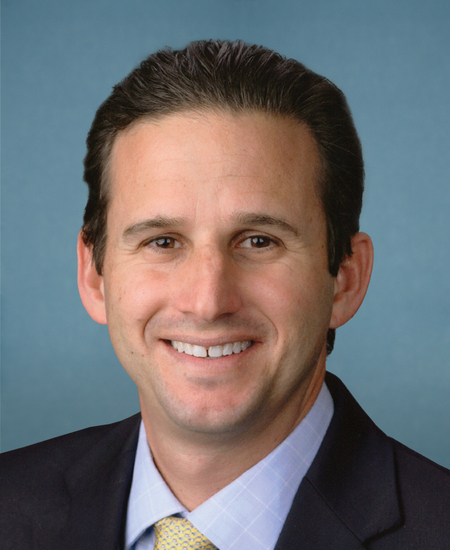
Brian Schatz
0% support rate
Ranked legislators
10
5 support · 5 oppose
Key legislators

Who's moving homeownership in United States

Legislators moving homeownership in United States
Legislator Party Stance Support rate Votes
Adam B. Schiff
Adam B. Schiff Senate
D
Strong +
100% 3
Alex Padilla
Alex Padilla Senate
D
Strong +
100% 3
Amy Klobuchar
Amy Klobuchar Senate
D
Strong +
100% 3
Andy Kim
Andy Kim Senate
D
Strong +
100% 3
Angela D. Alsobrooks
Angela D. Alsobrooks Senate
D
Strong +
100% 3
Brian Schatz
Brian Schatz Senate
D
Strong −
0% 3
Mike Lee
Mike Lee Senate
R
Strong −
0% 3
Rand Paul
Rand Paul Senate
R
Strong −
0% 3
Rick Scott
Rick Scott Senate
R
Strong −
0% 3
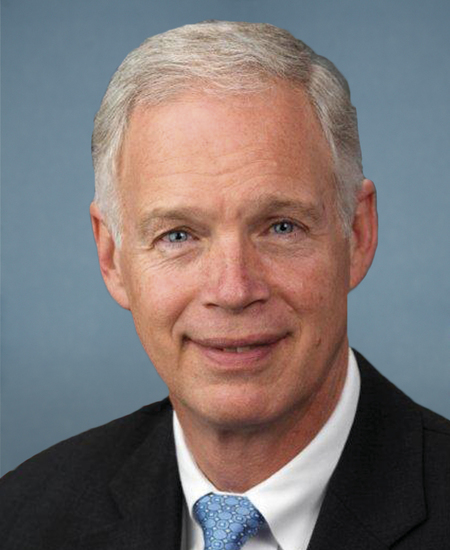
Ron Johnson
Ron Johnson Senate
R
Strong −
0% 3
Showing 11–20 of 157 bills

All housing bills

in committee · United States · Senate Jun 23, 2026

S 4854: Foster Youth Housing Opportunity Act

The Foster Youth Housing Opportunity Act aims to improve housing stability for current and former foster youth by expanding their access to federal housing assistance and supportive services. It amends existing laws to allow states to use funding for services such as financial literacy counseling, help with lease contracts, and assistance with security deposits and moving costs. The bill also clarifies that these supportive services do not count toward spending limits on room and board, enabling more funds to be used for housing support. Additionally, it requires the Departments of Health and Human Services and Housing and Urban Development to create joint guidance within a year to better coordinate programs for youth aging out of foster care. Finally, the act mandates a report to Congress within three years detailing how many eligible youth are receiving housing aid and the outcomes of these programs.
in committee · United States · Senate Jun 23, 2026

S 4861: Housing Financial Literacy Act of 2026

The Housing Financial Literacy Act of 2026 offers a financial incentive for first-time homebuyers by reducing their mortgage insurance premiums. To qualify for this discount, applicants must complete a financial literacy housing counseling program before signing their mortgage application or sales agreement. The bill lowers the premium rate by 25 basis points compared to the standard amount set by the Secretary, provided the counseling is finished prior to the mortgage signing. This policy directly affects individuals purchasing their first home who participate in the required educational program.
in committee · United States · House Jun 29, 2026

HR 9514: Homeownership Eligibility Reform Act

The Homeownership Eligibility Reform Act restricts access to government-backed and private mortgage insurance for single-family homes to individuals who are U.S. citizens. Specifically, the bill amends laws governing the Federal Housing Administration, Fannie Mae, and Freddie Mac to require that borrowers for one-to-four-unit properties must be citizens to qualify for their mortgage products. This change directly affects foreign nationals and non-citizen residents who currently might purchase homes with these types of financing, effectively limiting their eligibility for these specific mortgage programs.
in committee · United States · House May 14, 2026

HR 8830: Flood Mapping Modernization and Homeowner Empowerment Pilot Program Act of 2026

This bill establishes a pilot program to help local governments in large urban areas create and share better maps that show the risk of urban flooding, which includes water damage from heavy rain and overwhelmed drainage systems. The Federal Emergency Management Agency will award grants to up to 12 cities and stormwater authorities to develop technology-based tools that provide specific flood risk assessments for individual buildings and incorporate climate trends. Funding is available for fiscal years 2027 through 2030, with grants covering up to 75% of project costs and prioritizing communities that are highly vulnerable to sea-level rise or have populations facing socioeconomic challenges. Recipients must complete their projects within 18 months and submit reports on their progress and lessons learned to the agency and Congress.
in committee · United States · Senate Jun 17, 2026

S 4804: Manufactured Housing Lending Act

The Manufactured Housing Lending Act creates a pilot program to help expand access to loans for manufactured homes. It directs two major government-backed lenders to start buying or sharing the risk of new loans for these homes within a year of the program's launch. To qualify, the homes must be placed in nonprofit, government, or resident-owned communities with long-term or permanent site leases, and the program will include standard consumer protections. The lenders participating in this pilot will be allowed to earn a lower return on these specific loans compared to other similar lending activities.
in committee · United States · House Jun 18, 2026

HR 9380: Expanding Access to Credit through Consumer-Permissioned Data Act

This bill requires mortgage lenders to consider alternative credit information, such as rental payments and bank statements, when evaluating applicants who request it. It specifically targets individuals who lack a traditional credit history with major reporting agencies, a group that disproportionately includes low-income consumers, younger people, and people of color. Under the new rules, lenders must treat this permissioned data with the same weight as standard credit reports if the applicant authorizes its use and confirms it better reflects their financial standing. The legislation also mandates that underwriting systems be updated to automatically identify and include this data, while creditors must provide clear notices in eight common languages explaining the applicant's rights.
in committee · United States · House Jun 25, 2026

HR 9461: Working Families Home Construction Act of 2026

The Working Families Home Construction Act of 2026 allows Fannie Mae and Freddie Mac to buy and securitize specific construction loans designed to help build owner-occupied homes. These loans, which can cover costs like land acquisition and construction, are limited to $100,000 per unit and $2.4 million per project, and must be issued by approved lenders to builders who contribute at least 10% of the project's capital. To qualify, projects must receive local government approval and be sold to families earning between 90% and 130% of the area median income, with buyers required to live in the home for at least one year. The bill also directs that 22% of the available capital for these enterprises be allocated specifically to purchasing these qualifying construction loans.
in committee · United States · House Jun 25, 2026

HR 9460: Sustainable Homeownership Act

The Sustainable Homeownership Act modifies the rules for Freddie Mac and Fannie Mae to limit their purchase of high-risk mortgages while introducing stricter insurance requirements for loans with high loan-to-value ratios. It mandates that private insurers guarantee specific portions of unpaid mortgage balances, with higher coverage percentages required for riskier loans, though it includes exceptions for refinancing, state programs, and low-income borrowers. The bill also establishes new financial oversight measures, such as setting a return on equity range between 9 and 13 percent and requiring enterprises to remit excess earnings to the Treasury if they exceed that range. Additionally, the legislation outlines a plan to eventually convert the government-sponsored enterprises' preferred stock into common equity and prepare for their exit from federal conservatorship.
in committee · United States · House Jun 25, 2026

HR 9480: To amend the Internal Revenue Code of 1986 to allow a deduction for amounts contributed to home savings accounts, and for other purposes.

This bill creates a new type of tax-advantaged savings account called a "home savings account" designed to help individuals save for housing expenses. It allows taxpayers to deduct up to $10,000 annually from their income for cash contributions made to these accounts, with a higher limit of $20,000 for married couples filing jointly. Money withdrawn from the account is tax-free only if it is used to buy a principal residence or pay down the mortgage on that home; otherwise, the withdrawal is taxed as income and subject to a 20% penalty. The legislation also permits a one-time transfer of funds from an existing retirement plan into a new home savings account and includes specific rules for handling excess contributions, account transfers due to divorce, and inheritance after the account holder's death.
in committee · United States · House Jun 11, 2026

HR 9263: Housing Supply Fund Act of 2026

The Housing Supply Fund Act of 2026 creates a new $5 billion fund within the Treasury Department to provide competitive grants for affordable housing projects. Eligible recipients include certified financial institutions, nonprofit housing organizations, and public housing agencies, with funds intended for low- and very low-income renters and homeowners earning up to 120 percent of the area median income. Grant money can be used to establish loan reserves, capitalize revolving funds, provide risk-sharing loans, or convert commercial properties into affordable housing in urban, suburban, rural, and Tribal areas. The bill requires that all awarded funds be committed for use within four years, with unused amounts recaptured for future funding rounds, while limiting administrative expenses to no more than 5 percent of the total appropriation.
Showing 11 to 20 of 157 bills