Issue · Housing

Housing (Housing Finance)

Every housing bill, vote, and legislator stance in United States, automatically classified by Maddy, our AI policy reader.

Total bills
154
119th Congress
Top supporter
Adam B. Schiff
100% support rate
Top opponent
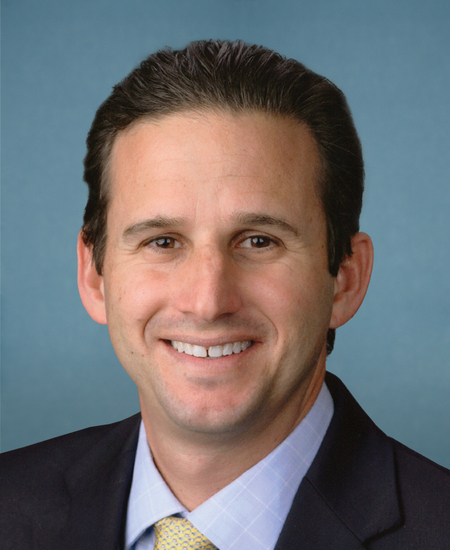
Brian Schatz
0% support rate
Ranked legislators
10
5 support · 5 oppose
Key legislators

Who's moving housing finance in United States

Legislators moving housing finance in United States
Legislator Party Stance Support rate Decisive votes
Adam B. Schiff
Adam B. Schiff Senate
D
Strong +
100% 3
Alex Padilla
Alex Padilla Senate
D
Strong +
100% 3
Amy Klobuchar
Amy Klobuchar Senate
D
Strong +
100% 3
Andy Kim
Andy Kim Senate
D
Strong +
100% 3
Angela D. Alsobrooks
Angela D. Alsobrooks Senate
D
Strong +
100% 3
Brian Schatz
Brian Schatz Senate
D
Strong −
0% 3
Mike Lee
Mike Lee Senate
R
Strong −
0% 3
Rand Paul
Rand Paul Senate
R
Strong −
0% 3
Rick Scott
Rick Scott Senate
R
Strong −
0% 3
Ron Johnson
Ron Johnson Senate
R
Strong −
0% 3
Showing 11–20 of 154 bills

All housing bills

in committee · United States · House Aug 10, 2026

HR 10075: First-Time Homebuyer Affordability Act

The First-Time Homebuyer Affordability Act amends the Internal Revenue Code to exempt qualified mortgage bonds from the federal government's annual volume cap on tax-exempt securities. By removing this limit, the bill allows for a greater issuance of these specific bonds, which are typically used to finance home loans for first-time buyers. This change directly affects financial markets and lenders by enabling them to issue more tax-advantaged debt without being constrained by existing statutory limits. The provision applies to all obligations issued after the date of the Act's enactment.
in committee · United States · Senate Aug 6, 2026

S 5285: Visitable Inclusive Tax credits for Accessible Living (VITAL) Act

The VITAL Act increases federal low-income housing tax credit allocations to states starting in 2026, with amounts adjusted annually for inflation to expand the supply of affordable and disability-accessible housing. The bill provides a 50% boost to the tax credit value for new buildings where at least half of the units are designed to meet accessibility standards for people with disabilities and are located in areas with high walkability. To ensure these accessible units are actually built, the legislation requires states to allocate credits so that at least 40% of all new low-income housing units created over any three-year period meet these specific disability access criteria.
Sub-Topics Affordable Housing Historic Preservation Housing Finance Tags People with Disabilities
in committee · United States · House Aug 6, 2026

HR 10049: Visitable Inclusive Tax credits for Accessible Living (VITAL) Act

The VITAL Act aims to increase the supply of affordable housing that is accessible to people with disabilities and older adults by modifying federal tax credit rules. It achieves this by raising the amount of funding states can receive for low-income housing projects and requiring that at least 40 percent of these funds support buildings specifically designed for individuals with disabilities. Additionally, the bill offers a financial bonus for projects located in walkable neighborhoods and mandates that these accessible units meet specific design standards, such as wider doorways and lowered counters. These changes are intended to help residents remain independent in their communities rather than moving to institutional care settings.
Sub-Topics Tax Credits Affordable Housing Historic Preservation Housing Finance Tags People with Disabilities
in committee · United States · House Jul 23, 2026

HR 9906: FIXER Act

The FIXER Act allows state and local governments to issue tax-free bonds for specific housing projects without being limited by the usual spending caps. This change applies to buildings that need repairs or upgrades, such as low-income housing where the required affordable rental period has ended or federally assisted structures. By removing these limits, the bill aims to make it easier to raise funds for preserving and improving existing residential rental properties. Additionally, the act adjusts rules on buying existing buildings to allow up to 50 percent of bond funds to be used for such acquisitions, up from the previous 15 percent limit.
in committee · United States · House Jul 2, 2026

HR 9584: The Housing Voucher Funding Reallocation Act

This bill, known as the Housing Voucher Funding Reallocation Act, aims to change how unspent federal housing funds are managed at the end of each fiscal year. It directly affects public housing agencies that administer tenant-based assistance, such as housing vouchers. Under the new rules, agencies that do not use all their allocated funds must return the leftover money to the federal government. These recaptured funds are then redistributed to other public housing agencies that have exhausted their entire budgets. The goal is to ensure that available housing assistance reaches more eligible individuals rather than remaining unused in agencies with excess capacity.
in committee · United States · House Jun 30, 2026

HR 9540: Community Housing Act of 2026

The Community Housing Act of 2026 aims to increase the supply and affordability of housing by directing significant new federal funding to programs like the Housing Trust Fund and the Capital Magnet Fund. It establishes a new Office of Community Land Use and Zoning within HUD to help states and localities reform restrictive zoning laws that limit housing development. The bill also expands financial support for rural areas, creates a new fund to promote shared equity and community land trusts, and removes a legal cap on the number of public housing units agencies can manage. Additionally, it provides grants to protect tenants from eviction and authorizes low-cost financing options for affordable housing projects.
in committee · United States · House Jun 25, 2026

HR 9461: Working Families Home Construction Act of 2026

The Working Families Home Construction Act of 2026 allows Fannie Mae and Freddie Mac to buy and securitize specific construction loans designed to help build owner-occupied homes. These loans, which can cover costs like land acquisition and construction, are limited to $100,000 per unit and $2.4 million per project, and must be issued by approved lenders to builders who contribute at least 10% of the project's capital. To qualify, projects must receive local government approval and be sold to families earning between 90% and 130% of the area median income, with buyers required to live in the home for at least one year. The bill also directs that 22% of the available capital for these enterprises be allocated specifically to purchasing these qualifying construction loans.
in committee · United States · House Jun 11, 2026

HR 9267: Transit Oriented Development Act of 2026

This bill creates a new tax incentive to encourage the construction and renovation of affordable housing near public transportation hubs. It directly affects developers and investors by increasing the Low-Income Housing Tax Credit for buildings located within half a mile of rail, bus, harbor, or waterway stations in high-density zones. The credit amount is boosted to 150% of the standard value, rising to 155% for projects in Hawaii, Alaska, or U.S. territories, with limits on how many areas can be designated in each region. Additionally, the bill requires the Department of Housing and Urban Development to study geographic cost-of-living differences and propose changes to how tax credit funds are distributed among states.
in committee · United States · House Jun 11, 2026

HR 9263: Housing Supply Fund Act of 2026

The Housing Supply Fund Act of 2026 creates a new $5 billion fund within the Treasury Department to provide competitive grants for affordable housing projects. Eligible recipients include certified financial institutions, nonprofit housing organizations, and public housing agencies, with funds intended for low- and very low-income renters and homeowners earning up to 120 percent of the area median income. Grant money can be used to establish loan reserves, capitalize revolving funds, provide risk-sharing loans, or convert commercial properties into affordable housing in urban, suburban, rural, and Tribal areas. The bill requires that all awarded funds be committed for use within four years, with unused amounts recaptured for future funding rounds, while limiting administrative expenses to no more than 5 percent of the total appropriation.
in committee · United States · House May 21, 2026

HR 8996: Rental Housing Investment Act

The Rental Housing Investment Act provides tax incentives to encourage the development of new long-term residential rental properties in the United States. It allows developers to take an accelerated depreciation deduction of up to $150,000 per unit for buildings containing at least two dwelling units, with an increased limit of $250,000 per unit for projects designated as affordable housing. To ensure these properties remain available for rent, the bill includes rules that require the buildings to be used for rental purposes for at least 10 years, or 15 years for affordable housing, before the tax benefits are recaptured. These changes apply to properties placed in service after a 12-month delay following the law's enactment.
Showing 11 to 20 of 154 bills