Issue · Healthcare

Healthcare

Every healthcare bill, vote, and legislator stance in United States, automatically classified by Maddy, our AI policy reader.

Total bills
2,910
119th Congress
Top supporter
Darline Graham
82% support rate
Top opponent
Rick Scott
19% support rate
Ranked legislators
10
5 support · 5 oppose
Key legislators

Who's moving healthcare in United States

Legislators moving healthcare in United States
Legislator Party Stance Support rate Decisive votes
Darline Graham
Darline Graham Senate
R
Strong +
82% 11
Peter Welch
Peter Welch Senate
D
Strong +
81% 27
Ron Wyden
Ron Wyden Senate
D
Support
78% 27
Alex Padilla
Alex Padilla Senate
D
Support
77% 26
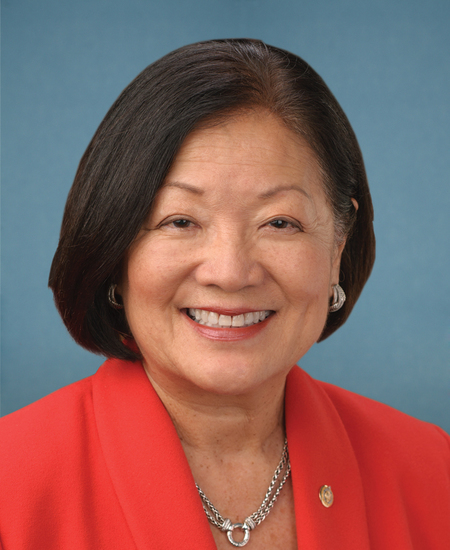
Mazie K. Hirono
Mazie K. Hirono Senate
D
Support
74% 27
Rick Scott
Rick Scott Senate
R
Strong −
19% 27
Ashley Moody
Ashley Moody Senate
R
Oppose
22% 27
Rand Paul
Rand Paul Senate
R
Oppose
22% 27
Brad Knott
Brad Knott House · District 13
R
Oppose
28% 18
Pat Harrigan
Pat Harrigan House · District 10
R
Oppose
28% 18
Showing 811–820 of 2,910 bills

All healthcare bills

in committee · United States · Senate Mar 5, 2026

S 4008: Promoting Dental Health Act

The Promoting Dental Health Act extends federal funding for oral health programs through 2031, directly supporting community dental health initiatives and disease prevention efforts. The bill updates the authorization periods for two specific programs under the Public Health Service Act, shifting coverage from previous years to the 2027-2031 timeframe. This reauthorization allows continued government support for oral health promotion activities without requiring new legislation to maintain existing funding streams.
Sub-Topics Public Health
in committee · United States · Senate Mar 25, 2026

SCONRES 31: A concurrent resolution recognizing the duty of Congress to meet the needs of working women.

This concurrent resolution formally recognizes Congress's duty to protect the rights and economic security of working women in the United States. It highlights concerns about wage gaps, workplace discrimination, and recent policy changes that the bill's sponsors claim have disproportionately harmed women in the workforce. The document calls for federal action to ensure equal pay, workplace safety, access to healthcare, and the right to unionize, while affirming the importance of women's contributions to the economy. As a non-binding statement of principle, it does not create new laws but serves to express congressional intent and guide future legislative priorities.
in committee · United States · House Mar 30, 2026

HR 8158: Reproductive Healthcare Leave Act

This bill would create a federal paid leave program allowing employees to take up to 96 hours of paid time off each year for reproductive health needs, including menstrual care, endometriosis, fertility treatments, and pregnancy-related procedures. It applies to private employers with at least five employees and certain government workers, requiring employers to grant this leave upon request without requiring employees to find replacements during their absence. The legislation prohibits retaliation against employees who use this leave and establishes enforcement mechanisms through the Department of Labor, including civil penalties for violations. Employers with existing paid leave policies that already cover these reproductive health reasons would not need to provide additional leave under this bill.
in committee · United States · Senate Mar 12, 2026

S 4070: Diabetes Foot Health Access and Modernization Act of 2026

This bill, known as the Diabetes Foot Health Access and Modernization Act of 2026, makes two main changes to federal health insurance programs. First, it allows podiatric physicians to provide covered physician services under Medicaid, ensuring patients have access to specialized foot and ankle care. Second, it updates Medicare rules to clarify documentation requirements for diabetic shoes, specifying that a physician must confirm a patient has diabetes and related foot conditions before these shoes are covered. The changes take effect on January 1, 2026 for Medicaid podiatry services and January 1, 2028 for Medicare diabetic shoe documentation.
in committee · United States · Senate Mar 3, 2026

S 3963: Rural Emergency Response Support Act

This bill would allow employers of emergency medical technicians and paramedics in rural areas to avoid paying overtime wages under certain conditions. It specifically exempts public agencies in communities with fewer than 100,000 residents and private contractors serving those areas from overtime requirements for these workers. The changes would be made to the Fair Labor Standards Act of 1938, which currently sets federal overtime pay rules. The legislation aims to address staffing challenges in rural emergency medical services by providing flexibility in compensation for these essential workers.
Sub-Topics Labor Standards
in committee · United States · Senate Mar 4, 2026

S 3990: PrEP Access and Coverage Act of 2026

This bill, the PrEP Access and Coverage Act of 2026, requires most health insurance plans to cover HIV prevention medication without charging patients any cost-sharing fees. It directly affects people enrolled in private insurance, Medicare, Medicaid, and other government health programs by mandating that these plans cover the medication, related lab tests, and follow-up care without requiring prior approval. The law also prohibits insurance companies from denying life, disability, or long-term care insurance to individuals taking HIV prevention medication and requires a public education campaign to increase awareness about the medication.
in committee · United States · Senate Apr 29, 2026

S 4043: Health Care for Homeless Veterans Act

This bill makes permanent the authority of the Secretary of Veterans Affairs to provide treatment and rehabilitation services to seriously mentally ill and homeless veterans. It amends the United States Code by removing a temporary expiration clause that previously limited this program. The legislation directly affects veterans who face both mental health challenges and homelessness, ensuring they can continue receiving support without interruption. By codifying this authority into law, the bill removes the need for periodic renewal of the program.
in committee · United States · House Mar 9, 2026

HR 7868: Expanding Support for Living Donors Act of 2026

This bill, titled the Expanding Support for Living Donors Act of 2026, amends the Public Health Service Act to expand financial assistance for individuals who donate organs while alive. It directly affects living organ donors by removing income restrictions and increasing the maximum reimbursement amount for their qualifying medical expenses. The legislation sets a new maximum reimbursement of $10,000 for fiscal year 2027, with automatic annual adjustments based on inflation, and requires the Secretary of Health and Human Services to submit detailed annual reports on program funding, participation, and outcomes. Additionally, the bill mandates a Government Accountability Office study to examine how Medicare could potentially cover costs currently reimbursed through this program.
Sub-Topics Medicare Public Health
in committee · United States · House Mar 17, 2026

HR 7877: Shane DiGiovanna Act

This bill requires the Secretary of Health and Human Services to create a two-year demonstration program that would make certain wound care treatments mandatory for Medicaid coverage for people with epidermolysis bullosa. The program would include over-the-counter medications, antiseptics, antibiotic ointments, and specific wound care supplies such as dressings and bandages. It would operate nationwide and require states to include these items and services in their Medicaid plans or waivers. At the end of the program, the Secretary must submit a report to Congress evaluating the program's impact on treatment costs and health outcomes, along with recommendations on preventing hospitalizations.
Sub-Topics Medicaid
in committee · United States · Senate Apr 29, 2026

S 4140: Carlton H. Ingram Veterans’ Benefits Protection Act

This bill, known as the Carlton H. Ingram Veterans' Benefits Protection Act, amends the Department of Veterans Affairs' disability rating system to ensure that a veteran's disability level is assessed without considering the positive effects of medication or treatment. The key provision requires the VA to establish a baseline disability rating that reflects the veteran's condition before treatment, ensuring compensation is based on the underlying disability rather than improvements from medical care. Veterans seeking compensation for additional disabilities caused by or worsened by their treatment for service-connected conditions remain eligible for benefits under this change. The legislation aims to provide a more accurate reflection of a veteran's true disability status when determining compensation levels.
Showing 811 to 820 of 2,910 bills
Previous 1 … 81 82 83 … 291 Next