Issue · Healthcare

Healthcare

Every healthcare bill, vote, and legislator stance in United States, automatically classified by Maddy, our AI policy reader.

Total bills
2,910
119th Congress
Top supporter
Darline Graham
82% support rate
Top opponent
Rick Scott
19% support rate
Ranked legislators
10
5 support · 5 oppose
Key legislators

Who's moving healthcare in United States

Legislators moving healthcare in United States
Legislator Party Stance Support rate Decisive votes
Darline Graham
Darline Graham Senate
R
Strong +
82% 11
Peter Welch
Peter Welch Senate
D
Strong +
81% 27
Ron Wyden
Ron Wyden Senate
D
Support
78% 27
Alex Padilla
Alex Padilla Senate
D
Support
77% 26
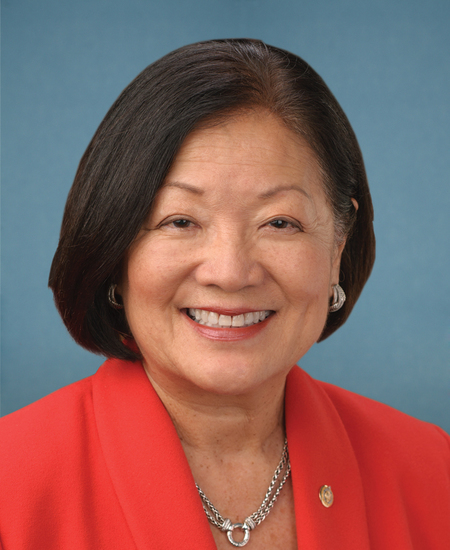
Mazie K. Hirono
Mazie K. Hirono Senate
D
Support
74% 27
Rick Scott
Rick Scott Senate
R
Strong −
19% 27
Ashley Moody
Ashley Moody Senate
R
Oppose
22% 27
Rand Paul
Rand Paul Senate
R
Oppose
22% 27
Brad Knott
Brad Knott House · District 13
R
Oppose
28% 18
Pat Harrigan
Pat Harrigan House · District 10
R
Oppose
28% 18
Showing 741–750 of 2,910 bills

All healthcare bills

in committee · United States · House Apr 14, 2026

HRES 1167: Expressing support for the designation of the month of April 2026 as "Parkinson's Awareness Month".

This resolution expresses support for designating April 2026 as Parkinson's Awareness Month to raise public awareness about the condition. It directly affects individuals living with Parkinson's disease, their caregivers, and organizations working to improve care and research. The bill does not change laws or funding but serves as a symbolic gesture to highlight the disease's impact and encourage continued research and community support. It recognizes the millions of people affected and acknowledges the importance of clinical trials and quality-of-life improvements for patients and their families.
in committee · United States · House Mar 12, 2026

HR 7909: Medicare Expansion and Lowering Costs Now Act

This bill creates a Medicare buy-in option for individuals aged 50 to 64 who would qualify for Medicare at age 65 but are not yet eligible, allowing them to enroll in Medicare Parts A, B, and D with premiums based on average costs and geographic adjustments. It also establishes a new voluntary supplemental insurance program for current Medicare beneficiaries to help cover deductibles and copayments, starting in 2027, and requires the government to negotiate lower drug prices for Medicare Part D plans beginning in 2029. The legislation creates a reinsurance fund to stabilize health insurance premiums in the individual market for high-cost enrollees starting in 2025 and extends risk corridor reauthorization through 2031. Additionally, the bill increases eligibility for premium tax credits to cover individuals with household incomes up to 400% of the poverty line and repeals certain reconciliation provisions from a previous law.
in committee · United States · House Apr 2, 2026

HR 8192: Nitazene Response Act

The Nitazene Response Act directs the Department of Health and Human Services to create and publish clinical guidelines for treating nitazene overdoses, a specific type of ultra-potent synthetic opioid. These guidelines will outline best practices for administering naloxone and provide instructions for emergency departments, hospitals, and rural emergency medical services. The Secretary must publish the guidelines online within 180 days of the bill's enactment and submit a report to Congress within one year detailing how the guidelines address nitazene overdose risks. The legislation defines nitazene to include various benzimidazole-opioids such as etonitazene and isotonitazene, ensuring the guidelines cover this growing class of substances.
Sub-Topics Substance Abuse
in committee · United States · House Mar 24, 2026

HRES 1133: Designating November 7 of each year as ''Shwachman Diamond Syndrome Awareness Day''.

This resolution designates November 7 of each year as Shwachman Diamond Syndrome Awareness Day to increase public understanding of this rare genetic disorder. The bill aims to highlight the condition's impact on bone marrow, pancreas, and skeletal health, while promoting research and support for the approximately 2,000 Americans living with the disease. It does not change laws or funding but serves as a symbolic designation to encourage awareness and multidisciplinary care for affected individuals.
in committee · United States · Senate Mar 26, 2026

S 4225: DOULA for VA Act of 2026

This bill establishes a five-year pilot program to provide doula support services to pregnant and postpartum women veterans enrolled in the Department of Veterans Affairs. The program aims to improve maternal, mental health, and infant care outcomes by training doulas to advocate for veterans alongside medical teams, with sessions occurring before, during, and after labor and delivery. The pilot will operate in specific Veterans Integrated Service Networks selected based on female veteran enrollment rates and will include targeted support for populations facing higher health risks, such as American Indian or Alaska Native veterans. Funding is authorized through fiscal year 2032, and the VA Secretary must submit annual reports on the program's impact to Congress, including recommendations on whether to expand the initiative.
in committee · United States · House Mar 26, 2026

HR 8109: Save Struggling Hospitals Act

The Save Struggling Hospitals Act adjusts Medicare reimbursement rates for hospitals in low-wage areas to help them remain financially viable. It directly affects hospitals located in regions where the average hospital wages fall below the 25th percentile nationally. The bill increases the area wage index for these struggling hospitals by half the difference between their current index and the 25th percentile threshold, starting with discharges on or after October 1, 2019. These adjustments are designed to be budget neutral, meaning the increased payments to low-wage hospitals are offset by reductions elsewhere without decreasing payments to hospitals in the top 75th percentile or reducing any hospital's payment by more than 5 percent from the previous year.
Sub-Topics Hospitals Medicare
in committee · United States · House Mar 25, 2026

HR 8080: Data to Save Moms Act

The Data to Save Moms Act aims to improve maternal health outcomes by increasing funding and support for maternal mortality review committees across the United States. The bill provides $10 million annually from 2027 to 2031 to help these committees recruit more diverse community members, including people with personal experiences of maternal mortality or severe health complications, and to address barriers like transportation and compensation that prevent participation. It also requires committees to conduct outreach to racial and ethnic minority communities and publicly report on their review processes and diversity efforts. Additionally, the legislation directs the Health and Human Services Secretary to study maternal health data collection methods, conduct a specific study on American Indian and Alaska Native maternal health outcomes, and award grants to minority-serving institutions for research on maternal mortality disparities.
Sub-Topics Women's Health
in committee · United States · House Mar 26, 2026

HR 8124: STOP Suicide Act

The STOP Suicide Act establishes a new grant program to fund stabilization services for individuals experiencing acute suicidal thoughts. These grants will be awarded competitively to eligible entities such as community health centers, crisis centers, schools, and tribal organizations to support evidence-based interventions that reduce immediate suicide risk. The program authorizes up to $30 million annually from 2027 to 2031 and requires recipients to submit plans for sustaining services after grant funding ends. Grants may support outpatient care, virtual services, and peer support in the least restrictive settings appropriate for each individual's needs.
Sub-Topics Mental Health
in committee · United States · House Apr 9, 2026

HR 7976: Moral Injury Recognition and Restitution Act

This bill, known as the Moral Injury Recognition and Restitution Act, changes how the Department of Veterans Affairs handles compensation claims for veterans affected by military sexual trauma. It allows veterans who receive approved claims for mental health conditions or physical injuries caused by such trauma to receive back pay starting from the day after their military discharge rather than from the date their claim was filed. The legislation defines military sexual trauma according to existing legal standards and includes both mental health conditions and physical disabilities resulting from or worsened by the trauma. This change applies retroactively to eligible veterans who have already been approved for compensation benefits.
in committee · United States · Senate Mar 25, 2026

S 4195: Kira Johnson Act

The Kira Johnson Act establishes a federal grant program to support community-based organizations working to improve maternal health outcomes for demographic groups facing higher rates of maternal mortality and health disparities. The bill authorizes $100 million annually from 2027 to 2031 for grants that fund programs addressing social determinants of health, culturally congruent care, and midwifery support, with special consideration given to organizations led by individuals from affected communities. It also creates a separate $5 million annual grant program for respectful maternity care training that requires ongoing education for all maternity care staff, including administrative and support personnel, to address bias and racism. Additionally, the legislation mandates that hospitals establish compliance programs to report and respond to instances of bias in maternity care, requires regular reporting on patient experiences, and directs the Secretary of Health and Human Services to conduct studies on reducing discrimination in healthcare settings.
Sub-Topics Women's Health
Showing 741 to 750 of 2,910 bills
Previous 1 … 74 75 76 … 291 Next