Issue · Healthcare

Healthcare (Medicare)

Every healthcare bill, vote, and legislator stance in United States, automatically classified by Maddy, our AI policy reader.

Total bills
591
119th Congress
Top supporter
Christopher Murphy
88% support rate
Top opponent
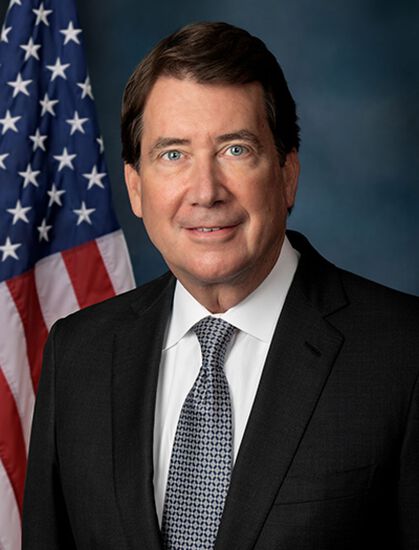
Bill Hagerty
12% support rate
Ranked legislators
10
5 support · 5 oppose
Key legislators

Who's moving medicare in United States

Legislators moving medicare in United States
Legislator Party Stance Support rate Decisive votes
Christopher Murphy
Christopher Murphy Senate
D
Strong +
88% 8
Adam B. Schiff
Adam B. Schiff Senate
D
Support
78% 9
Alex Padilla
Alex Padilla Senate
D
Support
78% 9
Amy Klobuchar
Amy Klobuchar Senate
D
Support
78% 9
Andy Kim
Andy Kim Senate
D
Support
78% 9
Bill Hagerty
Bill Hagerty Senate
R
Strong −
12% 8
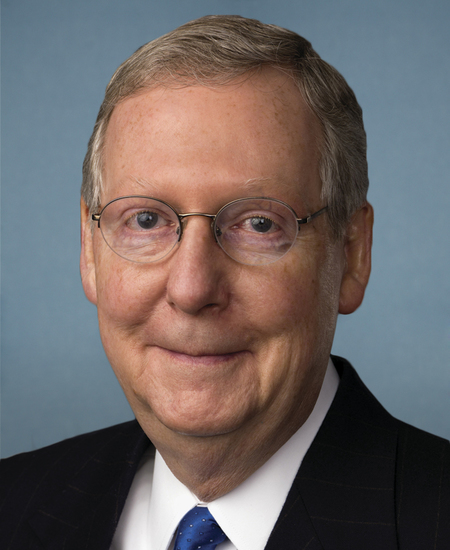
Mitch McConnell
Mitch McConnell Senate
R
Strong −
12% 8
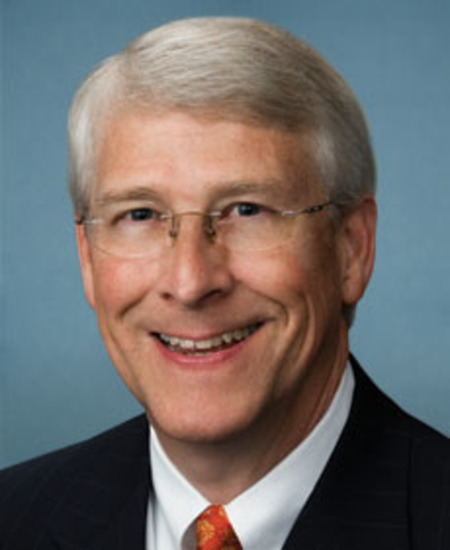
Roger F. Wicker
Roger F. Wicker Senate
R
Strong −
12% 8
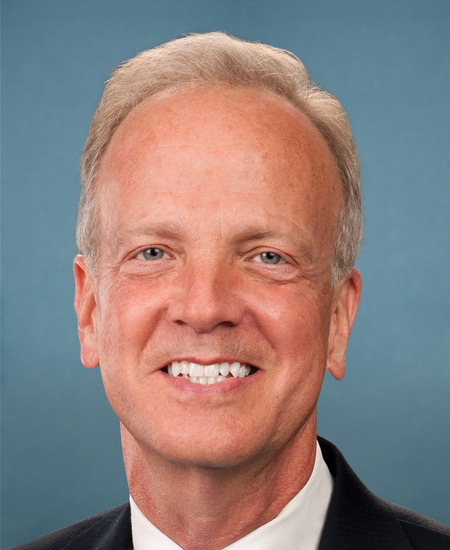
Jerry Moran
Jerry Moran Senate
R
Strong −
14% 7
Ashley Moody
Ashley Moody Senate
R
Oppose
22% 9
Showing 151–160 of 591 bills

All healthcare bills

in committee · United States · House Mar 12, 2026

HR 7905: Diabetes Foot Health Access and Modernization Act of 2026

This bill, known as the Diabetes Foot Health Access and Modernization Act of 2026, makes two main changes to federal healthcare programs. First, it allows Medicaid to cover foot and ankle care services provided by podiatric physicians, ensuring patients have access to this specialized care. Second, it updates Medicare rules to clarify documentation requirements for diabetic shoes, specifying conditions under which patients can receive extra-depth or custom-molded footwear. The changes take effect on January 1, 2026, for Medicaid services and January 1, 2028, for Medicare shoe coverage.
Sub-Topics Medicaid Medicare
in committee · United States · House Mar 16, 2026

HR 7747: State Veterans Homes Inspection Simplification Act

This bill, known as the State Veterans Homes Inspection Simplification Act, would allow certain State Veterans Homes that are already certified by the Department of Veterans Affairs to be automatically considered compliant with Medicare and Medicaid nursing home standards. Under this proposal, facilities meeting specific VA inspection and certification requirements would not need to undergo separate reviews by the Centers for Medicare & Medicaid Services, reducing duplication of effort. The legislation maintains oversight by requiring the VA to submit its inspection standards for review every two years, allowing CMS to conduct targeted surveys or complaints investigations, and mandating public reporting of inspection data on the Nursing Home Care Compare website. A Government Accountability Office report would be required three years after enactment to evaluate the bill's impact on survey efficiency, enforcement outcomes, and resident care quality.
in committee · United States · Senate Mar 10, 2026

S 4037: Diabetes Act

This bill, known as the DIABETES Act, aims to improve Medicare coverage for diabetes technology and education services. It would require Medicare to continue covering diabetes devices like continuous glucose monitors and insulin pumps when beneficiaries enroll in the program, preventing loss of access during enrollment transitions. The legislation also expands coverage for diabetes self-management training services, removes deductibles for these services, and authorizes virtual training options. Additionally, it directs the government to study barriers to diabetes care access and establish new billing codes for insulin pump training services.
in committee · United States · Senate Feb 26, 2026

S 3951: Balanced Budget Responsibility Act of 2026

This bill, titled the Balanced Budget Responsibility Act of 2026, would give the President the authority to reduce government spending to eliminate a projected budget deficit. It allows the President to decline to spend certain discretionary funds, excluding Medicare and Social Security benefits, if a deficit is anticipated for a fiscal year. The decision to withhold these funds would be made in consultation with the Treasury Secretary and the Office of Management and Budget. This provision would operate outside the usual rules governing how the President handles unspent government funds.
in committee · United States · Senate Mar 12, 2026

S 4076: Removing Medicare Mental Health Inpatient Limitations Act of 2026

This bill proposes to remove the 190-day lifetime limit on inpatient psychiatric hospital services for Medicare beneficiaries. It directly affects older Americans and other eligible individuals who rely on Medicare for mental health care coverage. The key provision amends the Social Security Act to delete the specific restriction that currently caps how many days Medicare will pay for inpatient psychiatric hospital stays. Changes made by this legislation would take effect on January 1, 2027, allowing Medicare to cover these services without the previous daily limit.
in committee · United States · House Dec 16, 2025

HR 6766: Essential Caregivers Act of 2025

Essential Caregivers Act of 2025   This bill prohibits certain health care facilities from limiting the access of essential caregivers to residents of those facilities, including during designated emergency periods.   Specifically, the bill generally prohibits Medicare skilled nursing facilities, Medicaid nursing facilities, Medicaid intermediate care facilities, and associated inpatient rehabilitation facilities from restricting the access of essential caregivers to residents of the facilities, including during emergency periods in which visitation rights are otherwise restricted. During emergency periods, facilities may restrict access for an initial period of up to seven days and for one additional maximum seven-day period (if the additional period is approved by the state health department). Facilities may restrict access for a total of 7 days (or 14 days with the approval of the state health department) during an emergency period. Essential caregivers must agree to comply with any safety protocols set by the facility, which may be no more stringent for caregivers compared to those for staff. Caregivers who fail to comply with these requirements may be denied access, subject to an appeals process.
in committee · United States · Senate Mar 12, 2026

S 4085: Take Back Our Hospitals Act of 2026

This bill, titled the Take Back Our Hospitals Act of 2026, would prohibit Medicare from paying hospitals and skilled nursing facilities owned or controlled by private equity funds, real estate investment trusts, or corporations owned by private equity funds. The law defines ownership control as holding 10 percent or more of voting securities and includes provisions for a three-year transition period for existing facilities before the ban takes full effect. Facilities found in violation would face penalties, and the owning firms would be held jointly and severally liable for those penalties. The measure aims to restrict investment by specific financial entities in healthcare facilities that receive Medicare funding.
in committee · United States · Senate Mar 2, 2026

S 3956: Make Billionaires Pay Their Fair Share Act

The Make Billionaires Pay Their Fair Share Act (S. 3956) imposes a new 5% annual wealth tax on individuals and trusts whose net assets exceed $1 billion, with the threshold adjusted for inflation. The bill also expands Medicare coverage to include dental, hearing, and vision services, establishes a $60,000 minimum annual salary for public school teachers, and creates a birth-through-five child care entitlement program for families with income up to 250% of state median income. Additional provisions include permanent extensions of Medicaid protections for home and community-based services, increased funding for housing trust funds, and expanded child care and early learning support for working families.
in committee · United States · Senate May 6, 2025

S 1624: PATCH Act

The PATCH Act modifies how Medicare calculates payment rates for physicians providing services in Hawaii starting January 1, 2026. It requires the Centers for Medicare & Medicaid Services to set the work geographic index at a minimum of 1.5 for Hawaii, even if the calculated rate would be lower. This change directly affects physicians who bill Medicare for services in Hawaii by ensuring their reimbursement rates meet a specific threshold. The bill does not apply to other payment systems or states.
Sub-Topics Medicaid Medicare
in committee · United States · Senate Jul 17, 2025

S 2347: Equal Health Care for All Act

The Equal Health Care for All Act requires health care providers to collect and report disaggregated health data by race, national origin, sex, disability, and age to identify health disparities. It establishes an Office for Civil Rights and Health Equity within HHS to enforce anti-discrimination measures and creates a Federal Health Equity Commission to monitor implementation. The bill prohibits health care providers from delivering inequitable care based on protected characteristics and provides grants to hospitals to improve equitable care through bias training, translation services, and workforce diversity initiatives. Hospitals would need to incorporate equitable health care measures into value-based purchasing programs starting in 2026. This legislation aims to address systemic health care inequities affecting marginalized communities through data collection, enforcement mechanisms, and targeted support for health care providers.
Sub-Topics Medicaid Medicare
Showing 151 to 160 of 591 bills
Previous 1 … 15 16 17 … 60 Next