Issue · Healthcare

Healthcare

Every healthcare bill, vote, and legislator stance in United States, automatically classified by Maddy, our AI policy reader.

Total bills
3,150
119th Congress
Top supporter
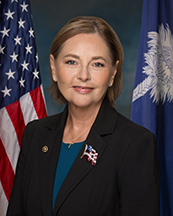
Darline Graham
82% support rate
Top opponent
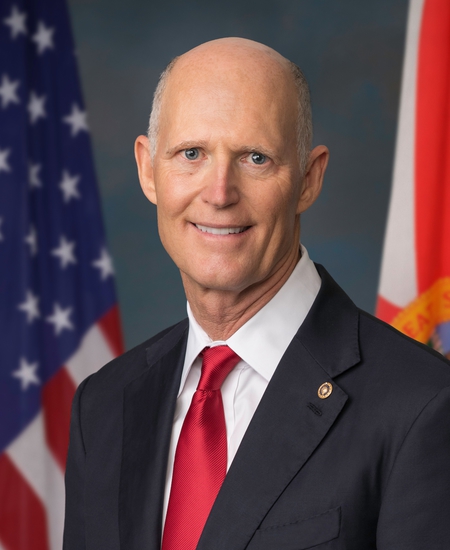
Rick Scott
19% support rate
Ranked legislators
10
5 support · 5 oppose
Key legislators

Who's moving healthcare in United States

Legislators moving healthcare in United States
Legislator Party Stance Support rate Decisive votes
Darline Graham
Darline Graham Senate
R
Strong +
82% 11
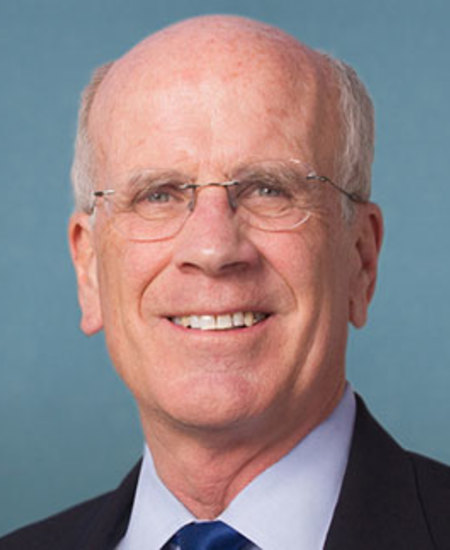
Peter Welch
Peter Welch Senate
D
Strong +
81% 27
Ron Wyden
Ron Wyden Senate
D
Support
78% 27
Alex Padilla
Alex Padilla Senate
D
Support
77% 26
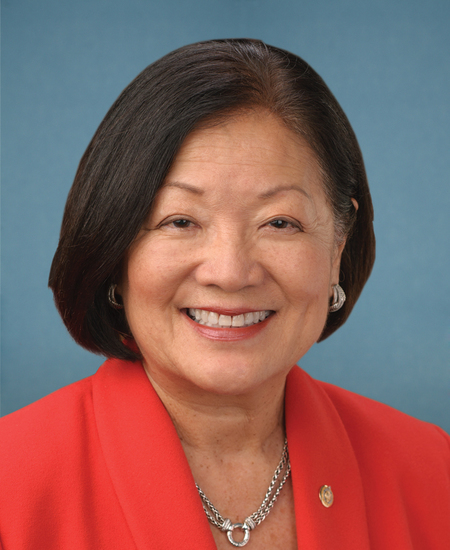
Mazie K. Hirono
Mazie K. Hirono Senate
D
Support
74% 27
Rick Scott
Rick Scott Senate
R
Strong −
19% 27
Ashley Moody
Ashley Moody Senate
R
Oppose
22% 27
Rand Paul
Rand Paul Senate
R
Oppose
22% 27
Brad Knott
Brad Knott House · District 13
R
Oppose
28% 18
Pat Harrigan
Pat Harrigan House · District 10
R
Oppose
28% 18
Showing 1,091–1,100 of 3,150 bills

All healthcare bills

in committee · United States · House Feb 21, 2025

HR 1466: Cardiac Arrest Survival Act of 2025

HR 1466, the Cardiac Arrest Survival Act of 2025, creates uniform federal liability protection for individuals and entities involved with automated external defibrillators (AEDs) used in cardiac emergencies. It directly affects businesses, public venues, and organizations that own, manage, or use AEDs - especially those operating across multiple states where inconsistent state laws previously discouraged AED deployment. The bill shields users, property owners/managers, and AED owners from civil lawsuits for harm caused during emergency AED use, unless the harm resulted from gross negligence or willful misconduct. This preempts conflicting state laws, removing legal barriers to wider AED placement without requiring any new AED installations.
in committee · United States · House Apr 17, 2025

HRES 335: Supporting the designation of the week of April 21 through April 25, 2025, as "National Home Visiting Week".

This resolution (HRES 335) is a symbolic gesture by the House of Representatives to recognize existing home visiting programs. It supports designating the week of April 21-25, 2025, as "National Home Visiting Week" to highlight the work of these programs. The resolution cites statistics showing these programs served over 139,000 parents and children in 2023, emphasizing their role in promoting child development and family well-being. It does not create new policy or funding but aims to raise awareness about established community services that assist families with young children.
Tags Families
in committee · United States · Senate Jul 8, 2025

S 2211: Special Diabetes Program Reauthorization Act of 2025

This bill reauthorizes two existing federal diabetes programs through 2027. It provides $160 million annually for fiscal years 2026 and 2027 for the Special Diabetes Program for Type I Diabetes (serving people with Type I diabetes) and the Special Diabetes Program for Indians (serving Native American communities through Indian Health Services). A final $40 million is allocated for October-December 2027 for both programs, with all funds remaining available until expended. The bill extends current funding levels without changing program eligibility or structure.
in committee · United States · House Jun 12, 2025

HR 3974: Protect Black Women and Girls Act

HR 3974, the Protect Black Women and Girls Act, creates a federal task force to examine systemic challenges faced by Black women and girls (defined as individuals identifying as women, female, or femme). The task force, composed of agency representatives and community experts, will identify effective policies and programs across education, economic opportunity, healthcare, justice, and housing, then recommend improvements to federal, state, and local governments. Key mechanisms include studying issues like school discipline disparities, maternal health outcomes, economic barriers, and over-incarceration, and proposing solutions such as restorative justice programs, career training, and expanded healthcare access. The task force must report annually to Congress and submit final recommendations within two years, focusing on concrete policy changes to improve outcomes.
in committee · United States · House Jun 12, 2025

HR 3643: VA Data Transparency and Trust Act

HR 3643, the VA Data Transparency and Trust Act, requires the Veterans Health Administration (VHA) and Veterans Benefits Administration (VBA) to submit detailed annual reports on healthcare services and benefits provided to veterans. The VHA report must include data on veterans receiving care, their health conditions (such as traumatic brain injury and diabetes), demographics, and facility management. The VBA report must detail benefit recipients, service-connected disability ratings, compensation amounts, and claims processing times. The bill also establishes a data sharing system allowing researchers to access anonymized, aggregated veteran healthcare and benefits data for research purposes. These requirements will run for five years from the act's enactment date.
in committee · United States · House Apr 1, 2025

HR 2532: To prohibit certain removals of employees of the Department of Health and Human Services and sub-agencies and operating divisions thereof, and for other purposes.

This bill (HR 2532) blocks federal funding for large-scale layoffs at the Department of Health and Human Services (HHS) and its sub-agencies. It prohibits using federal funds to remove 3% or more of all HHS employees, or 3% or more at any single sub-agency, within a 60-day period. This applies to actions like layoffs under federal workforce rules (Title 5) or agency reorganizations. The bill directly affects HHS employees and its operating divisions by preventing rapid, widespread workforce reductions. It does not change HHS policies but restricts how personnel actions can be funded.
in committee · United States · Senate Mar 5, 2025

S 870: Native ELDER Act

S 870, the Native ELDER Act, creates an Older Americans Tribal Advisory Committee to advise the federal government on Native American elder programs under the Older Americans Act. This committee, composed of 11 members including tribal representatives and Native Hawaiian organizations, ensures tribes and Native Hawaiians directly influence policies affecting their communities. Key provisions include amending in-home assistance to cover necessary home modifications for aging Native Americans and requiring annual reports to Congress on barriers to tribal access to elder services. The bill directly affects Native American tribes, Alaska Native groups, and Native Hawaiian organizations through mandated government-to-government consultation and program adjustments.
Tags Seniors Tribal Nations
passed · United States · House Jan 15, 2026

HR 7006: Financial Services and General Government and National Security, Department of State, and Related Programs Appropriations Act, 2026

# Summary of U.S. Department of State, Foreign Operations, and Related Programs Appropriations Bill This document is a comprehensive federal appropriations bill for the Department of State, foreign operations, and related programs for fiscal year 2026. It contains detailed provisions governing the allocation, use, and reporting requirements for foreign assistance funds. ## Key Provisions 1. **Funding Restrictions**: - Prohibits funding for abortions as a method of family planning or involuntary sterilization - Bans direct assistance to governments of Cuba, North Korea, or Iran - Prohibits assistance to countries that have experienced a military coup d'état - Restricts assistance to countries in default on U.S. loans - Prohibits funding for countries supporting international terrorism 2. **Notification Requirements**: - Mandates 15-day advance notification to Congress for program changes exceeding $1 million or 10% - Requires prior consultation for major program changes or reprogramming - Requires notification for assistance to specific countries including Afghanistan, Iran, Syria, and others 3. **Funding Allocation Rules**: - Specifies minimum funding levels for various programs - Limits deviations from designated amounts to 10% (up to 50% for national security emergencies) - Requires detailed reports on fund allocation at program, project, and activity levels 4. **Prohibited Expenditures**: - Bans first-class travel in contravention of federal regulations - Prohibits use of funds for tobacco promotion - Restricts use of funds for entertainment at recreational events - Requires computer network filters to block sexually explicit websites 5. **Reporting and Transparency**: - Requires posting of reports on public websites within 45 days - Mandates detailed beneficiary feedback collection for assistance programs - Requires impact evaluations of foreign assistance programs - Requires coordination of foreign assistance with Department of State programs 6. **Transfer Authorities**: - Allows limited transfers between appropriations accounts (up to 5%) - Requires prior consultation for significant transfers - Prohibits transfers to other departments without specific authorization This bill represents a comprehensive framework for U.S. foreign assistance, emphasizing accountability, transparency, national security considerations, and restrictions on certain types of funding. It contains numerous specific prohibitions and requirements aimed at ensuring U.S. foreign aid serves American interests while adhering to specific policy constraints.
Sub-Topics Appropriations
in committee · United States · House Oct 17, 2025

HR 5791: BLOOD Centers Act

HR 5791, the BLOOD Centers Act, creates a 30-day expedited approval process for blood centers seeking to add apheresis collection devices to existing biologics licenses. It directly affects blood centers operating under FDA biologics licenses that already manage multiple locations or hold accredited status. The bill requires the FDA to approve such applications within 30 days unless safety concerns exist at the specific location or the center has systemic safety failures elsewhere. This streamlines the process for expanding blood collection capabilities without compromising safety standards.
in committee · United States · Senate Mar 5, 2025

SRES 107: A resolution expressing support for the designation of the week of March 3 through March 7, 2025, as "National Social and Emotional Learning Week" to recognize the critical role social and emotional learning plays in supporting the academic success and overall well-being of students, educators, and families.

SRES 107 is a non-binding Senate resolution supporting the designation of March 3-7, 2025, as "National Social and Emotional Learning Week." It recognizes social and emotional learning (SEL) - which helps students develop skills like self-awareness and relationship management - as critical for academic success, mental wellness, and long-term well-being for students, educators, and families. The resolution encourages expanding access to SEL programs and urges federal agencies to advance these initiatives. As a symbolic gesture, it does not create new laws or allocate funding but highlights research showing SEL improves student outcomes and reduces societal costs.
Showing 1,091 to 1,100 of 3,150 bills