Issue · Environment

Environment (Water Quality)

Every environment bill, vote, and legislator stance in United States, automatically classified by Maddy, our AI policy reader.

Total bills
183
119th Congress
Top supporter
Adam B. Schiff
100% support rate
Top opponent
Alan Armstrong
0% support rate
Ranked legislators
10
5 support · 5 oppose
Key legislators

Who's moving water quality in United States

Legislators moving water quality in United States
Legislator Party Stance Support rate Votes
Adam B. Schiff
Adam B. Schiff Senate
D
Strong +
100% 3
Alex Padilla
Alex Padilla Senate
D
Strong +
100% 3
Amy Klobuchar
Amy Klobuchar Senate
D
Strong +
100% 3
Andy Kim
Andy Kim Senate
D
Strong +
100% 3
Angela D. Alsobrooks
Angela D. Alsobrooks Senate
D
Strong +
100% 3
AA
Alan Armstrong Senate
R
Strong −
0% 3
Ashley Moody
Ashley Moody Senate
R
Strong −
0% 3
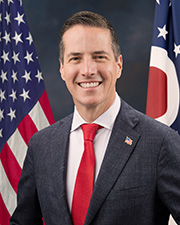
Bernie Moreno
Bernie Moreno Senate
R
Strong −
0% 3
Bill Cassidy
Bill Cassidy Senate
R
Strong −
0% 3
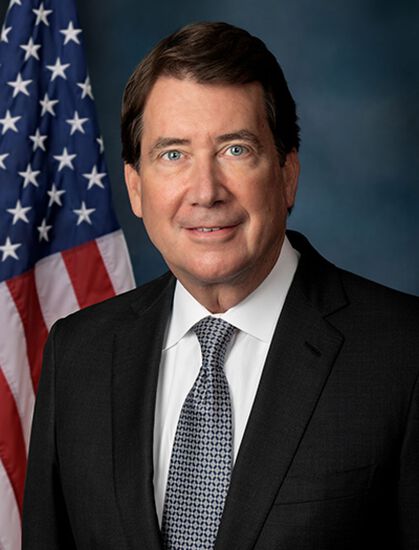
Bill Hagerty
Bill Hagerty Senate
R
Strong −
0% 3
Showing 81–90 of 183 bills

All environment bills

in committee · United States · House Jul 11, 2025

HR 4357: Border Water Quality Restoration and Protection Act

This bill establishes two new programs to address water quality issues in the Tijuana River and New River watersheds, which flow from Mexico into California. It requires the Environmental Protection Agency to develop action plans for pollution prevention, including projects to manage wastewater, stormwater, debris, sediment, and contaminants that flow across the border. The bill authorizes $50 million annually from 2026-2036 for these programs, with funding to support projects that improve water quality, protect public health, and enhance natural habitats in affected communities. The programs will coordinate with Mexican and U.S. agencies, including the International Boundary and Water Commission, to implement projects addressing transboundary flows that impact coastal communities in Imperial Beach, San Diego, Calexico, and the Imperial Valley.
in committee · United States · House Jun 26, 2025

HR 4168: PFAS National Drinking Water Standard Act of 2025

This bill makes the Environmental Protection Agency's existing April 2024 rule on PFAS limits in drinking water legally binding. It codifies the EPA's "PFAS National Primary Drinking Water Regulation" (89 Fed. Reg. 32532), which sets enforceable limits for specific PFAS chemicals in public water systems. The rule directly affects municipal water providers and communities relying on public water sources by requiring them to meet these new contaminant standards. The bill does not create new standards but formally adopts the EPA's previously issued rule into law.
in committee · United States · House Jun 11, 2025

HR 3862: Clean Water SRF Parity Act of 2025

HR 3862, the Clean Water SRF Parity Act of 2025, expands eligibility for Clean Water State Revolving Fund (SRF) assistance to include qualified nonprofit entities and privately owned treatment works operators. The bill adds provisions allowing nonprofits to receive SRF funds for constructing, acquiring, or improving treatment works, and creates a new section (l) for privately owned treatment works to access funds for upgrades, water conservation, energy efficiency, security measures, and other specified activities. Crucially, it requires that financial assistance for private operators must primarily benefit the end-users served by the treatment works, not the shareholders or owners. This directly affects nonprofits managing water infrastructure and private utility companies operating treatment facilities, ensuring SRF funds support community water needs under defined conditions.
in committee · United States · House Jun 7, 2025

HR 3818: Stop Poisoning Florida Act

HR 3818, the Stop Poisoning Florida Act, prohibits the U.S. Army Corps of Engineers from discharging water from Lake Okeechobee through specific locks and dams (S-308 and S-80) when toxin levels exceed EPA-recommended limits for recreational waters. The law requires testing for microcystins - a toxic algae byproduct - and blocks discharges if levels surpass EPA standards. This directly affects water management practices at Lake Okeechobee and protects recreational users by preventing unsafe water releases. The provision applies when the Army Corps, EPA, or Florida state tests show toxin concentrations above the EPA’s human health criteria.
Sub-Topics Water Quality
in committee · United States · House Jul 22, 2025

HR 4592: No Radioactive Roads Act of 2025

This bill requires the EPA to revise its regulations to strictly regulate any future use of phosphogypsum (a byproduct of fertilizer production containing uranium and radium) beyond current restrictions. It mandates that EPA approve new uses - like road construction - only after reviewing detailed risk assessments, case-by-case evaluations, and strict limits (max 9.1 cancer risk per 100,000 people). The EPA must also require public disclosure of all approval requests and enforce comprehensive monitoring for water contamination and air exposure throughout a product's lifecycle. This directly affects construction workers, nearby residents, and communities near phosphogypsum applications by ensuring any new use meets the EPA’s existing cancer risk threshold. The bill does not ban current uses but sets new, stringent requirements for future approvals.
in committee · United States · Senate Feb 20, 2025

S 670: Protect the West Act of 2025

The Protect the West Act of 2025 establishes a $60 billion Outdoor and Watershed Restoration Fund to support ecological restoration projects across western U.S. landscapes. It creates two main programs: a $20 billion grant program to help eligible entities like state governments, tribes, and nonprofits plan and coordinate restoration projects, and a $40 billion partnership program focused on carrying out projects on Federal and non-Federal lands with high wildfire risk. The bill requires projects to improve forest conditions, watersheds, wildlife habitat, and reduce wildfire risks while creating jobs in outdoor industries, with special priority for projects in the wildland-urban interface and underserved communities. Projects must be coordinated with existing conservation programs and follow scientific best practices, with annual reporting requirements to track environmental benefits and job creation.
in committee · United States · House Feb 13, 2025

HR 1311: Stop the Delta Tunnel Act

HR 1311, the Stop the Delta Tunnel Act, prohibits the U.S. Army Corps of Engineers from issuing a federal permit for California's Delta Conveyance Project. The bill specifically blocks a permit under the Clean Water Act (section 404) for the project described in the Corps' December 2022 Draft Environmental Impact Statement. This directly affects the project's ability to proceed by preventing a key federal approval needed for construction. The bill does not alter the project itself but stops the permitting process for this specific water infrastructure initiative.
Sub-Topics Water Quality
in committee · United States · House Mar 11, 2025

HR 2091: Chesapeake Bay Conservation Acceleration Act of 2025

This bill establishes the Chesapeake Bay States Partnership Initiative to help agricultural producers in the Chesapeake Bay watershed (covering parts of Delaware, Maryland, New York, Pennsylvania, Virginia, West Virginia, and D.C.) implement conservation practices that improve water quality, restore soil resources, and increase climate resilience. It provides targeted funding for erosion control, nutrient reduction, and habitat restoration on agricultural land, with special consideration for practices that reduce nitrogen and sediment. The bill creates a "turnkey pilot program" allowing technical service providers to establish and manage conservation practices on farmland without requiring landowners to pay costs or submit additional paperwork. Additionally, it updates conservation programs, enhances agricultural education funding, and adjusts regulatory oversight for certain catfish species in the Chesapeake Bay ecosystem.
in committee · United States · House Oct 29, 2025

HR 5846: Solid Waste Infrastructure for Recycling Grant Program Reauthorization Act

HR 5846 reauthorizes the Solid Waste Infrastructure for Recycling Grant Program by extending annual funding of $65 million for fiscal years 2027 through 2036. The bill directly affects local governments and communities by providing continued financial support for projects that improve recycling infrastructure, such as modernizing facilities or expanding collection systems. Key provisions include maintaining the $65 million annual funding level for a decade beyond the previous authorization period (2021-2025), ensuring stable resources for waste management upgrades. This concrete policy change allows communities to access federal grants for recycling infrastructure projects without interruption through 2036.
in committee · United States · House Aug 13, 2025

HR 4961: Public Utility Remediation and Enhancement for Water Act

HR 4961, the Public Utility Remediation and Enhancement for Water Act, creates a federal grant program to help municipal water systems address harmful chemicals like PFAS (perfluoroalkyl substances) in drinking water. The bill authorizes $200 million annually (2026-2028) to fund 75% of costs for planning, building, or upgrading treatment systems to prevent or treat these emerging contaminants. It directly affects publicly owned water treatment facilities by providing financial support to comply with federal water pollution standards for these chemicals. The program requires states to manage grants similarly to existing water fund programs, with non-federal funds covering the remaining 25% through local or private sources.
Showing 81 to 90 of 183 bills
Previous 1 8 9 10 19 Next