Issue · Environment

Environment (Agriculture)

Every environment bill, vote, and legislator stance in United States, automatically classified by Maddy, our AI policy reader.

Total bills
79
119th Congress
Top supporter
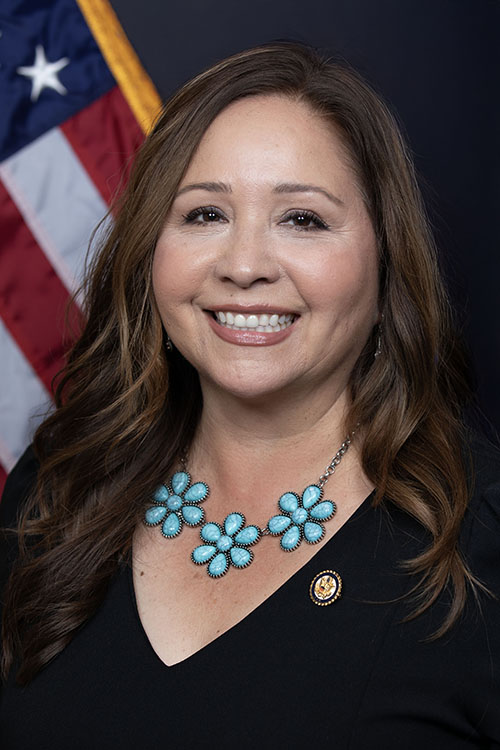
Marie Gluesenkamp Perez
89% support rate
Top opponent
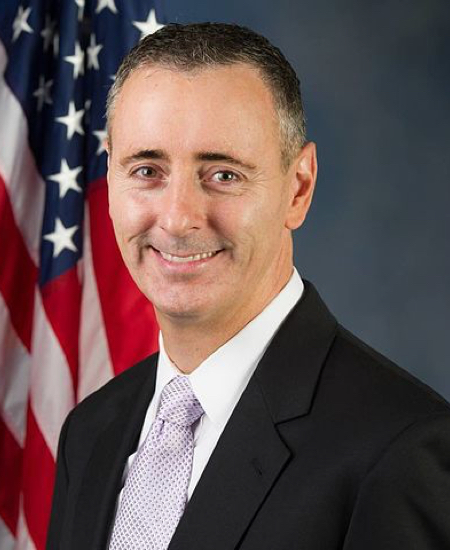
Brian K. Fitzpatrick
22% support rate
Ranked legislators
10
5 support · 5 oppose
Key legislators

Who's moving environment · agriculture in United States

Legislators moving environment in United States
Legislator Party Stance Support rate Votes
Marie Gluesenkamp Perez
Marie Gluesenkamp Perez House · District 3
D
Strong +
89% 9
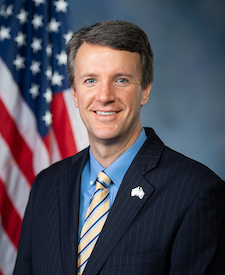
Aaron Bean
Aaron Bean House · District 4
R
Support
78% 9
Abraham J. Hamadeh
Abraham J. Hamadeh House · District 8
R
Support
78% 9
Anna Paulina Luna
Anna Paulina Luna House · District 13
R
Support
78% 9
Ben Cline
Ben Cline House · District 6
R
Support
78% 9
Brian K. Fitzpatrick
Brian K. Fitzpatrick House · District 1
R
Oppose
22% 9
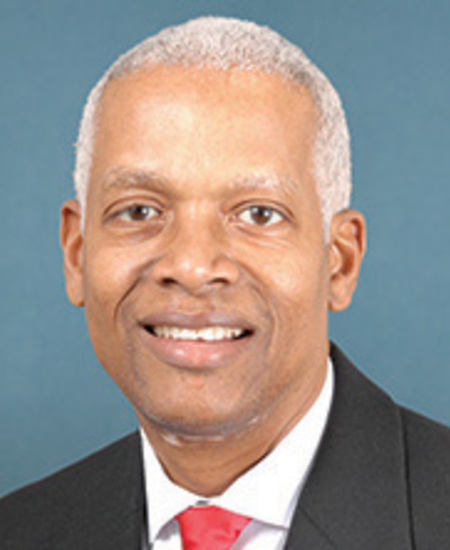
Henry C. "Hank" Johnson, Jr.
Henry C. "Hank" Johnson, Jr. House · District 4
D
Oppose
22% 9
Eleanor Holmes Norton
Eleanor Holmes Norton House · District At-Large
D
Oppose
29% 7
Pablo José Hernández
Pablo José Hernández House · District At-Large
D
Oppose
29% 7
Adelita S. Grijalva
Adelita S. Grijalva House · District 7
D
Oppose
33% 9
Showing 71–79 of 79 bills

All environment bills

in committee · United States · Senate Dec 4, 2025

S 3353: Relief for Farmers Hit with PFAS Act

S 3353, the Relief for Farmers Hit with PFAS Act, establishes a federal grant program to assist commercial farms and agricultural land affected by PFAS (chemicals found in some industrial products) contamination. Eligible states, tribes, or territories can receive funds to cover costs like monitoring health impacts, compensating for contaminated land or crops, upgrading equipment, conducting research on remediation, and providing financial aid to affected farmers. The program authorizes $500 million over five years (2026-2030), with funds prioritized for direct assistance to producers facing financial losses due to PFAS contamination. It requires annual reporting on fund usage and establishes a task force to advise on PFAS-related agricultural programs.
Sub-Topics Drinking Water Tags Agriculture
in committee · United States · House Mar 28, 2025

HR 1854: Climate Agricultural Conservation Practices Act

Climate Agricultural Conservation Practices Act This bill requires the Natural Resources Conservation Service (NRCS) to consider climate benefits in reviews or revisions of its conservation practice standards. Climate benefits include a reduction in agricultural greenhouse gas emissions, an increase in carbon sequestration, or mitigation against (or adaptation to) increased weather volatility. As background, NRCS administers most of the Department of Agriculture conservation programs, which assist producers and landowners who wish to practice conservation on agricultural lands. The NRCS conservation practice standards provide guidance and set out minimum quality criteria for implementing federally funded conservation practices.
Sub-Topics Climate Change Conservation Tags Agriculture
in committee · United States · House May 20, 2026

HR 6969: Rural Investment for Producers and the Environment (RIPE) Act of 2026

The RIPE Act of 2026 establishes a demonstration program to pay farmers and ranchers for adopting environmental practices on eligible agricultural watersheds. It provides direct payments covering costs of implementation, lost income during transition, and environmental benefits like improved water quality, carbon sequestration, and habitat restoration. The program targets up to 30 watersheds nationwide (max 2 per state), with 15% higher payments for limited-resource or socially disadvantaged producers. The Secretary must review payments annually and report annually on enrolled acres, environmental outcomes, and participant demographics. Funding includes $150 million annually from 2027-2029 for program operations.
Sub-Topics Water Quality Tags Agriculture Rural Communities
in committee · United States · House Aug 1, 2025

HRES 628: Recognizing the 20th anniversary of the Renewable Fuel Standard and its foundational role in strengthening United States energy security, supporting rural communities, growing the United States economy, and improving environmental performance.

HRES 628 is a ceremonial resolution recognizing the 20th anniversary of the Renewable Fuel Standard (RFS), a policy established in 2005 and expanded in 2007. It highlights the RFS's historical role in supporting rural economies (through 2,700+ renewable fuel facilities and 644,000 jobs), reducing greenhouse gas emissions via mandatory fuel standards, and lowering consumer fuel costs. The resolution does not create new policy or alter the RFS; it solely commemorates the program's past impacts on energy security, agriculture, and environmental performance. It affirms the RFS as a foundational element of U.S. energy policy without proposing any legislative changes.
Sub-Topics Renewable Energy Climate Change Tags Agriculture Rural Communities
in committee · United States · House Mar 20, 2026

HR 7665: Friends in the Field Act

HR 7665, the Friends in the Field Act, adds "biological pest control" as a priority area for federal agricultural research funding. It directly affects researchers, extension services, and farmers by allowing grants to support projects using natural methods (like beneficial insects or microbes) to control pests instead of chemical pesticides. The key provision amends a 1990 law to explicitly include biological pest control in funding categories for research, education materials, and outreach programs. This aims to reduce crop damage and food-borne illnesses through sustainable pest management practices. The bill changes funding priorities but does not create new programs or impose new requirements.
Tags Agriculture
in committee · United States · House Jun 25, 2025

HR 4134: Flood Resiliency and Land Stewardship Act

HR 4134 amends the Regional Conservation Partnership Program (RCPP) under the Food Security Act of 1985 to expand its conservation goals. The bill updates the program's purpose to specifically prioritize regional conservation efforts focused on soil health, water protection (including drinking water sources), flood/drought mitigation, and wildlife/agricultural land conservation. This change directly affects farmers, ranchers, and landowners participating in the RCPP by broadening the types of projects eligible for program funding. The key mechanism is revising the statutory language to explicitly include these new conservation priorities within the existing RCPP framework.
in committee · United States · House May 8, 2025

HR 3293: Support Water-Efficient Strategies and Technologies Act of 2025

HR 3293, the Support Water-Efficient Strategies and Technologies Act of 2025, increases financial support for farmers and ranchers adopting water-saving agricultural practices. The bill allows up to 85% of costs for drought-resilient farming (like dryland systems), water conservation methods (reducing irrigation use), and perennial crop systems (such as long-term grain or forage crops). It also modifies existing conservation programs to better account for income loss during transitions to these practices and adds requirements for soil health outreach and testing. The changes apply to participants in USDA conservation programs under the Food Security Act of 1985, with a $200,000 payment cap over five years for any single entity.
Sub-Topics Conservation Tags Agriculture
in committee · United States · House Jan 13, 2026

HR 6341: Partnerships for Agricultural Climate Action Act

The Partnerships for Agricultural Climate Action Act creates a federal grant program to fund climate-friendly farming practices that reduce greenhouse gas emissions, store carbon in soil, and increase resilience to extreme weather. It provides grants to state and tribal governments, farmer groups, cooperatives, and conservation organizations to develop or implement projects meeting specific climate goals, with priority for initiatives supporting beginning farmers, socially disadvantaged producers, and those incorporating Indigenous agricultural knowledge. The program allocates $150 million annually from 2026 to 2034 (with at least one-third reserved for tribal governments), requiring non-federal matching funds for most applicants and strict rules on fund usage and reporting.
Sub-Topics Climate Change Conservation Tags Agriculture
in committee · United States · House Jul 7, 2025

HR 4296: CROP for Farming Act

HR 4296, the CROP for Farming Act, amends existing federal conservation programs to expand eligible practices for farmers. It updates the Food Security Act of 1985 to explicitly include reducing greenhouse gas emissions (like nitrous oxide or methane) and increasing carbon storage in plants or soil as qualifying conservation activities under incentive contracts. This directly affects farmers enrolled in these programs by broadening the types of environmental practices they can pursue for program benefits. The key change modifies two specific sections of the law to add these new criteria to the existing conservation requirements.
Sub-Topics Climate Change Conservation Tags Agriculture
Showing 71 to 79 of 79 bills
Previous 1 6 7 8