Issue · Environment

Environment

Every environment bill, vote, and legislator stance in United States, automatically classified by Maddy, our AI policy reader.

Total bills
1,501
119th Congress
Top supporter
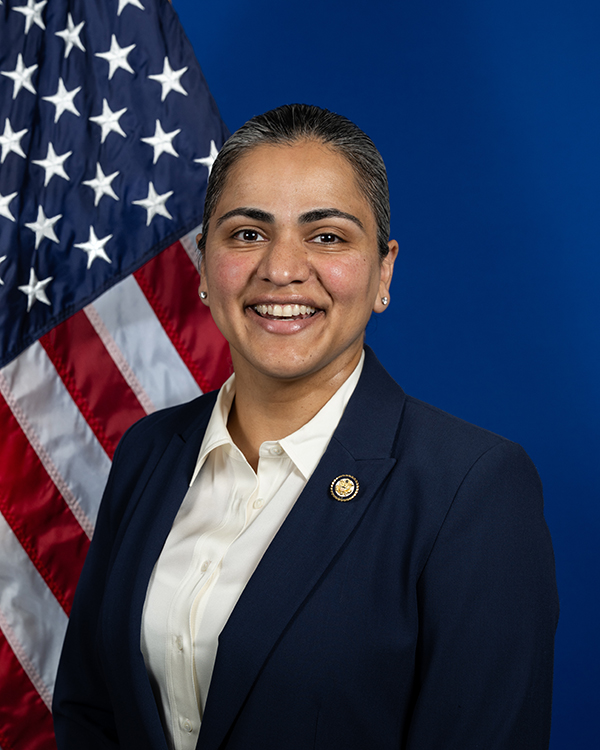
Aisha Wahab
100% support rate
Top opponent
Marsha Blackburn
11% support rate
Ranked legislators
10
5 support · 5 oppose
Key legislators

Who's moving environment in United States

Legislators moving environment in United States
Legislator Party Stance Support rate Decisive votes
Aisha Wahab
Aisha Wahab House · District 14
D
Strong +
100% 7
Everton Blair Jr.
Everton Blair Jr. House · District 13
D
Strong +
89% 9
Martin Heinrich
Martin Heinrich Senate
D
Strong +
84% 37
Adam B. Schiff
Adam B. Schiff Senate
D
Support
79% 53
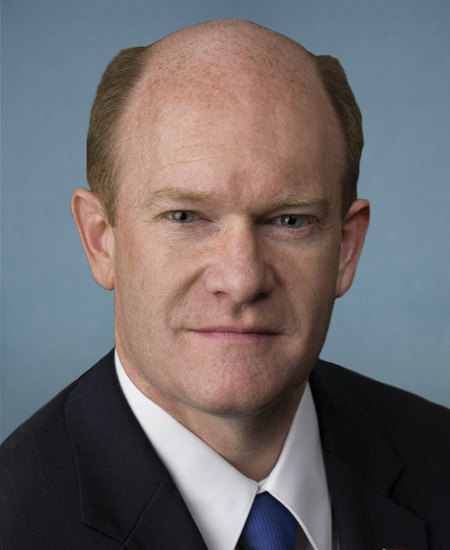
Christopher A. Coons
Christopher A. Coons Senate
D
Support
79% 52
Marsha Blackburn
Marsha Blackburn Senate
R
Strong −
11% 36
Ted Budd
Ted Budd Senate
R
Strong −
20% 40
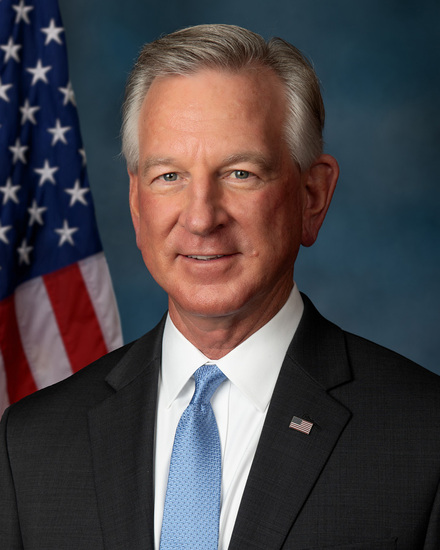
Tommy Tuberville
Tommy Tuberville Senate
R
Oppose
21% 53
Bill Cassidy
Bill Cassidy Senate
R
Oppose
22% 54
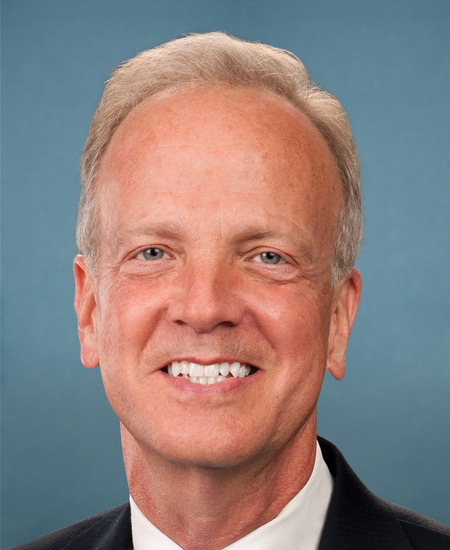
Jerry Moran
Jerry Moran Senate
R
Oppose
23% 53
Showing 741–750 of 1,501 bills

All environment bills

in committee · United States · House Jun 7, 2025

HR 3817: Toxic Health Threat Warning Act of 2025

HR 3817, the Toxic Health Threat Warning Act of 2025, requires the Secretary of the Army to test water released from flood control structures for cyanotoxins before any release. If cyanotoxin levels exceed 8 parts per billion, the Secretary must notify the public and local governments about the release and potential health risks. This law directly affects communities and local governments downstream of flood control structures where water is released. The key provision mandates testing and public notification when toxin levels surpass the established threshold, aiming to prevent exposure to harmful cyanotoxins.
in committee · United States · Senate Oct 27, 2025

S 1350: A bill to modify the boundaries of the Talladega National Forest, and for other purposes.

This bill adds specific land to the Talladega National Forest, as shown on a map dated September 6, 2024. The Secretary of Agriculture can acquire this land using existing federal land acquisition tools (like the Weeks Law) from willing sellers, using donated or appropriated funds. The newly acquired land will be managed as part of the National Forest System under standard federal rules. It directly affects the Talladega National Forest's boundaries and potential landowners in the designated area.
Sub-Topics Forestry Public Lands
in committee · United States · House Feb 5, 2025

HR 986: Marsh-Billings-Rockefeller National Historical Park Establishment Act Amendments Act of 2025

HR 986 expands the boundaries of Marsh-Billings-Rockefeller National Historical Park in Vermont to include the Marsh-Billings-Rockefeller Mansion, surrounding buildings, part of Mt. Tom, Billings Farm and Museum, and the King Farm (divided between historic and protection zones). It clarifies land acquisition rules for the King Farm area, requiring access rights for the park and allowing acquired land to be used for agriculture, forestry, conservation, and educational activities. The bill also establishes the National Park Service Stewardship Institute at the park to promote conservation workshops, research, and community engagement. These changes directly affect park management, land use policies, and operations at the King Farm and adjacent areas.
passed · United States · Senate Sep 10, 2026

S 1377: Theodore Roosevelt National Park Wild Horses Protection Act

This bill requires the Secretary of the Interior to maintain a genetically diverse herd of at least 150 wild horses in the South Unit of Theodore Roosevelt National Park. The Secretary must develop a management plan within 120 days of the bill's enactment, focused on cost-effective horse management that protects park resources. It prohibits removing horses from the park except to maintain genetic diversity, in emergencies, or to protect public health and safety. The Secretary must also annually monitor and publicly report on the herd's population, structure, and health.
Sub-Topics Parks & Recreation
passed · United States · House Mar 17, 2026

HR 2294: To reauthorize the Integrated Coastal and Ocean Observation System Act of 2009.

HR 2294 reauthorizes the Integrated Coastal and Ocean Observation System Act of 2009, extending funding and updating governance for the nation's ocean and coastal observation network. It changes references from "Council" to "Committee" throughout the law and adds requirements for federal agencies to collaborate with regional coastal observing systems on data sharing. The bill specifically directs agencies to conduct operational oceanography measurements and establishes $56 million annually for fiscal years 2026 through 2030 to support this system. This bill directly affects federal agencies managing ocean observation programs and regional coastal data networks.
in committee · United States · Senate Mar 27, 2025

S 1183: Maintaining and Enhancing Hydroelectricity and River Restoration Act of 2025

Maintaining and Enhancing Hydroelectricity and River Restoration Act of 2025 This bill establishes a new investment tax credit in the amount of 30% of the basis of any hydropower improvement property. The bill defines hydropower improvement property as property that adds or improves fish passage at a qualified dam; maintains or improves the quality of the water retained or released by a qualified dam; promotes downstream sediment transport and habitat maintenance; upgrades, repairs, or reconstructs a qualified dam to meet safety and security standards; improves public uses of, and access to, public waterways impacted by a qualified dam; removes an obsolete river obstruction; or places into service an approved remote dam. Further, written approval for hydropower improvement property must be obtained from the Federal Energy Regulatory Commission or state or local officials prior to January 1, 2035. The bill also allows an election to claim the investment tax credit for qualified progress expenses for some types of hydropower improvement property in advance of such property being placed into service. Any investment tax credit amount claimed for qualified progress expenses reduces the amount of the investment tax credit that may be claimed once the hydropower improvement property is placed into service.  The bill authorizes certain entities, including tax-exempt and governmental entities, to treat the investment tax credit for hydropower improvement property as a payment of tax and receive a refund of any overpayment (also known as elective pay).  Finally, the investment tax credit for hydropower improvement property may be transferred (i.e., sold).
in committee · United States · House May 13, 2025

HR 3328: To establish an Ambassador-at-Large for Arctic Affairs.

HR 3328 establishes a new U.S. Ambassador-at-Large for Arctic Affairs within the State Department, appointed by the President with Senate approval. The position coordinates U.S. foreign policy across federal agencies on Arctic issues including environmental protection, indigenous engagement, resource management, security, and scientific research. The ambassador reports directly to the Secretary of State and oversees efforts related to the eight Arctic Council nations and the defined Arctic region (including northern U.S. territories and Arctic waters). This bill creates a dedicated diplomatic role to streamline U.S. coordination on Arctic matters rather than changing existing laws or affecting specific constituencies directly.
in committee · United States · House Apr 24, 2025

HR 2991: Ocean Acidification Research Partnerships Act

This bill establishes a federal grant program to fund collaborative research between the seafood industry (including shellfish growers, commercial fishermen, and supply chain businesses) and academic institutions on ocean acidification. Projects must meet specific criteria, such as fostering mutual partnerships, incorporating industry expertise, and delivering shared benefits to both sectors. The program prioritizes research addressing vulnerable coastal communities, demonstrating local stakeholder support, or utilizing industry resources for monitoring. It authorizes $5 million annually from 2026 to 2030, with federal funds covering up to 85% of project costs.
in committee · United States · House Jan 21, 2025

HR 582: Community Protection and Wildfire Resilience Act

Community Protection and Wildfire Resilience Act This bill establishes a wildfire resilience grant program within the U.S. Fire Administration (USFA), expands an existing U.S. Forest Service (USFS) wildfire risk reduction grant program, and requires the USFA and Government Accountability Office (GAO) to produce various reports and resources relating to wildfire resilience. Specifically, the bill requires the USFA to award grants to state or local governments, tribes, volunteer fire departments, or groups thereof for developing a community protection and wildfire resilience plan or carrying out projects that support strategies described in such a plan.  Also, under current law, the USFS’s Community Wildfire Defense Grant program provides grants to at-risk communities for implementing wildfire risk reduction, including reducing hazardous fuels and restoring fire-adapted ecosystems, but excluding activities such as construction and home hardening (e.g., roof upgrades, fire-resistant siding). The bill expands the eligible project types to include construction or modification of a structure to increase fire-resistance and modification of a structure or the adjacent area to reduce exposure to contact with wildfire.  Additionally, the bill requires the USFA to develop and publish a map depicting communities at risk from wildfire. The USFA must also provide a report evaluating and ensuring public entities have radio communication capabilities adequate for wildfire management. The bill also requires the GAO to publish a study on potential certification for community protection and wildfire resilience plans, and a report assessing impediments for federal wildfire resilience programs.
in committee · United States · House Dec 2, 2025

HR 5781: MATCH Act of 2025

The MATCH Act of 2025 creates a new emergency watershed program allowing state, local, or tribal governments to incur costs for urgent cleanup work after natural disasters *before* formally agreeing with the federal government. It requires the Secretary to identify eligible emergency measures and establish a state-level process for sponsors to request reimbursement for these preagreement costs within 180 days. Sponsors assuming these costs bear the financial risk, but if a formal agreement is later signed, those preagreement costs count toward the sponsor’s required contribution. The bill does not obligate the federal government to enter agreements, focusing solely on enabling reimbursement for specific, pre-approved emergency actions.
Sub-Topics Natural Disasters Water Quality Tags Emergency Management
Showing 741 to 750 of 1,501 bills
Previous 1 … 74 75 76 … 151 Next