Issue · Environment

Environment

Every environment bill, vote, and legislator stance in United States, automatically classified by Maddy, our AI policy reader.

Total bills
1,501
119th Congress
Top supporter
Aisha Wahab
100% support rate
Top opponent
Marsha Blackburn
11% support rate
Ranked legislators
10
5 support · 5 oppose
Key legislators

Who's moving environment in United States

Legislators moving environment in United States
Legislator Party Stance Support rate Decisive votes
Aisha Wahab
Aisha Wahab House · District 14
D
Strong +
100% 7
Everton Blair Jr.
Everton Blair Jr. House · District 13
D
Strong +
89% 9
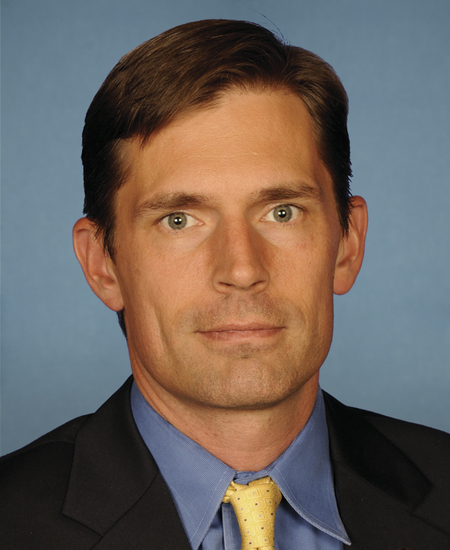
Martin Heinrich
Martin Heinrich Senate
D
Strong +
84% 37
Adam B. Schiff
Adam B. Schiff Senate
D
Support
79% 53
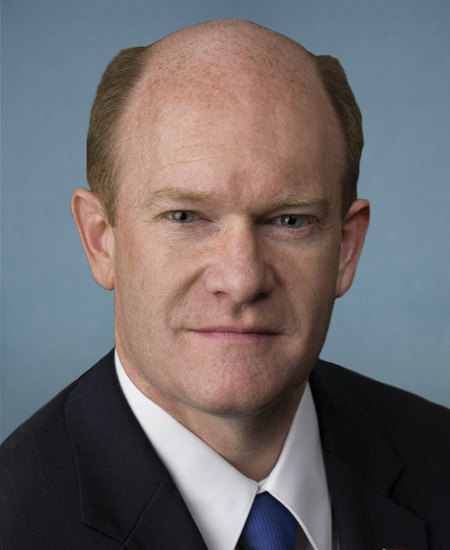
Christopher A. Coons
Christopher A. Coons Senate
D
Support
79% 52
Marsha Blackburn
Marsha Blackburn Senate
R
Strong −
11% 36
Ted Budd
Ted Budd Senate
R
Strong −
20% 40
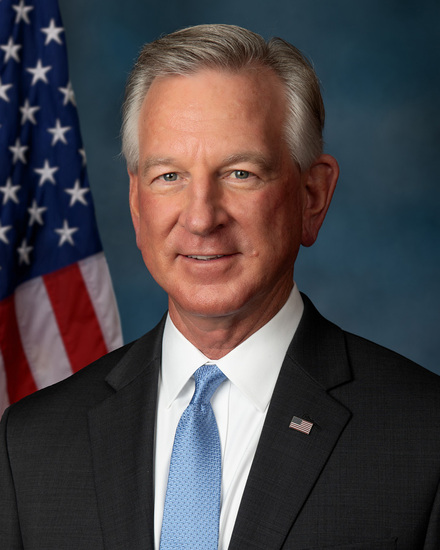
Tommy Tuberville
Tommy Tuberville Senate
R
Oppose
21% 53
Bill Cassidy
Bill Cassidy Senate
R
Oppose
22% 54
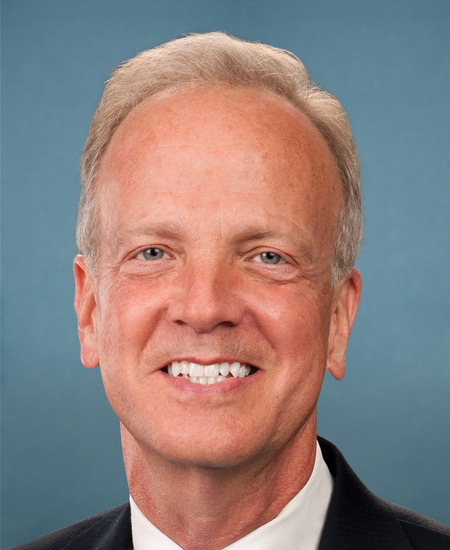
Jerry Moran
Jerry Moran Senate
R
Oppose
23% 53
Showing 721–730 of 1,501 bills

All environment bills

in committee · United States · House Nov 18, 2025

HR 6082: Fracturing Responsibility and Awareness of Chemicals Act of 2025

This bill requires oil and gas companies conducting hydraulic fracturing operations to disclose detailed chemical ingredients before starting and within 30 days after completing operations. Companies must provide full chemical names, CAS numbers, safety data sheets, and volumes to state or federal authorities, who then make this information publicly available online. The bill includes an exception allowing immediate disclosure of proprietary chemical formulas during medical emergencies, though companies can later request confidentiality agreements. It directly affects fracking operators in oil, gas, and geothermal production, amending the Safe Drinking Water Act to mandate transparency while maintaining trade secret protections outside emergency situations.
Sub-Topics Drinking Water
in committee · United States · House Sep 15, 2025

HR 1809: Great Lakes Fishery Research Reauthorization Act

This bill extends federal funding authorization for Great Lakes fisheries research and monitoring programs. It amends existing law to change the expiration date from 2025 to 2030, ensuring continued support for these programs. The key provision directly affects federal research initiatives focused on assessing and managing fish populations in the Great Lakes Basin. This is a procedural reauthorization, not a new policy, maintaining current funding levels through 2030.
in committee · United States · Senate May 11, 2026

S 2126: Integrated Ocean Observation System Reauthorization Act of 2025

This bill reauthorizes the Integrated Coastal and Ocean Observation System through 2030, updating the 2009 law to replace "Council" with "Committee" (specifically the Ocean Policy Committee) throughout. It expands the system's scope to include meteorological observations and data management systems, requiring collaboration between regional observing systems and federal agencies. The bill authorizes $56 million annually for fiscal years 2026-2030, mandating at least 7.5% of funds support existing regional coastal observing systems. It directly affects federal agencies, regional observing networks, and coastal states by updating governance and funding mechanisms for ocean and weather data collection.
in committee · United States · Senate Sep 16, 2026

S 456: STEAM Act

S 456, the STEAM Act, amends the Energy Policy Act of 2005 to include geothermal resources under existing environmental review requirements for energy projects. It updates Section 390 of the Energy Policy Act to explicitly add "geothermal" alongside "gas" in provisions governing National Environmental Policy Act (NEPA) reviews for exploration and development. This change directly affects geothermal energy developers by extending the same federal permitting and environmental review processes currently applied to gas projects. The bill modifies legal language to ensure geothermal projects undergo the same federal environmental assessments as gas projects, without creating new programs or altering funding.
in committee · United States · House May 15, 2025

HR 3465: Civilian Conservation Center Enhancement Act of 2025

This bill establishes new training programs at Civilian Conservation Centers (CCCs) operated by the Interior or Agriculture Departments, focusing on wildfire firefighting, forestry, and conservation skills for underserved youth. It requires the Secretaries to hire 300 annual graduates into wildland firefighting roles, bypass standard hiring rules for qualified graduates, and use covered students (current trainees) for facility renovations and housing projects. Key provisions include specialized curricula like heavy equipment operation, forest restoration, and habitat monitoring, alongside housing pilots to improve federal housing for firefighters using CCC trainees. The bill directly affects CCC participants, federal agencies, and rural communities seeking conservation workforce development.
Sub-Topics Conservation Forestry
passed · United States · House May 20, 2025

HR 1453: Clean Energy Demonstration Transparency Act of 2025

HR 1453, the Clean Energy Demonstration Transparency Act of 2025, requires the Department of Energy to submit detailed, publicly available reports on clean energy demonstration projects funded under the Infrastructure Investment and Jobs Act. It mandates that within six months of enactment and every six months thereafter, the Secretary must provide Congress and the public with copies of initial contracts, status of project milestones, and any major changes to project scope, funding, or partners. These reports apply to all covered projects administered or supported by the program. The bill aims to increase transparency by standardizing reporting requirements and allowing coordination with existing reporting processes.
Sub-Topics Renewable Energy
in committee · United States · Senate Mar 6, 2025

S 896: Co-Location Energy Act

S 896, the Co-Location Energy Act, allows renewable energy projects (solar/wind) to be developed on existing federal oil, gas, coal, and geothermal lease areas. It requires the Secretary of the Interior to obtain leaseholder consent before authorizing evaluations or issuing permits for renewable energy development on those lands. The bill mandates the Secretary to determine within 180 days if such projects qualify for streamlined environmental review under the National Environmental Policy Act. This directly affects federal leaseholders (e.g., oil/gas companies) and renewable energy developers seeking to co-locate projects on currently leased federal lands.
in committee · United States · House Jan 13, 2026

HR 7042: Heroes Home Energy Savings Act

HR 7042, the Heroes Home Energy Savings Act, allocates specific funding to enhance weatherization services for military households under the existing Weatherization Assistance Program (WAP). It authorizes $350 million annually (2026-2030) for general WAP services and sets aside $2.1 million each year specifically for weatherization improvements to homes of active duty and reserve military members. The bill requires that no more than 6% of the general WAP funding can be used for program enhancements, while the dedicated $2.1 million must be spent solely on military households. This directly affects active duty and reserve military personnel and their households by providing targeted energy efficiency upgrades to their homes.
in committee · United States · House Mar 27, 2025

HR 2472: INFANTS Act of 2025

This bill requires food facilities manufacturing or processing infant and toddler food (for children up to 24 months) to conduct quarterly testing for toxic metals like lead, cadmium, mercury, and arsenic in final products. Facilities must maintain detailed records of sampling plans, test results, and lab accreditation for at least two years or the product’s shelf life, whichever is longer. Manufacturers must report confirmed positive pathogen tests (like Cronobacter) to the FDA within 24 hours and implement environmental monitoring for sanitation controls in powdered infant formula production. These requirements apply directly to food facilities producing infant/toddler food, aiming to strengthen safety testing and transparency without specifying enforcement outcomes.
Sub-Topics Children's Health
signed · United States · House Feb 11, 2026

HR 1043: La Paz County Solar Energy and Job Creation Act

La Paz County Solar Energy and Job Creation Act This act directs the Department of the Interior, after receiving a request from La Paz County, Arizona, to convey approximately 3,400 acres of identified land managed by the Bureau of Land Management to the county for fair market value. Interior must exclude from the conveyance any federal land that contains significant cultural, environmental, wildlife, or recreational resources. As a condition of the conveyance, La Paz County and any subsequent owner must make good faith efforts to avoid disturbing tribal artifacts; minimize impacts on tribal artifacts if they are disturbed; coordinate with the Colorado River Indian Tribes Tribal Historic Preservation Office to identify artifacts of cultural and historic significance; and allow tribal representatives to rebury unearthed artifacts at, or near, where they were discovered. The federal land is withdrawn from the operation of U.S. mining and mineral leasing laws, and thus the land is not available for new mining claims, new mineral or geothermal leases, nor sales of mineral materials. The county must pay all costs related to the conveyance.
Showing 721 to 730 of 1,501 bills
Previous 1 … 72 73 74 … 151 Next