Issue · Environment

Environment

Every environment bill, vote, and legislator stance in United States, automatically classified by Maddy, our AI policy reader.

Total bills
1,501
119th Congress
Top supporter
Aisha Wahab
100% support rate
Top opponent
Marsha Blackburn
11% support rate
Ranked legislators
10
5 support · 5 oppose
Key legislators

Who's moving environment in United States

Legislators moving environment in United States
Legislator Party Stance Support rate Decisive votes
Aisha Wahab
Aisha Wahab House · District 14
D
Strong +
100% 7
Everton Blair Jr.
Everton Blair Jr. House · District 13
D
Strong +
89% 9
Martin Heinrich
Martin Heinrich Senate
D
Strong +
84% 37
Adam B. Schiff
Adam B. Schiff Senate
D
Support
79% 53
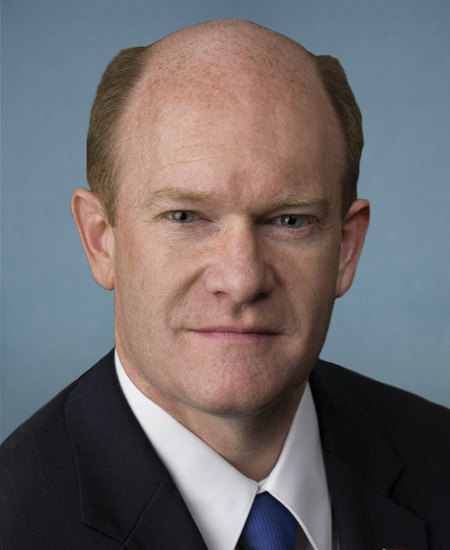
Christopher A. Coons
Christopher A. Coons Senate
D
Support
79% 52
Marsha Blackburn
Marsha Blackburn Senate
R
Strong −
11% 36
Ted Budd
Ted Budd Senate
R
Strong −
20% 40
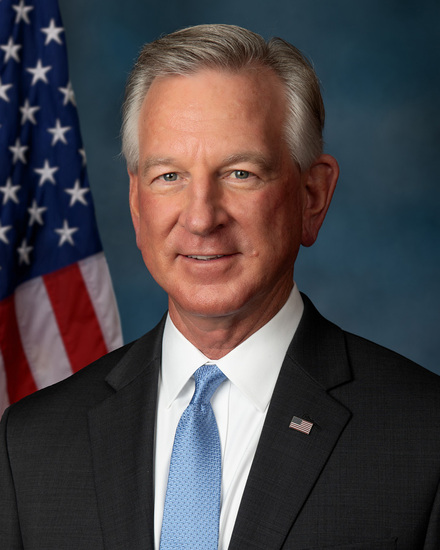
Tommy Tuberville
Tommy Tuberville Senate
R
Oppose
21% 53
Bill Cassidy
Bill Cassidy Senate
R
Oppose
22% 54
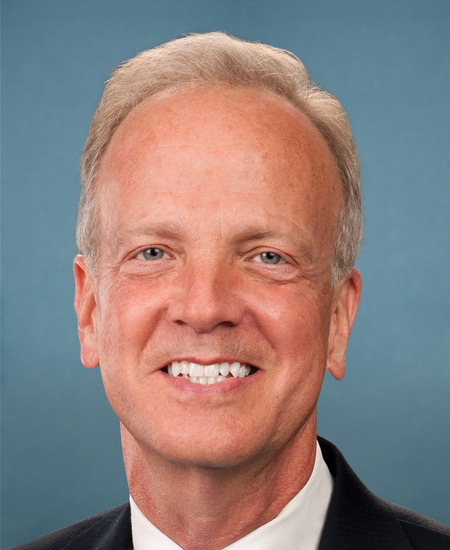
Jerry Moran
Jerry Moran Senate
R
Oppose
23% 53
Showing 651–660 of 1,501 bills

All environment bills

in committee · United States · House Mar 20, 2026

HR 7476: Water Infrastructure Assistance Reauthorization Act

This bill extends the funding period for existing USDA water and wastewater infrastructure grants from 2019-2023 to 2026-2031. It directly affects rural communities and tribal areas that rely on these federal grants to upgrade drinking water systems, sewage treatment, and waste disposal facilities. The key provision amends a specific section of the Consolidated Farm and Rural Development Act to adjust the grant program's authorization period. This change ensures continued access to funding for critical water infrastructure improvements without altering the program's scope or eligibility.
Sub-Topics Drinking Water Waste Management Tags Rural Communities
in committee · United States · House Sep 16, 2025

HR 5410: Critical Mineral Brine Extraction Research and Development Act

HR 5410, the Critical Mineral Brine Extraction Research and Development Act, directs the U.S. Department of Energy to fund research and demonstrations for extracting critical minerals (like lithium or cobalt) from saltwater solutions (brine). It requires the Department to collaborate with private industry to scale up this technology, improve its performance, and lower costs through pilot projects. The bill authorizes $2 million annually from 2026 to 2030 for this work and mandates a congressional report within one year assessing the technology’s feasibility, barriers, and potential federal-private partnerships for domestic mineral supply. This directly affects the Department of Energy, private sector partners, and future domestic mineral production, focusing solely on advancing the technology’s development without mandating specific extraction or use.
in committee · United States · House Apr 7, 2025

HR 2679: Cool Roof Rebate Act of 2025

HR 2679, the Cool Roof Rebate Act of 2025, creates a federal program providing rebates to low-income households for installing highly reflective roofing products that reduce home cooling costs. Eligible households must have incomes below 200% of their ZIP code’s median income and reside in areas ranked in the top 25% for heat vulnerability by the CDC. Rebates range from $0.25 to $0.75 per square foot, depending on roof type (low-sloped or steep-sloped) and the product’s ability to reflect sunlight and emit heat, as measured by standardized testing. The program runs from 2026 through 2030 with $25 million annually allocated for rebates, requiring participants to report on roof types and products used.
Sub-Topics Energy Efficiency
in committee · United States · Senate Jun 4, 2025

S 1942: Malheur Community Empowerment for the Owyhee Act

This bill establishes the Malheur County Grazing Management Program, allowing ranchers to adjust grazing schedules and water placement with written notice to improve ecological health on federal lands. It creates the Malheur C.E.O. Group, an 18-member advisory body representing ranching interests, environmental groups, tribal representatives, and government agencies to develop and monitor projects. The bill designates approximately 1.1 million acres of federal land as wilderness areas and transfers specific parcels to the Burns Paiute Tribe. The program requires monitoring plans, annual reports, and consultation with stakeholders to balance ecological health with grazing uses.
Sub-Topics Public Lands
passed · United States · Senate Mar 27, 2026

S 1142: Scarper Ridge Golden Gate National Recreation Area Boundary Adjustment Act

S 1142, the Scarper Ridge Golden Gate National Recreation Area Boundary Adjustment Act, formally adds a specific parcel of land (known as Scarper Ridge) to the Golden Gate National Recreation Area. The bill amends existing law to include land depicted on a map titled "Golden Gate National Recreation Area Proposed Boundary Addition" (map number 641/193973, dated July 2024). This boundary adjustment incorporates Scarper Ridge into the recreation area, subjecting it to National Park Service management and protections. The change directly affects the Scarper Ridge land, which will now be managed as part of the protected recreation area.
Sub-Topics Parks & Recreation
in committee · United States · Senate Mar 25, 2025

S 1107: MATCH Act of 2025

S 1107, the MATCH Act of 2025, allows states, local governments, and federally recognized tribes to pay for urgent emergency watershed protection measures (like flood prevention after disasters) before formally agreeing with the federal government. It requires the Secretary of Agriculture to identify eligible emergency measures and create a state-level process for sponsors to request these upfront costs within 180 days of the bill's enactment. If an agreement is later made, these pre-agreement costs count toward the sponsor’s required contribution. However, sponsors bear the full risk of incurring these costs if no agreement is reached. The bill does not guarantee federal funding but streamlines cost-sharing for immediate disaster response.
Sub-Topics Coastal & Flood Protection Natural Disasters Water Quality Tags Emergency Management
in committee · United States · House Jan 14, 2025

HR 383: End Oil and Gas Tax Subsidies Act of 2025

The End Oil and Gas Tax Subsidies Act of 2025 would eliminate several tax benefits currently available to oil and gas companies, including credits for enhanced oil recovery, deductions for intangible drilling costs, and percentage depletion allowances. It would also prohibit major integrated oil companies (defined as those meeting specific production and revenue thresholds) from using last-in, first-out accounting for inventory purposes. These changes would take effect for taxable years beginning after December 31, 2024, directly affecting oil and gas producers who currently claim these tax benefits. The legislation removes specific tax advantages that have been available to the oil and gas industry, potentially increasing their tax burden.
in committee · United States · Senate Jun 11, 2025

S 2038: Wildfire Coordination Act

The Wildfire Coordination Act (S 2038) establishes a permanent federal advisory Board to improve how wildfire research is used in practice. The Board, composed of federal agency leaders and 18 non-federal experts (including state/local/Tribal representatives and fire departments), will coordinate wildfire research across agencies, translate findings into operational tools, and share best practices through online portals and workshops. It requires a congressional report within two years detailing progress, barriers, and future research priorities. The bill directly affects federal wildfire management agencies, researchers, and fire departments by creating a structured process to connect science with on-the-ground wildfire operations.
Sub-Topics Forestry
in committee · United States · House May 20, 2026

HR 301: GEO Act

Geothermal Energy Opportunity Act or the GEO Act This bill expands the Geothermal Steam Act of 1970 to establish a deadline for the Department of the Interior to process applications related to geothermal leases. Specifically, Interior must process each application for a geothermal drilling permit or other authorization under a valid existing geothermal lease within 60 days after completing all requirements under applicable federal laws and regulations (including the National Environmental Policy Act of 1969, the Endangered Species Act of 1973, and the National Historic Preservation Act) unless a U.S. federal court vacates or provides injunctive relief for the underlying lease.
in committee · United States · Senate Jul 9, 2025

S 2215: Restoring America’s Floodplains Act

S 2215, the Restoring America’s Floodplains Act, amends the Agricultural Credit Act of 1978 to update how federal floodplain easements are managed. It directly affects landowners who hold existing floodplain easements (where they’ve given up development rights on flood-prone land) and federal agencies managing these areas. The bill requires the Secretary to provide financial and technical assistance for restoring natural vegetation and water flow on these easements, and grants the Secretary sole discretion to manage them through agreements with landowners or organizations. This changes current management by adding specific restoration requirements and flexibility for ongoing maintenance.
Showing 651 to 660 of 1,501 bills
Previous 1 … 65 66 67 … 151 Next