Issue · Environment

Environment (Conservation)

Every environment bill, vote, and legislator stance in United States, automatically classified by Maddy, our AI policy reader.

Total bills
81
119th Congress
Top supporter
Adam B. Schiff
100% support rate
Top opponent
Ashley Moody
0% support rate
Ranked legislators
10
5 support · 5 oppose
Key legislators

Who's moving conservation in United States

Legislators moving conservation in United States
Legislator Party Stance Support rate Votes
Adam B. Schiff
Adam B. Schiff Senate
D
Strong +
100% 9
Alex Padilla
Alex Padilla Senate
D
Strong +
100% 9
Amy Klobuchar
Amy Klobuchar Senate
D
Strong +
100% 9
Andy Kim
Andy Kim Senate
D
Strong +
100% 9
Angus S. King, Jr.
Angus S. King, Jr. Senate
I
Strong +
100% 9
Ashley Moody
Ashley Moody Senate
R
Strong −
0% 9
Bernie Moreno
Bernie Moreno Senate
R
Strong −
0% 9
Bill Cassidy
Bill Cassidy Senate
R
Strong −
0% 9
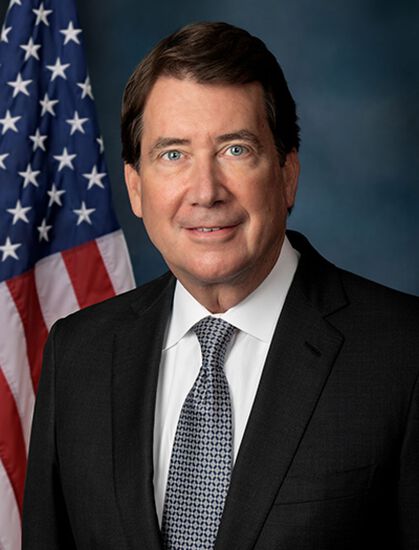
Bill Hagerty
Bill Hagerty Senate
R
Strong −
0% 9
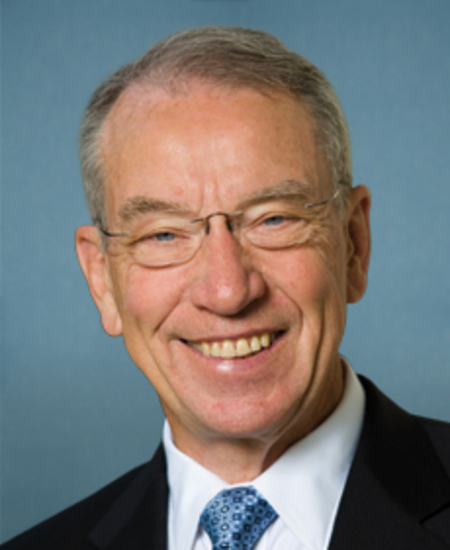
Chuck Grassley
Chuck Grassley Senate
R
Strong −
0% 9
Showing 51–60 of 81 bills

All environment bills

in committee · United States · Senate Feb 11, 2025

S 530: WEST Act of 2025

S 530, the WEST Act of 2025, repeals a specific Bureau of Land Management (BLM) rule titled "Conservation and Landscape Health" (88 Fed. Reg. 19583, April 3, 2023). The bill directly affects the BLM by nullifying the legal force of this 2023 regulation. It contains no new provisions or policy changes, only the repeal of an existing rule. This is a procedural legislative action with no direct impact on the public, businesses, or other entities.
in committee · United States · Senate May 1, 2025

S 1568: LIT Act of 2025

The LIT Act of 2025 repeals three existing Department of Energy energy efficiency rules for general service lamps (common incandescent light bulbs). It directly affects manufacturers and retailers of traditional incandescent bulbs by removing regulatory requirements they previously had to meet. Key mechanisms include amending the Energy Policy and Conservation Act to eliminate specific references to incandescent standards and formally terminating three finalized rules (from 2022 and 2024) that established minimum efficiency levels. This bill makes no new efficiency requirements for these bulbs but removes the existing ones.
in committee · United States · Senate Apr 10, 2025

S 1495: NRCS Wetland Compliance and Appeals Reform Act

S 1495 reforms how the Natural Resources Conservation Service (NRCS) handles wetland compliance and appeals for farmers and ranchers. It requires NRCS to prove violations (not farmers to prove innocence), prohibits retroactive penalties for past wetland conversions, and prevents NRCS from changing its arguments after a successful appeal. The bill also mandates on-site visits during appeals, creates farmer-led State oversight committees, and requires customer satisfaction surveys after wetland determinations. These changes directly affect agricultural landowners who interact with NRCS regarding wetland assessments.
Sub-Topics Conservation Tags Agriculture
in committee · United States · Senate Jan 21, 2025

S 171: A bill to remove the lesser prairie-chicken from the lists of threatened species and endangered species published pursuant to the Endangered Species Act of 1973, to amend that Act to exclude the lesser prairie-chicken from the authority of that Act, and for other purposes.

This bill removes the lesser prairie-chicken from the federal endangered and threatened species lists under the Endangered Species Act. It specifically amends the Act to permanently prevent the U.S. Fish and Wildlife Service from re-listing the bird as endangered or threatened in the future. The legislation directly affects the regulatory protections for this bird species, ending federal conservation requirements like habitat restrictions or project reviews under the ESA. The change applies to all populations of the lesser prairie-chicken across its range.
Sub-Topics Conservation Wildlife
in committee · United States · House Dec 11, 2025

HR 6674: CLAIM Act of 2025

HR 6674, the CLAIM Act of 2025, changes the annual maintenance fee for hardrock mining claims on federal land based on proximity to protected areas like National Parks and monuments. It establishes tiered fees: $1,100 for claims mostly within protected areas, decreasing to $300 for claims over 30 miles away, replacing the traditional "assessment work" requirement under the 1872 Mining Law. Small miners (holding ≤10 claims, ≤200 acres, or earning <$50,000 annually from mining) are exempt from these fees. Excess fees collected fund conservation programs, with 40% allocated to infrastructure projects, 20% to Tribal preservation, and 10% each to the Land and Water Conservation Fund and national park restoration. The bill directly affects individual miners and small operations holding claims near protected lands.
in committee · United States · House Mar 11, 2025

HR 2063: To prohibit natural asset companies from entering into any agreement with respect to land in the State of Utah or natural assets on or in land in the State of Utah.

HR 2063 prohibits "natural asset companies" from entering agreements related to land or natural assets in Utah. These companies are defined as corporations managing defined areas for conservation, restoration, or sustainable use, or similar organizations. The bill directly affects such companies by banning all agreements involving Utah land or its natural assets. This creates a clear legal restriction on their operations within the state.
in committee · United States · Senate May 13, 2025

S 1724: Town of North Topsail Beach Coastal Barrier Resources System Map Amendment Act of 2025

This bill amends the map for Unit L06 of the John H. Chafee Coastal Barrier Resources System to exclude specific parcels in North Topsail Beach, North Carolina, that are zoned for non-conservation uses under local regulations. It requires the Secretary of the Interior to correct the map within 30 days of enactment, removing these parcels from the system. This change directly affects the town's land by lifting federal restrictions on development and federal funding that previously applied to those areas. The amendment applies only to parcels within North Topsail Beach's municipal boundaries in Unit L06.
in committee · United States · Senate Mar 27, 2025

SJRES 44: A joint resolution providing for congressional disapproval under chapter 8 of title 5, United States Code, of the rule submitted by the Department of Energy relating to "Energy Conservation Program: Energy Conservation Standards for Commercial Refrigerators, Freezers, and Refrigerator-Freezers".

This bill (SJRES 44) seeks to block a Department of Energy rule that set new energy efficiency standards for commercial refrigerators, freezers, and refrigerator-freezers. It directly affects businesses that manufacture, sell, or operate these commercial refrigeration units, which would have been required to meet the new standards. The resolution uses a specific legal process (under Chapter 8 of Title 5 U.S. Code) to formally disapprove the rule, meaning it would prevent the rule from taking effect. The rule in question was published in the Federal Register on January 21, 2025 (90 Fed. Reg. 7464). If passed, the rule would have no force or effect.
in committee · United States · House May 8, 2025

HR 3313: Protecting American Farmland Act

HR 3313, the Protecting American Farmland Act, prohibits federal agencies from using taxpayer funds to support solar energy projects that convert prime farmland. It also excludes solar installations on prime farmland from multiple federal tax credits, including the residential clean energy credit, production tax credits, and investment tax credits. The bill defines "prime farmland" using existing standards from the Farmland Protection Policy Act, directly affecting solar developers seeking federal funding or tax incentives for projects on such land. These provisions aim to prevent agricultural land conversion for solar energy development by restricting financial incentives.
in committee · United States · House Jun 25, 2025

HR 4133: EQIP Improvement Act of 2025

The EQIP Improvement Act of 2025 revises payment limits for farmers participating in the Environmental Quality Incentives Program (EQIP), which provides financial assistance for conservation practices. It sets a 75% payment cap for most conservation costs (down from higher previous limits), reduces payments to 40% for specific infrastructure like irrigation systems or animal mortality facilities, and allows 100% coverage for income foregone. The bill also lowers the annual payment cap per producer from $450,000 to $150,000. Additionally, it requires the Secretary to submit annual reports to Congress detailing funding distribution by practice type, state, and farm size. These changes directly affect farmers adopting conservation practices under EQIP.
Sub-Topics Conservation Tags Agriculture
Showing 51 to 60 of 81 bills
Previous 1 5 6 7 9 Next