Issue · Environment

Environment (Wildlife)

Every environment bill, vote, and legislator stance in United States, automatically classified by Maddy, our AI policy reader.

Total bills
135
119th Congress
Top supporter
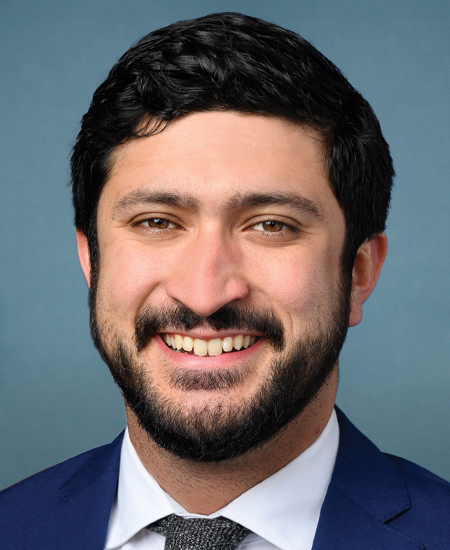
Greg Casar
83% support rate
Top opponent
Susan M. Collins
0% support rate
Ranked legislators
10
5 support · 5 oppose
Key legislators

Who's moving wildlife in United States

Legislators moving wildlife in United States
Legislator Party Stance Support rate Votes
Greg Casar
Greg Casar House · District 35
D
Strong +
83% 12
Judy Chu
Judy Chu House · District 28
D
Strong +
81% 16
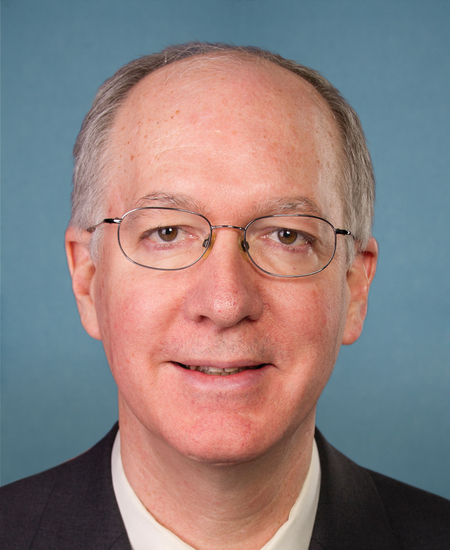
Bill Foster
Bill Foster House · District 11
D
Strong +
80% 15
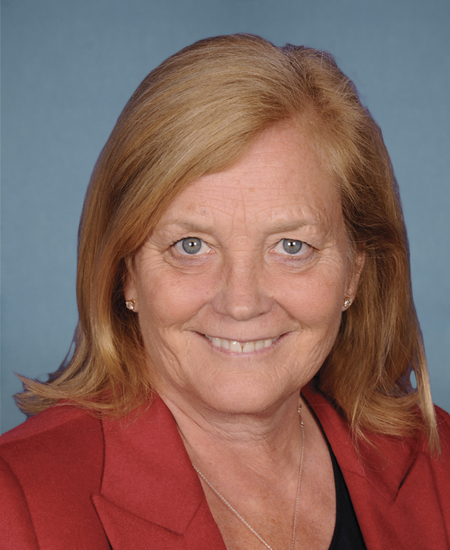
Chellie Pingree
Chellie Pingree House · District 1
D
Strong +
80% 15
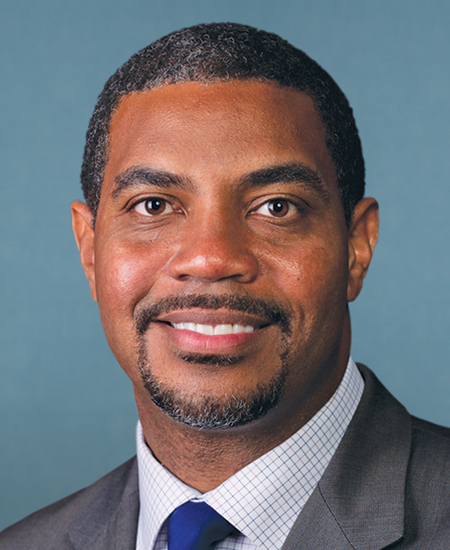
Steven Horsford
Steven Horsford House · District 4
D
Strong +
80% 15
Susan M. Collins
Susan M. Collins Senate
R
Strong −
0% 5
Aaron Bean
Aaron Bean House · District 4
R
Strong −
19% 16
Clay Fuller
Clay Fuller House · District 14
R
Strong −
20% 5
John Fetterman
John Fetterman Senate
D
Strong −
20% 5
Andrew Ogles
Andrew Ogles House · District 5
R
Oppose
21% 14
Showing 41–50 of 135 bills

All environment bills

in committee · United States · House Dec 18, 2025

HR 6864: SAW Act

HR 6864, the SAW Act, prohibits using motor vehicles to intentionally hunt, pursue, or kill mammalian predators (like coyotes or wolves) on federal land. It directly affects hunters or recreational users operating vehicles on federal lands, with penalties including fines up to $10,000 or up to 5 years in prison for violations. An exception allows use of vehicles for self-defense or to prevent injury to others. The Secretary of the Interior enforces the law, with authority to investigate violations and coordinate with federal, state, and local law enforcement. The law excludes tribal trust lands and defines "motor vehicle" broadly to include snowmobiles, vehicles, and watercraft.
Sub-Topics Public Lands Wildlife
signed · United States · House Feb 11, 2026

HR 1043: La Paz County Solar Energy and Job Creation Act

La Paz County Solar Energy and Job Creation Act This act directs the Department of the Interior, after receiving a request from La Paz County, Arizona, to convey approximately 3,400 acres of identified land managed by the Bureau of Land Management to the county for fair market value. Interior must exclude from the conveyance any federal land that contains significant cultural, environmental, wildlife, or recreational resources. As a condition of the conveyance, La Paz County and any subsequent owner must make good faith efforts to avoid disturbing tribal artifacts; minimize impacts on tribal artifacts if they are disturbed; coordinate with the Colorado River Indian Tribes Tribal Historic Preservation Office to identify artifacts of cultural and historic significance; and allow tribal representatives to rebury unearthed artifacts at, or near, where they were discovered. The federal land is withdrawn from the operation of U.S. mining and mineral leasing laws, and thus the land is not available for new mining claims, new mineral or geothermal leases, nor sales of mineral materials. The county must pay all costs related to the conveyance.
in committee · United States · House Apr 18, 2025

HR 2301: To promote the development of renewable energy on public land, and for other purposes.

HR 2301 sets new national goals for renewable energy production on Federal land, increasing the target from 25% to 60% by 2030. The bill establishes "priority areas" for wind, solar, and geothermal projects on public land and streamlines permitting by allowing delegation to State Renewable Energy Coordination Offices. It creates a revenue-sharing system where 25% of project revenues go to the state, 25% to counties, and 35% (increasing to 40% after 2045) to a Renewable Energy Resource Conservation Fund that supports habitat restoration and recreational access. The bill affects renewable energy developers, Federal land managers, states, counties, and communities near renewable energy projects, while requiring updates to environmental impact statements and balancing development with conservation of wildlife, cultural resources, and other land uses.
passed · United States · House May 14, 2025

HR 331: To amend the Aquifer Recharge Flexibility Act to clarify a provision relating to conveyances for aquifer recharge purposes.

This bill clarifies how states, tribes, or public entities can use existing water infrastructure (like canals built before 1976) for aquifer recharge without needing new federal permits. It requires 30 days' advance notice to the Bureau of Land Management detailing the infrastructure, intended use, and a written agreement with the rights-holder. Non-profit uses of existing rights are exempt from additional rent, but for-profit operations are not. The bill also exempts these recharge activities from certain environmental laws (Clean Water Act, Endangered Species Act) and allows modifying existing infrastructure. It directly affects water management entities working with federal land rights.
in committee · United States · House Mar 3, 2025

HR 1780: Hawaii Native Species Conservation and Recovery Act of 2025

This bill establishes the Hawaii Native Species Conservation and Recovery Grant Program, providing federal funding to eligible entities like state/local governments, Native Hawaiian organizations, nonprofits, businesses, and universities. It directs grants toward projects preventing invasive species spread, addressing climate impacts on native habitats, restoring species populations, and increasing public engagement in conservation. The program requires 75% federal funding (with 100% possible for specific projects) and mandates that at least 5% of annual funds support projects led by Native Hawaiian organizations or focused on youth workforce development. The bill authorizes $30 million annually for 10 years, with funds supplementing (not replacing) existing conservation efforts in Hawaii.
Sub-Topics Conservation Wildlife
passed · United States · House Mar 17, 2026

HR 831: Lower Colorado River Multi-Species Conservation Program Amendment Act of 2025

Lower Colorado River Multi-Species Conservation Program Amendment Act of 2025 This bill establishes an interest-bearing account for the nonfederal contributions for the Lower Colorado River Multi-Species Conservation Program, a cooperative effort between federal and nonfederal entities in Arizona, California, and Nevada. The program works to recover multiple species listed under the Endangered Species Act. Currently, the pace of funding exceeds the pace of work. The bill allows the nonfederal contributions deposited in the fund to be made available, without further appropriation, for the program in the future. However, amounts derived from interest earned on amounts in the fund are subject to the availability of appropriations.
Sub-Topics Conservation Wildlife
in committee · United States · House Apr 18, 2025

HR 2235: Habitat Connectivity on Working Lands Act of 2025

HR 2235, the Habitat Connectivity on Working Lands Act of 2025, amends key USDA conservation programs to prioritize wildlife habitat connectivity, particularly for big game species like deer and elk. It adds habitat connectivity and migration corridors as conservation goals in the Environmental Quality Incentives Program (EQIP) and Conservation Stewardship Program (CSP), allowing payments for activities like planning and maintenance on grasslands enrolled in the Conservation Reserve Program (CRP) that are ecologically significant. The bill increases the maximum rental payment limit for CRP grasslands from $50,000 to $125,000 per year and requires the USDA to incorporate nonstructural methods (like virtual fencing) into conservation standards. It also directs research grants to study virtual fencing technology and its impacts on sensitive habitats used by big game species.
passed · United States · House May 14, 2025

HR 1001: To provide for a memorandum of understanding to address the impacts of a certain record of decision on the Upper Colorado River Basin Fund.

HR 1001 requires federal agencies to create a memorandum of understanding (MOU) addressing how a specific 2024 record of decision (related to Glen Canyon Dam operations) might impact the Upper Colorado River Basin Fund. The MOU, developed with the Glen Canyon Dam Adaptive Management Work Group, must establish a plan to address three key areas: potential effects on infrastructure costs and operations, impacts on hydropower production and grid reliability, and effects on endangered species. It directly affects the Interior Department, Energy Department, and the fund managing hydropower revenues from Glen Canyon Dam. The bill focuses on assessing and planning for potential financial and operational impacts, not on changing the record of decision itself.
in committee · United States · House Jan 23, 2025

HR 704: To provide for the issuance of a Manatee Semipostal Stamp.

HR 704 would direct the U.S. Postal Service to issue a special "Manatee Semipostal Stamp" for public sale. All extra money collected from selling this stamp (above the standard postage rate) would be sent to the U.S. Fish and Wildlife Service to fund manatee conservation and habitat protection in the U.S. The stamp would be available for at least two years starting within a year of the bill's passage.
Sub-Topics Conservation Wildlife
in committee · United States · Senate Jul 31, 2025

S 2586: MARA Act of 2025

The MARA Act of 2025 establishes a framework for developing sustainable offshore aquaculture in U.S. waters by creating an Office of Aquaculture within NOAA. It authorizes commercial-scale demonstration projects that must meet strict environmental requirements to minimize impacts on wildlife, habitats, and existing ocean users, while requiring regular data reporting on environmental and socioeconomic impacts. The bill includes provisions for workforce development through Aquaculture Centers of Excellence at minority-serving institutions and mandates studies on offshore aquaculture viability and regulatory processes. These provisions directly affect offshore aquaculture developers, coastal communities, seafood industry workers, and environmental stakeholders. The bill aims to support the growth of a domestic aquaculture industry while ensuring environmental protection and community benefits.
Showing 41 to 50 of 135 bills
Previous 1 4 5 6 14 Next