Issue · Environment

Environment

Every environment bill, vote, and legislator stance in United States, automatically classified by Maddy, our AI policy reader.

Total bills
1,490
119th Congress
Top supporter
Aisha Wahab
100% support rate
Top opponent
Marsha Blackburn
11% support rate
Ranked legislators
10
5 support · 5 oppose
Key legislators

Who's moving environment in United States

Legislators moving environment in United States
Legislator Party Stance Support rate Decisive votes
Aisha Wahab
Aisha Wahab House · District 14
D
Strong +
100% 7
Everton Blair Jr.
Everton Blair Jr. House · District 13
D
Strong +
89% 9
Martin Heinrich
Martin Heinrich Senate
D
Strong +
84% 37
Adam B. Schiff
Adam B. Schiff Senate
D
Support
79% 53
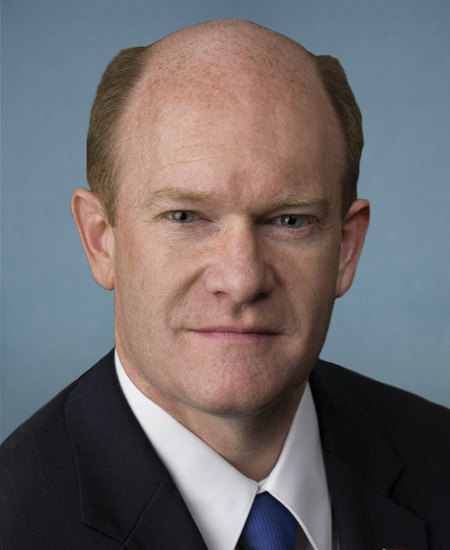
Christopher A. Coons
Christopher A. Coons Senate
D
Support
79% 52
Marsha Blackburn
Marsha Blackburn Senate
R
Strong −
11% 36
Ted Budd
Ted Budd Senate
R
Strong −
20% 40
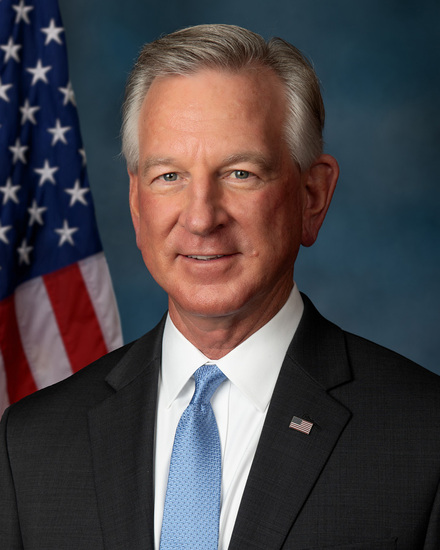
Tommy Tuberville
Tommy Tuberville Senate
R
Oppose
21% 53
Bill Cassidy
Bill Cassidy Senate
R
Oppose
22% 54
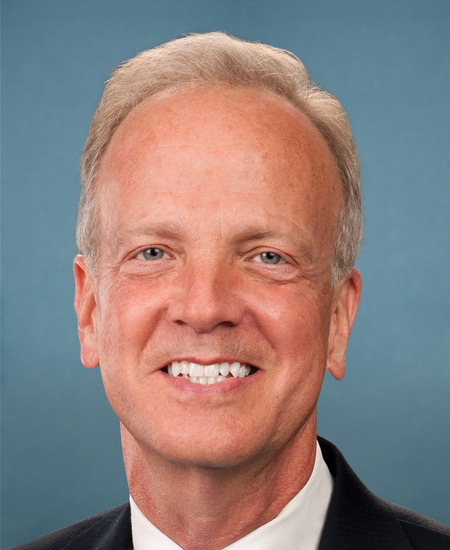
Jerry Moran
Jerry Moran Senate
R
Oppose
23% 53
Showing 401–410 of 1,490 bills

All environment bills

in committee · United States · Senate Feb 26, 2026

S 3939: Chesapeake WATERS Act

This bill reauthorizes the Chesapeake Bay Office of the National Oceanic and Atmospheric Administration (NOAA) and establishes its role as the primary NOAA representative in the Chesapeake Bay watershed. The legislation creates a new Director position with expertise in Chesapeake Bay research and resource management, and expands the office's responsibilities to include coastal hazards, climate change, and education initiatives. Key provisions authorize programs for scientific peer review, coastal observing systems, education and training grants, and habitat restoration projects focused on oysters, blue crabs, and other living marine resources. The bill also requires biennial reports to Congress on the office's activities and progress in protecting and restoring the Chesapeake Bay ecosystem.
in committee · United States · House Mar 5, 2026

HR 7821: Promoting Reduction of Emissions through Landscaping Equipment Act

This bill creates a business tax credit for companies that purchase zero-emission electric lawn, garden, and landscaping equipment. The credit equals 40 percent of the equipment's cost, with annual limits of $25,000 and a ten-year aggregate cap of $100,000 per business. Eligible equipment includes electric-powered mowers, trimmers, and other landscaping tools powered by solar, batteries, fuel cells, or grid electricity, as well as batteries and generators used to power them. The credit applies to equipment placed in service after December 31, 2024, and expires five years after the bill is enacted.
in committee · United States · Senate Mar 12, 2026

S 4091: Habitat Connectivity on Working Lands Act of 2026

This bill, titled the Habitat Connectivity on Working Lands Act of 2026, amends the Food Security Act of 1985 to expand federal conservation funding and technical support for wildlife habitat connectivity and migration corridors on private working lands. It defines native big game species such as deer, elk, and pronghorn to ensure conservation efforts prioritize these animals and increases payment limits for land enrolled in the Conservation Reserve Program. The legislation also authorizes cost-share payments for habitat restoration projects on grasslands and mandates that conservation practice standards include nonstructural methods like virtual fencing to manage livestock distribution while protecting wildlife corridors. Additionally, it directs the Secretary of Agriculture to provide technical assistance for implementing these practices and establishes virtual fencing as a high-priority research area to study its effects on natural resources and wildlife habitats.
in committee · United States · Senate Feb 26, 2026

S 3928: SCOPE Act of 2026

This bill directs the Environmental Protection Agency to create a study and publish guidance on how companies should calculate and report their scope 3 emissions, which are indirect greenhouse gas emissions from their supply chains and product use. The EPA would determine which facilities must report and establish methods for tracking emissions from upstream and downstream activities in the value chain. The guidance would include specific thresholds for reporting, calculation methods, monitoring frequency recommendations, and recordkeeping requirements for covered facilities. This legislation focuses on standardizing how industrial facilities report their broader environmental impact beyond their own direct operations.
Sub-Topics Climate Change
in committee · United States · House Feb 25, 2026

HR 7697: International AI Energy Grid Modernization Strategy Act

This bill directs the U.S. Secretary of State to create an international strategy focused on using artificial intelligence to upgrade and secure electrical grids around the world. It requires the development of partnerships with allied nations, academic institutions, and private companies to research and deploy AI tools that can predict grid failures, detect cyber threats, and integrate renewable energy sources. The legislation authorizes funding for pilot projects, workforce training, and technical assistance to help vulnerable regions modernize their power infrastructure while ensuring compliance with U.S. export control laws. Additionally, the bill mandates that the Secretary of State submit regular reports to Congress detailing the progress of these international cooperation efforts and the measurable improvements made to grid resilience.
in committee · United States · House Mar 5, 2026

HR 7788: Maryland Whole Watershed Program Federal Partnership Act

This bill authorizes the Chesapeake Bay Program Office to join state watershed management teams in Maryland and other states with similar programs. It allows the office to coordinate with local and federal agencies while providing technical support and funding for environmental projects in the Chesapeake Bay area. The legislation defines the Chesapeake Bay Program Office as the entity established under the Federal Water Pollution Control Act.
Sub-Topics Water Quality
in committee · United States · House Dec 1, 2025

HR 5652: Wildfire Recovery Act

HR 5652, the Wildfire Recovery Act, increases federal reimbursement for wildfire response by setting a minimum 75% federal cost share under Section 420 of the Stafford Act, directly benefiting states, local governments, and Tribal governments that deploy firefighting resources. It requires FEMA to develop rules within three years to determine when the federal share could exceed 75% based on a state's financial impact from wildfires. The bill also updates FEMA policy to allow reimbursement for predeployment of fire assets (like crews or equipment) before a fire occurs. These changes aim to provide more predictable and timely federal support for wildfire recovery efforts.
Sub-Topics Forestry Natural Disasters Tags Emergency Management Tribal Nations
passed · United States · House Mar 25, 2025

HR 1368: DOE and NASA Interagency Research Coordination Act

HR 1368, the DOE and NASA Interagency Research Coordination Act, establishes a formal framework for DOE and NASA to collaborate on joint research and development projects. It directs the agencies to coordinate through memoranda of understanding and competitive awards in specific areas like nuclear propulsion systems, quantum computing, space-based solar energy transmission, and earth sciences research. The bill requires the agencies to share data, leverage existing infrastructure, and report on coordination progress to Congress within two years. This legislation does not create new funding but aims to streamline existing research efforts between the two agencies and their partners, such as national laboratories and universities.
in committee · United States · House Mar 27, 2025

HR 2428: Wildfire Homeowner Relief Act

This bill mandates a 12-month study by the Government Accountability Office (GAO) to analyze the feasibility of a federal program that would buy properties from homeowners in high-risk wildfire areas before or after disasters. The study must examine existing buyout programs, develop definitions for terms like "disadvantaged community," and recommend how to implement such a program, including land use after buyouts and eligibility mapping. It does not create a new program or provide immediate relief but requires a report to Congress within one year detailing findings and cost analysis. The bill directly affects future policy decisions, not current homeowners.
passed · United States · House Jul 29, 2026

HR 6380: Chiricahua National Park Act

Chiricahua National Park Act This bill redesignates the Chiricahua National Monument in Arizona as the Chiricahua National Park. The bill directs the National Park Service (NPS) to (1) ensure the protection of traditional cultural and religious sites in the park, and (2) provide access to those sites by members of Indian tribes for traditional cultural and customary uses. Upon the request of an Indian tribe, the NPS may temporarily close to general public use one or more specific areas of the park to protect traditional cultural and customary uses in the area by members of the tribe. The closure must be limited to the smallest practicable area for the minimum period necessary for the traditional cultural and religious activities.
Sub-Topics Parks & Recreation
Showing 401 to 410 of 1,490 bills
Previous 1 40 41 42 149 Next