Issue · Environment

Environment (Conservation)

Every environment bill, vote, and legislator stance in United States, automatically classified by Maddy, our AI policy reader.

Total bills
385
119th Congress
Top supporter
Adam B. Schiff
100% support rate
Top opponent
Ashley Moody
0% support rate
Ranked legislators
10
5 support · 5 oppose
Key legislators

Who's moving conservation in United States

Legislators moving conservation in United States
Legislator Party Stance Support rate Votes
Adam B. Schiff
Adam B. Schiff Senate
D
Strong +
100% 9
Alex Padilla
Alex Padilla Senate
D
Strong +
100% 9
Amy Klobuchar
Amy Klobuchar Senate
D
Strong +
100% 9
Andy Kim
Andy Kim Senate
D
Strong +
100% 9
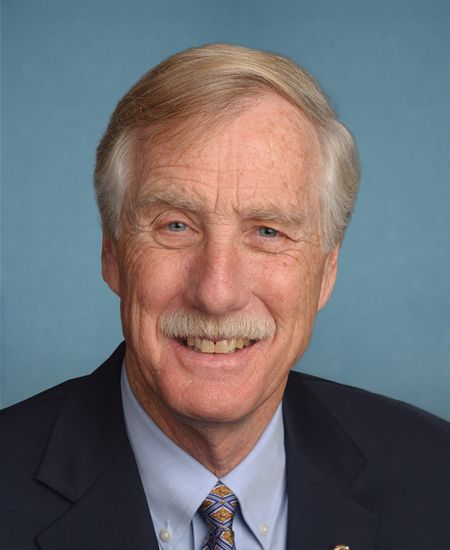
Angus S. King, Jr.
Angus S. King, Jr. Senate
I
Strong +
100% 9
Ashley Moody
Ashley Moody Senate
R
Strong −
0% 9
Bernie Moreno
Bernie Moreno Senate
R
Strong −
0% 9
Bill Cassidy
Bill Cassidy Senate
R
Strong −
0% 9
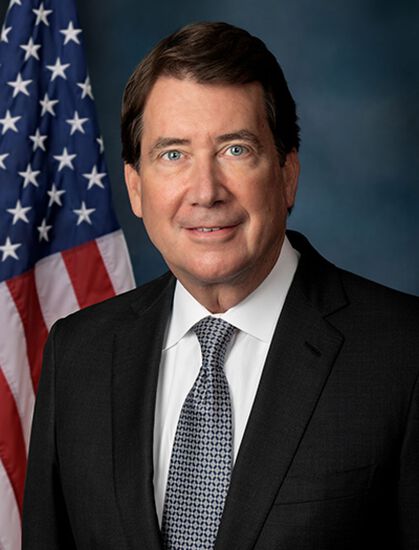
Bill Hagerty
Bill Hagerty Senate
R
Strong −
0% 9
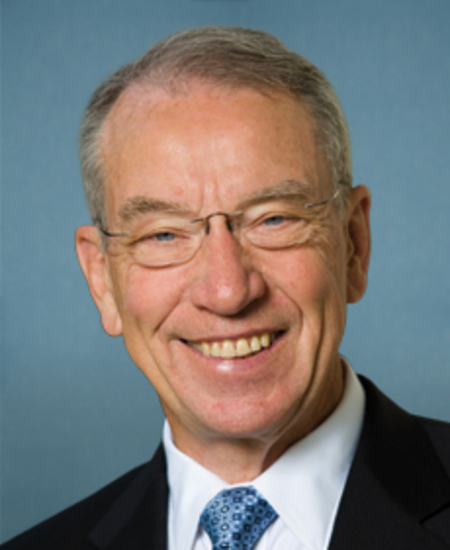
Chuck Grassley
Chuck Grassley Senate
R
Strong −
0% 9
Showing 321–330 of 385 bills

All environment bills

in committee · United States · House Feb 4, 2026

HR 7348: Transparency in Federal Land Acquisitions Act

This bill requires the U.S. Fish and Wildlife Service to publish proposed land protection plans in the Federal Register at least 60 days before finalizing them, giving the public a formal opportunity to submit comments. It applies to all land protection plans for National Wildlife Refuge System units, except for small expansions under 50 acres or 15% of a refuge’s total acreage. The law establishes a standardized process for public input on federal land management decisions, directly affecting how the agency engages with communities and stakeholders during planning.
in committee · United States · Senate Feb 5, 2025

SJRES 14: A joint resolution providing for congressional disapproval under chapter 8 of title 5, United States Code, of the rule submitted by the Environmental Protection Agency relating to "Phasedown of Hydrofluorocarbons: Management of Certain Hydrofluorocarbons and Substitutes Under the American Innovation and Manufacturing Act of 2020".

This joint resolution (SJRES 14) seeks congressional disapproval of a specific Environmental Protection Agency (EPA) rule implementing the phasedown of hydrofluorocarbons (HFCs), which are potent greenhouse gases used in refrigeration and air conditioning. The resolution targets the EPA's rule published in the Federal Register on October 11, 2024 (89 Fed. Reg. 82682), which manages HFCs and substitutes under the American Innovation and Manufacturing (AIM) Act of 2020. If passed, the resolution would block the EPA rule from taking effect, preventing it from regulating the phasedown of these chemicals. This is a procedural action to overturn an existing agency rule, not a new policy.
Sub-Topics Conservation
passed · United States · House Dec 10, 2025

HR 1676: Make SWAPs Efficient Act of 2025

HR 1676, the "Make SWAPs Efficient Act of 2025," requires the federal government to approve or deny state wildlife conservation plans within 180 days of receiving them. This directly affects states that submit comprehensive wildlife conservation plans under the Pittman-Robertson Wildlife Restoration Act. If the Secretary fails to act within that timeframe, the state's plan is automatically approved as of the 180th day. The bill streamlines the approval process to prevent federal delays from blocking state conservation funding.
Sub-Topics Conservation Wildlife
in committee · United States · House Feb 28, 2025

HR 622: To amend the Food Security Act of 1985 to increase funding for the conservation stewardship program, and for other purposes.

This bill increases annual funding for the Conservation Stewardship Program (CSP) to $1.8 billion each year from 2025 through 2031. It also transfers $5.02 billion in unused Inflation Reduction Act funds to the same program. The CSP directly supports farmers and ranchers who adopt conservation practices on their land. The key change is boosting financial resources for existing conservation efforts through both new annual appropriations and redirected existing funds.
Sub-Topics Conservation
in committee · United States · House Mar 21, 2025

HRES 233: Supporting the designation of April 2025 as "National Native Plant Month".

HRES 233 is a non-binding resolution supporting the designation of April 2025 as "National Native Plant Month" in the United States. It recognizes native plants - species naturally adapted to specific U.S. regions - as essential for healthy ecosystems, biodiversity, and environmental resilience, highlighting their role in supporting wildlife and sustainable habitats. The resolution does not create new laws or funding but aims to raise public awareness about the ecological and economic benefits of native plants. It directly affects public awareness and educational efforts, encouraging communities to promote native plant conservation. The resolution was introduced by Representatives Case, Neguse, Joyce, Soto, Moylan, and Tokuda and referred to the Committee on Natural Resources.
Sub-Topics Conservation Wildlife
in committee · United States · House Feb 13, 2025

HR 1309: Protect America’s Lands Act

HR 1309, the "Protect America’s Lands Act," prohibits national securities exchanges from processing transactions involving securities issued by "natural asset companies." These are defined as companies that hold rights to manage specific land areas for conservation, restoration, or sustainable use, with the primary purpose of maintaining or growing natural assets and ecosystem services. The bill directly affects financial markets by restricting how securities tied to environmental land management are traded, not landowners or conservation efforts. It amends the Securities Exchange Act of 1934 to create this new regulatory barrier for such financial instruments. The bill focuses on securities regulation, not direct land protection or policy changes for land use.
in committee · United States · House Jul 22, 2025

HR 4591: Habitat Enhancement Now Act

HR 4591, the Habitat Enhancement Now Act, creates two federal grant programs to boost waterfowl populations. It provides $3.5 million annually (2026-2030) for grants to states, tribes, nonprofits, or individuals to install nesting structures (like hen houses) in the Prairie Pothole Region to improve duck nest success, and to establish nesting cover, brood ponds, and incentivize private landowners in California to enhance breeding habitat for mallards and gadwalls. The bill directly affects landowners who participate in the California program and conservation entities implementing both programs. Key mechanisms include competitive grants for specific habitat actions proven to increase nest success, based on scientific findings about declining duck populations. The funding is explicitly allocated for these targeted habitat management activities.
in committee · United States · House Mar 4, 2026

HJRES 151: Providing for congressional disapproval under chapter 8 of title 5, United States Code, of the rule submitted by the Bureau of Land Management relating to "Grand Staircase-Escalante National Monument Record of Decision and Approved Resource Management Plan".

H.J. Res. 151 seeks to block a Bureau of Land Management (BLM) rule that established management guidelines for Utah's Grand Staircase-Escalante National Monument. The resolution, introduced in March 2026, uses the Congressional Review Act to request Congress disapprove the rule, which was issued in January 2025 and submitted for review. If enacted, the resolution would prevent the rule from taking effect, meaning the BLM would not be required to follow the specific management plan outlined in that rule. This action directly affects the monument's management, as the rule governed activities like land use and conservation within the protected area.
passed · United States · House Feb 24, 2026

HRES 1075: Providing for consideration of the bill (H.R. 4626) to amend the Energy Policy and Conservation Act to prohibit the Secretary of Energy from prescribing any new or amended energy conservation standard for a product that is not technologically feasible and economically justified, and for other purposes, and providing for consideration of the bill (H.R. 4758) to repeal provisions of Public Law 117–169 relating to taxpayer subsidies for home electrification, and for other purposes.

HRES 1075 is a procedural resolution that enables the House to debate and vote on two specific bills. It allows consideration of H.R. 4626, which would prevent the Energy Secretary from setting new appliance efficiency standards unless they are both technologically possible and economically reasonable for manufacturers. It also enables consideration of H.R. 4758, which would eliminate federal tax subsidies for home electrification projects under Public Law 117-169. This resolution waives objections to debating these bills and sets rules for their floor consideration. The resolution itself does not change policy but facilitates the legislative process for these two bills.
in committee · United States · Senate Feb 12, 2026

S 3860: Office of Small Farms Establishment Act of 2026

This bill creates a new Office of Small Farms within the USDA to better support small farms, ranches, and forest operations (defined as under 180 acres or with under $350,000 annual income). The office will coordinate USDA programs, review policies to remove barriers for small operations, and develop new initiatives like grants up to $25,000 for equipment, land access, or conservation. It requires State coordinators in each state to improve local program delivery and mandates annual reports to Congress on participation progress. The bill authorizes $25 million over five years ($15 million for the office, $10 million for grants and technical assistance).
Sub-Topics Conservation Forestry
Showing 321 to 330 of 385 bills
Previous 1 32 33 34 39 Next