Issue · Environment

Environment (Forestry)

Every environment bill, vote, and legislator stance in United States, automatically classified by Maddy, our AI policy reader.

Total bills
31
119th Congress
Top supporter
Adam B. Schiff
100% support rate
Top opponent
Alan Armstrong
0% support rate
Ranked legislators
10
5 support · 5 oppose
Key legislators

Who's moving forestry in United States

Legislators moving forestry in United States
Legislator Party Stance Support rate Votes
Adam B. Schiff
Adam B. Schiff Senate
D
Strong +
100% 3
Alex Padilla
Alex Padilla Senate
D
Strong +
100% 3
Amy Klobuchar
Amy Klobuchar Senate
D
Strong +
100% 3
Andy Kim
Andy Kim Senate
D
Strong +
100% 3
Angela D. Alsobrooks
Angela D. Alsobrooks Senate
D
Strong +
100% 3
AA
Alan Armstrong Senate
R
Strong −
0% 3
Ashley Moody
Ashley Moody Senate
R
Strong −
0% 3
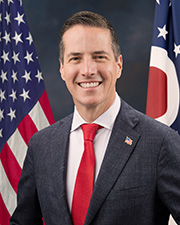
Bernie Moreno
Bernie Moreno Senate
R
Strong −
0% 3
Bill Cassidy
Bill Cassidy Senate
R
Strong −
0% 3
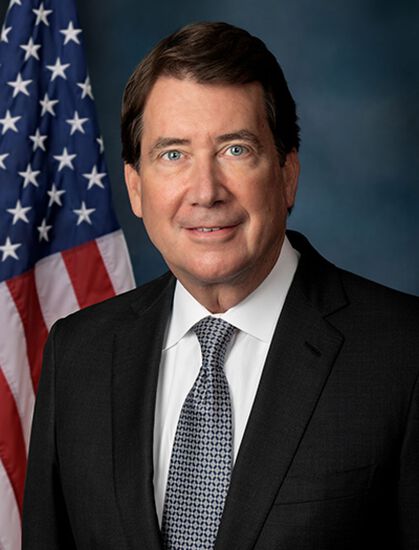
Bill Hagerty
Bill Hagerty Senate
R
Strong −
0% 3
Showing 21–30 of 31 bills

All environment bills

in committee · United States · House Feb 28, 2025

HR 598: FIR Act

HR 598, the Forest Information Reform Act (FIR Act), modifies federal land management rules to eliminate a requirement for reinitiating consultations under the Endangered Species Act (ESA). It applies directly to the U.S. Forest Service and Bureau of Land Management (BLM), preventing them from needing to restart ESA consultations when managing land plans if: (1) a new species is listed as endangered or critical habitat is designated, or (2) new information reveals impacts on listed species not previously considered. The bill removes a specific procedural step that would otherwise trigger federal agencies to reassess their land management plans in response to new ESA-related developments. This changes how agencies handle species conservation updates within their planning processes.
in committee · United States · House Feb 20, 2026

HR 7603: O&C Renewal Act of 2026

This bill reaffirms permanent timber production as the primary purpose of federal O&C (Oregon & California) lands, requiring revenue generation to support county government services in Oregon. It mandates the federal government meet or exceed Oregon's fire safety standards for these lands, enter agreements with Oregon and forest associations for fire protection, and compensate for services provided. The bill also clarifies that "timberlands" include parcels capable of producing at least 300,000 board feet of timber per 40-acre section. Within two years of enactment, the Secretary of the Interior must revise resource management plans to align with these changes.
Sub-Topics Forestry Public Lands
in committee · United States · House May 20, 2026

HR 6802: CLEAR Act of 2025

HR 6802, the CLEAR Act of 2025, blocks the Forest Service from enforcing a specific rule (89 Fed. Reg. 92808, November 25, 2024) related to law enforcement and criminal prohibitions. The bill directly prevents the Department of Agriculture’s Forest Service from implementing or administering this regulation. It does not create new policy but halts enforcement of an existing rule, affecting how the Forest Service operates under that specific provision. The bill is procedural, focusing solely on stopping the rule’s application without altering broader law enforcement authority.
Sub-Topics Forestry
passed · United States · House Apr 27, 2026

HR 6387: FIRE Act

The FIRE Act amends the Clean Air Act to clarify when air quality monitoring data affected by wildfires or prescribed fire (a state-approved wildfire risk mitigation practice) can be excluded from compliance calculations with air quality standards. It expands the definition of "exceptional events" to include natural wildfires and human activities mimicking natural events (like prescribed burns), while excluding common weather patterns and pollution from noncompliance. The bill requires the EPA to conduct regional analysis for multistate wildfire events and create a public website tracking state petitions for data exclusion. This change primarily affects how states and the EPA handle air quality data during wildfire seasons and when using prescribed fire as a management tool.
Sub-Topics Air Quality Forestry
in committee · United States · Senate Feb 12, 2025

S 537: Protecting Access for Hunters and Anglers Act of 2025

This bill prohibits federal agencies (like the Fish and Wildlife Service and Forest Service) from banning lead ammunition or tackle on public lands and waters used for hunting or fishing, directly affecting hunters and anglers who use federal lands. It blocks new federal regulations on lead levels in hunting gear, except in limited cases where a specific area's wildlife decline is linked to lead use and the state wildlife agency approves the restriction. The law requires federal agencies to explain in notices how any exception meets state wildlife department requirements or state law. It does not change existing state laws or allow federal bans on lead where states already prohibit it.
in committee · United States · Senate Feb 4, 2025

S 395: Emergency Fuel Reduction Act of 2025

This bill allows federal land managers to skip full environmental reviews under the National Environmental Policy Act (NEPA) for specific wildfire prevention projects on federal land. It directly affects agencies managing federal lands near communities, infrastructure (like schools, power lines, and water systems), and areas with endangered species habitat. Key provisions let projects removing dead/insect-infected trees or hazardous fuels near critical infrastructure qualify for this fast-track process, but only if they cover 10,000 acres or less and meet risk criteria. The exemption does not apply to wilderness areas, lands where vegetation removal is prohibited, or lands within national monuments as of the bill's enactment.
in committee · United States · House Jan 21, 2026

HR 4218: CLEAR Act

The CLEAR Act (HR 4218) amends the Clean Air Act to streamline state compliance with air quality standards. It extends the review cycle for national air quality standards from five to ten years, requires states to consider economic feasibility alongside technical achievability when developing plans, and gives states up to three years (instead of two) to fix deficiencies before federal intervention. The bill also creates a new exception for wildfire mitigation actions like prescribed fires, allowing states to exclude wildfire-related air quality data from violation determinations. These changes primarily affect states responsible for implementing air quality plans under federal oversight.
Sub-Topics Air Quality Forestry
in committee · United States · House May 21, 2026

HR 184: Action Versus No Action Act

HR 184, the "Action Versus No Action Act," requires the Secretary of Agriculture or Interior to limit environmental reviews for specific forest management activities to only two alternatives: the proposed activity or "no action." It applies when projects occur on lands suitable for timber production and meet conditions like being part of a collaborative process, developed via a resource advisory committee, or covered by a community wildfire protection plan. The bill mandates that "no action" alternatives must explicitly analyze impacts on forest health, wildfire risk, habitat, water supply, and economic factors. This directly affects federal land managers conducting environmental assessments under the National Environmental Policy Act (NEPA) for these designated projects.
in committee · United States · House Jun 17, 2025

HR 4041: To exempt certain forest management activities in Yosemite National Park from requirements of section 102 of the National Environmental Policy Act of 1969, and for other purposes.

This bill exempts specific forest management activities in Yosemite National Park from standard environmental review requirements under the National Environmental Policy Act (NEPA). It directly affects park managers by allowing fuels removal (like brush clearing) and reforestation planning/execution without needing an environmental assessment or impact statement. The key mechanism is a "categorical exclusion," meaning these activities are automatically exempted from NEPA's review process. This change streamlines park operations for fire prevention and forest restoration work.
in committee · United States · House Jan 24, 2025

HR 731: Green Tape Elimination Act of 2025

HR 731, the Green Tape Elimination Act of 2025, exempts certain forest fire prevention activities on federal land from major environmental review and legal requirements for 10 years. It specifically removes the need for compliance with the Endangered Species Act, National Historic Preservation Act, Migratory Bird Treaty Act, and related laws when conducting "hazardous fuel reduction activities," such as prescribed burns, creating firebreaks, or mechanically removing dead vegetation. The bill also adds a provision to the Clean Air Act allowing the EPA to exclude air quality monitoring data directly caused by these activities from violation determinations. This directly affects federal land management agencies (like the Forest Service) conducting fire prevention work on public lands.
Showing 21 to 30 of 31 bills
Previous 1 2 3 4 Next