Issue · Environment

Environment (Public Lands)

Every environment bill, vote, and legislator stance in United States, automatically classified by Maddy, our AI policy reader.

Total bills
198
119th Congress
Top supporter
Adam B. Schiff
92% support rate
Top opponent
Alan Armstrong
0% support rate
Ranked legislators
10
5 support · 5 oppose
Key legislators

Who's moving public lands in United States

Legislators moving public lands in United States
Legislator Party Stance Support rate Votes
Adam B. Schiff
Adam B. Schiff Senate
D
Strong +
92% 12
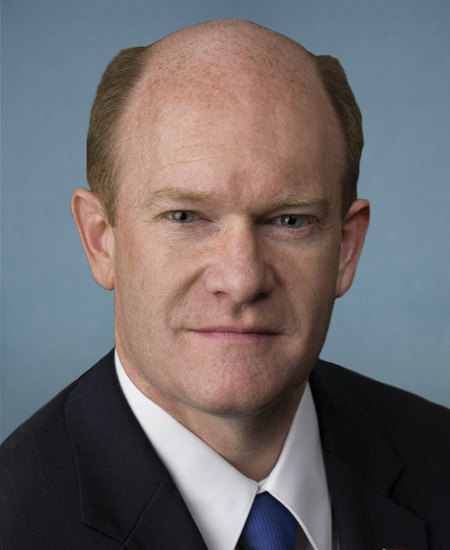
Christopher A. Coons
Christopher A. Coons Senate
D
Strong +
92% 12
Christopher Murphy
Christopher Murphy Senate
D
Strong +
92% 12
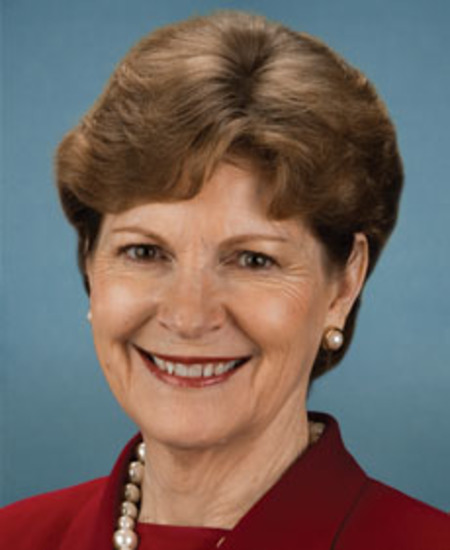
Jeanne Shaheen
Jeanne Shaheen Senate
D
Strong +
92% 12
Alex Padilla
Alex Padilla Senate
D
Strong +
85% 13
AA
Alan Armstrong Senate
R
Strong −
0% 3
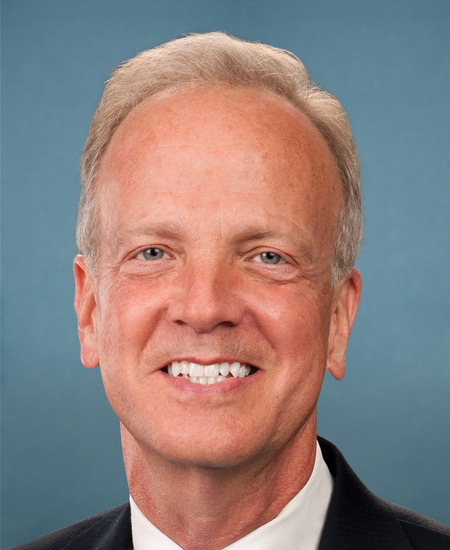
Jerry Moran
Jerry Moran Senate
R
Strong −
8% 12
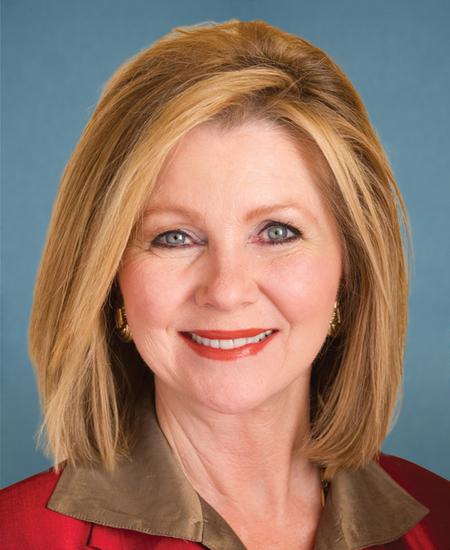
Marsha Blackburn
Marsha Blackburn Senate
R
Strong −
8% 12
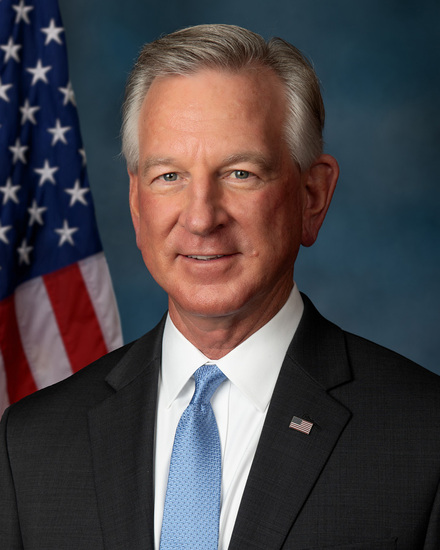
Tommy Tuberville
Tommy Tuberville Senate
R
Strong −
8% 12
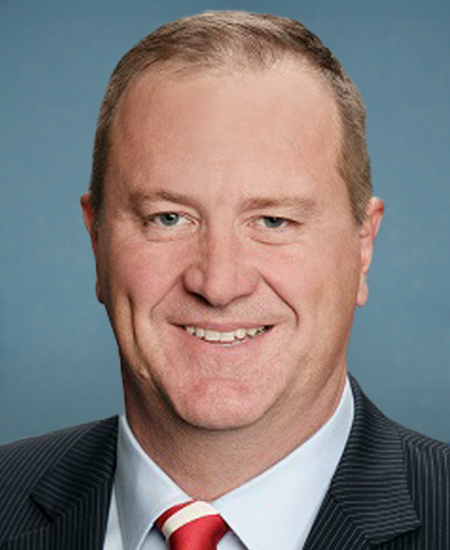
Eric Schmitt
Eric Schmitt Senate
R
Strong −
9% 11
Showing 181–190 of 198 bills

All environment bills

passed · United States · Senate Jun 15, 2026

S 2033: Cross-Boundary Wildfire Solutions Act

This bill directs the Comptroller General to study how federal programs and funding help or hinder wildfire mitigation efforts across different land ownerships (including federal, state, tribal, and private lands). It examines existing rules, funding access for agencies like the USDA Forest Service and FEMA, and analyzes activities from the Healthy Forests Restoration Act. The study will identify improvements to simplify cooperation between federal, state, local, and tribal governments on wildfire prevention. The Comptroller General must submit a report with findings and recommendations to Congress within two years. This is a procedural study bill focused on improving coordination, not implementing new policies.
Sub-Topics Forestry Natural Disasters Public Lands Tags Emergency Management
in committee · United States · Senate Jul 23, 2026

S 2881: A bill to provide for the transfer of administrative jurisdiction over certain Federal land in the State of California, and for other purposes.

This bill transfers specific federal lands between agencies to better align management with nearby protected areas. It moves approximately 160 acres of National Forest System land (in Tuolumne County) to the Secretary of the Interior for inclusion in Yosemite National Park, and about 170 acres of National Park System land to the Secretary of Agriculture for management as part of Stanislaus National Forest. The bill ensures existing rights, permits, and hazardous substance cleanup responsibilities remain with the original agencies until the transfer date. Minor land adjustments can be made with mutual agreement, and all transfers follow the map titled "Ackerson Meadow Land Interchange" dated February 24, 2022.
signed · United States · House Dec 11, 2025

HJRES 131: Providing for congressional disapproval under chapter 8 of title 5, United States Code, of the rule submitted by the Bureau of Land Management relating to Coastal Plain Oil and Gas Leasing Program Record of Decision.

HJRES 131 blocks a Bureau of Land Management (BLM) rule that would have allowed oil and gas leasing in Alaska's Arctic National Wildlife Refuge Coastal Plain. The bill uses the Congressional Review Act to formally disapprove this specific rule, making it legally void. It directly affects the BLM's ability to advance the leasing program and companies seeking permits for oil and gas development in that area. The resolution became law after passing both chambers of Congress in late 2025.
in committee · United States · House Feb 4, 2026

HR 7348: Transparency in Federal Land Acquisitions Act

This bill requires the U.S. Fish and Wildlife Service to publish proposed land protection plans in the Federal Register at least 60 days before finalizing them, giving the public a formal opportunity to submit comments. It applies to all land protection plans for National Wildlife Refuge System units, except for small expansions under 50 acres or 15% of a refuge’s total acreage. The law establishes a standardized process for public input on federal land management decisions, directly affecting how the agency engages with communities and stakeholders during planning.
in committee · United States · House Jul 22, 2025

HR 4591: Habitat Enhancement Now Act

HR 4591, the Habitat Enhancement Now Act, creates two federal grant programs to boost waterfowl populations. It provides $3.5 million annually (2026-2030) for grants to states, tribes, nonprofits, or individuals to install nesting structures (like hen houses) in the Prairie Pothole Region to improve duck nest success, and to establish nesting cover, brood ponds, and incentivize private landowners in California to enhance breeding habitat for mallards and gadwalls. The bill directly affects landowners who participate in the California program and conservation entities implementing both programs. Key mechanisms include competitive grants for specific habitat actions proven to increase nest success, based on scientific findings about declining duck populations. The funding is explicitly allocated for these targeted habitat management activities.
in committee · United States · Senate Feb 12, 2026

S 3526: PUBLIC Lands Act

The PUBLIC Lands Act designates approximately 1.3 million acres of California public land as wilderness areas, scenic areas, or wild and scenic rivers. It establishes the South Fork Trinity-Mad River Restoration Area (871,414 acres) to improve forest resilience, protect water quality, and reduce wildfire risks through collaborative restoration planning. The bill creates new recreational trails like the Bigfoot National Recreation Trail and designates visitor centers at Trinity Lake and Del Norte County. These designations withdraw the lands from mining, mineral leasing, and other public land disposal while allowing for prescribed fire and limited recreational use.
in committee · United States · House Jul 24, 2025

HR 4754: Department of the Interior, Environment, and Related Agencies Appropriations Act, 2026

Department of the Interior, Environment, and Related Agencies Appropriations Act, 2026 This bill provides FY2026 appropriations for the Department of the Interior, the Environmental Protection Agency (EPA), and several related agencies. The bill provides appropriations to Interior for the Bureau of Land Management, the U.S. Fish and Wildlife Service, the National Park Service, the U.S. Geological Survey, the Bureau of Ocean Energy Management, the Bureau of Safety and Environmental Enforcement, the Office of Surface Mining Reclamation and Enforcement, the Bureau of Indian Affairs, the Bureau of Indian Education, the Bureau of Trust Funds Administration, Departmental Offices, and Department-Wide Programs. The bill also provides appropriations to the EPA and the Forest Service. Within the Department of Health and Human Services, the bill provides appropriations for the Indian Health Service, the National Institute of Environmental Health Sciences, and the Agency for Toxic Substances and Disease Registry. The bill provides appropriations to several related agencies, including the Council on Environmental Quality and Office of Environmental Quality, the Chemical Safety and Hazard Investigation Board, the Institute of American Indian and Alaska Native Culture and Arts Development, the Smithsonian Institution, the National Gallery of Art, the John F. Kennedy Center for the Performing Arts, the Woodrow Wilson International Center for Scholars, the National Endowment for the Arts, the National Endowment for the Humanities, the Commission of Fine Arts, the Advisory Council on Historic Preservation. the National Capital Planning Commission, the U.S. Holocaust Memorial Museum, and the U.S. Semiquincentennial Commission. Additionally, the bill sets forth requirements and restrictions for using funds provided by this and other appropriations acts.
Sub-Topics Parks & Recreation Public Lands Wildlife Tags Tribal Nations
in committee · United States · Senate Dec 2, 2025

S 1319: Pecos Watershed Protection Act

S 1319, the Pecos Watershed Protection Act, withdraws approximately 11,599 acres of federal land in New Mexico's Pecos Watershed from mineral exploration and development, while designating it as the Thompson Peak Wilderness Area under the National Wilderness Preservation System. The bill prohibits new mining claims, mineral leasing, and land disposal on this land, preserving it for wilderness conservation. Existing grazing rights and wildfire management activities are maintained under the Wilderness Act, and the designation does not create buffer zones or restrict non-wilderness activities outside the area. This directly affects federal land management practices and future mineral development opportunities in the designated wilderness area.
in committee · United States · House Jul 23, 2025

HR 4636: SOIL Act

The SOIL Act increases payments for farmers participating in USDA conservation programs who implement practices that simultaneously improve soil health and wildlife habitat. It raises reimbursement rates to 90% of costs for specific activities like planting cover crops, restoring wetlands, creating riparian buffers, and establishing wildlife habitat plantings - listed in the bill as 26 distinct practices. The bill modifies program rules to prioritize applications and contract offers that address both soil and wildlife resource concerns. These changes directly affect farmers enrolled in the Environmental Quality Incentives Program (EQIP) and Conservation Stewardship Program (CSP) who adopt dual-benefit conservation practices. The policy shifts focus toward integrated land management by financially incentivizing practices that deliver multiple ecological outcomes.
in committee · United States · House Mar 28, 2025

HR 1853: CALL Act

The CALL Act (HR 1853) requires the U.S. Department of Agriculture to conduct a comprehensive study on barriers to conservation practice adoption on leased agricultural land. It examines factors like lease agreements, landowner awareness, and regional differences affecting farmers (who operate leased land but don’t own it) and landowners. The study will analyze existing data, including the TOTAL Survey, and assess how lease structures influence conservation efforts, with special focus on Black, Indigenous, and beginning farmers. The USDA must submit a final report by December 2026 with recommendations for improving conservation participation on leased land. This is a research-focused bill with no immediate policy changes, aiming to inform future USDA actions.
Showing 181 to 190 of 198 bills