Issue · Environment

Environment (Public Lands)

Every environment bill, vote, and legislator stance in United States, automatically classified by Maddy, our AI policy reader.

Total bills
272
119th Congress
Top supporter
Adam B. Schiff
92% support rate
Top opponent
Alan Armstrong
0% support rate
Ranked legislators
10
5 support · 5 oppose
Key legislators

Who's moving public lands in United States

Legislators moving public lands in United States
Legislator Party Stance Support rate Votes
Adam B. Schiff
Adam B. Schiff Senate
D
Strong +
92% 12
Christopher A. Coons
Christopher A. Coons Senate
D
Strong +
92% 12
Christopher Murphy
Christopher Murphy Senate
D
Strong +
92% 12
Jeanne Shaheen
Jeanne Shaheen Senate
D
Strong +
92% 12
Alex Padilla
Alex Padilla Senate
D
Strong +
85% 13
AA
Alan Armstrong Senate
R
Strong −
0% 3
Jerry Moran
Jerry Moran Senate
R
Strong −
8% 12
Marsha Blackburn
Marsha Blackburn Senate
R
Strong −
8% 12
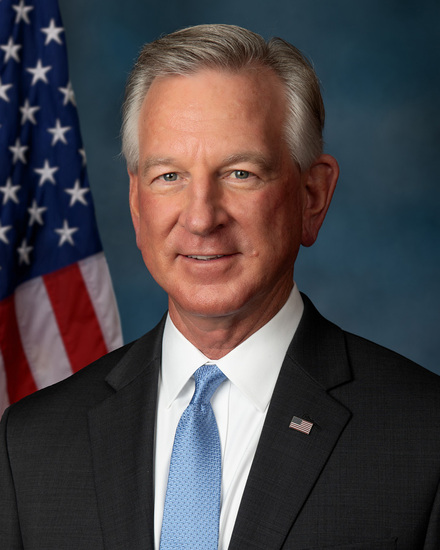
Tommy Tuberville
Tommy Tuberville Senate
R
Strong −
8% 12
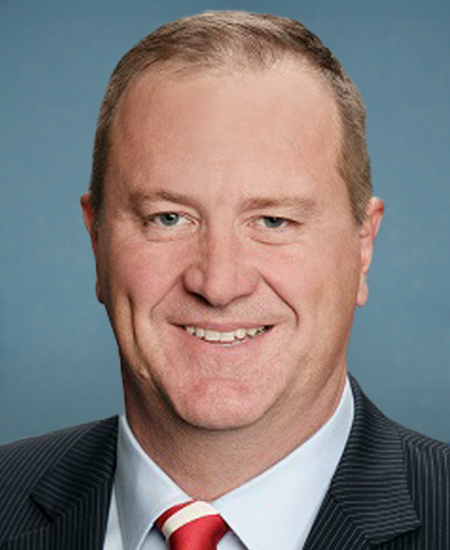
Eric Schmitt
Eric Schmitt Senate
R
Strong −
9% 11
Showing 161–170 of 272 bills

All environment bills

in committee · United States · Senate Jan 14, 2025

S 85: Continued Rapid Ohia Death Response Act of 2025

S 85 authorizes $5 million annually from 2026 to 2036 to address Rapid Ohia Death, a fungus killing over 1 million native ohia trees in Hawaii. The bill directs federal agencies (Interior and Agriculture Departments) to collaborate with Hawaii state officials on research, preventing the fungus's spread, managing animals that spread it, and propagating resistant trees for forest restoration. It specifically funds ongoing efforts like studying how the fungus spreads, partnering with local groups on land management, and supporting the Institute of Pacific Islands Forestry for research. This funding directly supports Hawaii's native ecosystems and communities reliant on them.
in committee · United States · House Apr 4, 2025

HR 168: TORCH Act

The TORCH Act (HR 168) streamlines wildfire risk reduction on National Forest System lands by creating new pathways for hazard tree removal, timber sales for extreme risks, and grazing management. It establishes a categorical exclusion for high priority hazard tree activities (limited to 3,000 acres), allows timber sales without appraisal for extreme risks, and expands opportunities for using livestock grazing to reduce fire fuels. The bill also modifies good neighbor agreements to better support state and local wildfire mitigation efforts and streamlines vegetation management for electric utility lines near power lines. These changes primarily affect the U.S. Forest Service, electric utility companies, and state/local governments managing wildfire risk on federal lands.
passed · United States · House Mar 17, 2026

HR 2709: Save Our Sequoias Act

Save Our Sequoias Act This bill provides for the conservation of giant sequoia trees ( Sequoiadendron giganteum ) in California. Specifically, it provides statutory authority for the Giant Sequoia Lands Coalition and outlines the coalition's duties. The coalition must submit a Giant Sequoia Health and Resiliency Assessment and annually update it. The information from the assessment must be made available so the information can be integrated into certain other plans. The coalition must also create and maintain a website that contains the assessment, educational materials, searchable information about individual giant sequoia groves, and a searchable database to track the status and costs of reforestation and rehabilitation activities. In addition, the bill declares an emergency on certain public lands and allows officials to carry out protection plans during the emergency to respond to the threat of wildfires, insects, and drought. The emergency expires after seven years. The Department of the Interior must develop and implement a Giant Sequoia Reforestation and Rehabilitation Strategy. Finally, the bill establishes a variety of programs and funds to support the conservation of giant sequoias.
in committee · United States · House Jan 16, 2025

HR 527: Strengthening Wildfire Resiliency Through Satellites Act of 2025

This bill creates a federal grant program to fund state wildfire agencies' use of advanced satellite technology for wildfire monitoring. It authorizes $20 million annually (2026-2028) for up to three competitive grants to eligible entities like state foresters or emergency managers. Grantees must use funds to purchase high-resolution satellite imaging capabilities and analyze data to monitor active fires, assess burn severity, guide prescribed burns, and support post-fire recovery. The program requires grantees to report on applications, outcomes, and recommendations for long-term implementation. The bill directly affects state wildfire management agencies through new funding for specific satellite-based monitoring tools.
in committee · United States · House Apr 10, 2025

HR 2903: M.H. Dutch Salmon Greater Gila Wild and Scenic River Act

The M.H. Dutch Salmon Greater Gila Wild and Scenic River Act designates specific segments of rivers in New Mexico - including the Gila River system, Apache Creek, and Black Canyon Creek - as "wild" or "recreational" rivers under the federal Wild and Scenic Rivers system. It withdraws federal lands within these designated segments from mining, grazing, and other development activities while preserving existing rights like water rights, grazing permits, and mining operations outside the designated areas. The bill also modifies boundaries of the Gila Cliff Dwellings National Monument and Gila National Forest by transferring approximately 440 acres from the Forest Service to the National Park Service. Management plans must be created for these rivers, requiring consultation with tribal governments and local communities. The bill ensures existing water infrastructure, native fish habitat projects, and treaty rights for Native American tribes are protected.
in committee · United States · House May 14, 2025

HR 3414: Joshua Tree National Park Expansion Act

HR 3414 would expand Joshua Tree National Park by adding approximately 20,149 acres of land, as shown on a specific June 2024 map. The bill transfers management of this newly added land from the Bureau of Land Management to the National Park Service and allows the Secretary of the Interior to acquire the land through donation, purchase, exchange, or transfer (with restrictions on acquiring California-owned land). It also renames the Cottonwood Visitor Center as the Dianne Feinstein Visitor Center for all official references. The expansion directly affects park management and land use within the new boundary, with no changes to existing landowner rights beyond the specified acquisition rules.
in committee · United States · House Sep 16, 2025

HR 5393: Southern Arizona Protection Act

HR 5393, the Southern Arizona Protection Act, nullifies a 2000 presidential proclamation that established the Ironwood Forest National Monument in Arizona. It prohibits the future creation or expansion of national monuments within the specific area depicted in the 2000 Ironwood Forest National Monument map, except with explicit approval from Congress. The bill directly affects land management decisions in that Southern Arizona region by restricting the use of the Antiquities Act, which allows presidents to designate national monuments. This changes the process by requiring Congressional action instead of presidential authority for monument designations in the specified area.
Sub-Topics Forestry Public Lands
in committee · United States · House May 15, 2025

HR 3421: Gunnison Outdoor Resources Protection Act of 2025

The Gunnison Outdoor Resources Protection Act of 2025 designates multiple protected areas across Gunnison County, Colorado, including nine Special Management Areas, eight Wildlife Conservation Areas, four Protection Areas, two Recreation Management Areas, and expands wilderness designations through amendments to the Colorado Wilderness Act of 1993. The bill establishes specific management rules for these areas, limiting off-highway vehicle and bicycle use to designated roads and trails, requiring winter travel management plans within three years, and restricting vegetation management projects to protect ecological integrity. It also includes provisions for transferring approximately 19,080 acres to the Ute Mountain Ute Tribe in trust, withdrawing certain lands from mineral development, and establishing seasonal closures to protect wildlife habitat in specific areas. The legislation directly affects federal land management practices, recreational use, and tribal land rights across approximately 350,000 acres in Gunnison County. These changes will reshape how federal lands are managed for conservation, recreation, and tribal uses in the region.
in committee · United States · House Jul 15, 2025

HR 4422: Don’t Feed the Bears Act of 2025

This bill prohibits bear baiting on federal lands by requiring the Secretary of the Interior and Secretary of Agriculture to enforce existing bans on feeding bears for hunting purposes in National Parks and wildlife refuges, and to adopt new regulations banning baiting on Bureau of Land Management and National Forest lands within one year. It directly affects licensed hunters who currently use bait stations (piles of human-scented food like meat or fruit) to attract bears for hunting on federal lands where state law permits it. The bill aims to reduce bear habituation to human food, lower property damage costs, and decrease human-bear conflicts by ending baiting practices that make bears lose natural wariness. Exceptions are allowed only for extraordinary cases involving bear welfare, public safety, or authorized research.
in committee · United States · House Apr 8, 2025

HR 2734: Sarvis Creek Wilderness Completion Act

HR 2734 designates approximately 6,817 acres in Routt National Forest as the Sarvis Creek Wilderness Addition, protecting this specific land from development. The bill directly affects the management of this newly designated wilderness area within the existing Sarvis Creek Wilderness. Key provisions include maintaining tribal treaty rights and permitting traditional tribal uses, while allowing the Secretary of Agriculture to manage fire, insects, and diseases within the addition under existing wilderness management rules.
Showing 161 to 170 of 272 bills
Previous 1 16 17 18 28 Next