Issue · Environment

Environment (Forestry)

Every environment bill, vote, and legislator stance in United States, automatically classified by Maddy, our AI policy reader.

Total bills
223
119th Congress
Top supporter
Adam B. Schiff
100% support rate
Top opponent
Alan Armstrong
0% support rate
Ranked legislators
10
5 support · 5 oppose
Key legislators

Who's moving forestry in United States

Legislators moving forestry in United States
Legislator Party Stance Support rate Votes
Adam B. Schiff
Adam B. Schiff Senate
D
Strong +
100% 3
Alex Padilla
Alex Padilla Senate
D
Strong +
100% 3
Amy Klobuchar
Amy Klobuchar Senate
D
Strong +
100% 3
Andy Kim
Andy Kim Senate
D
Strong +
100% 3
Angela D. Alsobrooks
Angela D. Alsobrooks Senate
D
Strong +
100% 3
AA
Alan Armstrong Senate
R
Strong −
0% 3
Ashley Moody
Ashley Moody Senate
R
Strong −
0% 3
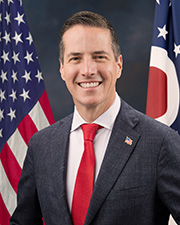
Bernie Moreno
Bernie Moreno Senate
R
Strong −
0% 3
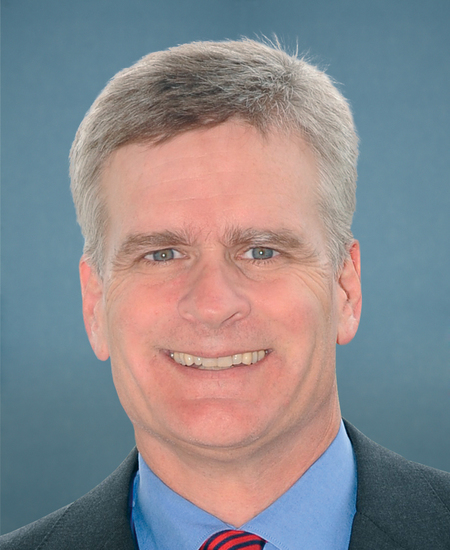
Bill Cassidy
Bill Cassidy Senate
R
Strong −
0% 3
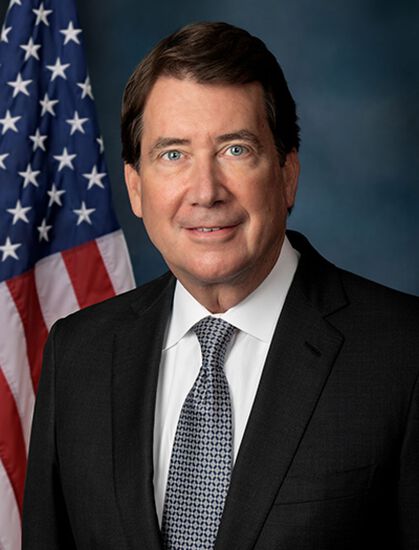
Bill Hagerty
Bill Hagerty Senate
R
Strong −
0% 3
Showing 151–160 of 223 bills

All environment bills

in committee · United States · House Mar 20, 2025

HR 1459: Protect the West Act of 2025

The Protect the West Act of 2025 establishes a $60 billion Outdoor and Watershed Restoration Fund to support projects improving forest conditions, rangeland health, watershed function, and wildlife habitat on both Federal and non-Federal lands. The bill creates two main programs: a $20 billion grant program for planning and projects on non-Federal land (with priority for wildfire risk reduction and community collaboration), and a $40 billion Partnership Program for restoration projects on Federal land, with at least $20 billion specifically allocated for Federal land projects. Eligible entities including states, tribes, local governments, and nonprofits can apply for funding to carry out projects that address wildfire risk, improve habitat, and create outdoor jobs while complementing existing conservation programs. The bill requires projects to follow best available science, prohibits work in wilderness areas, and mandates annual reporting to Congress on fund usage and outcomes.
in committee · United States · Senate Nov 6, 2025

S 3152: LEAF Act of 2025

The LEAF Act of 2025 requires the U.S. Forest Service to give preference in awarding contracts for wildfire prevention projects to "appropriate local contractors" meeting specific criteria. These contractors must either be based in the state where work occurs with at least 26% of their workforce residing there, or within 60 miles of their business location. The bill covers projects like forest thinning, hazard tree removal, and fuel breaks aimed at reducing wildfire risks on federal lands. The Forest Service must also submit annual reports tracking contract awards to such contractors and assessing the policy's economic impact.
Sub-Topics Forestry
in committee · United States · Senate Jan 30, 2025

S 341: Smoke and Heat Ready Communities Act of 2025

This bill creates federal grants to help communities prepare for wildfire smoke and extreme heat. It provides funding for air pollution agencies to monitor air quality, install air filtration in public buildings, distribute protective equipment like N95 masks, and conduct community outreach in vulnerable areas. The bill also establishes research centers at universities to study health impacts and develop better response strategies, and creates a competitive grant program for states, tribes, and local governments to develop community-specific smoke and heat mitigation plans. These provisions directly affect communities facing wildfire smoke and extreme heat risks, particularly those with limited resources.
in committee · United States · Senate Dec 17, 2025

SRES 559: A resolution recognizing that climate change is making wildfires more frequent, more intense, and more destructive.

SRES 559 is a non-binding Senate resolution recognizing that climate change is increasing wildfire frequency, intensity, and destruction. It cites scientific evidence - including NASA data linking human-caused climate change to longer fire seasons, U.S. Forest Service reports on extended fire periods, and the $424 billion annual cost of wildfires - to affirm this connection. The resolution specifically references the 2025 Los Angeles wildfires as an example of climate-driven impacts. It formally acknowledges the need for full federal funding and staffing of wildfire prevention and response efforts, though it does not create new laws or mandates.
in committee · United States · House Dec 3, 2025

HR 6391: Save Oak Flat from Foreign Mining Act

HR 6391, the Save Oak Flat from Foreign Mining Act, repeals Section 3003 of the 2014 National Defense Authorization Act that would have transferred Oak Flat (2,422 acres in Arizona’s Tonto National Forest) to Resolution Copper for mining. The bill withdraws Oak Flat from all public land use, preventing the foreign-owned mining venture (Rio Tinto/BHP) from extracting copper beneath the site for export to China. It directly protects the area, which is a sacred site for Indigenous peoples and a National Register Historic Property, from a mine projected to consume 250 billion gallons of groundwater over 40 years and cause significant land subsidence. The bill halts a process that would have allowed foreign corporations to mine copper from public land without requiring domestic smelting or benefiting U.S. consumers.
Sub-Topics Forestry Public Lands
in committee · United States · Senate Jun 10, 2026

S 140: Wildfire Prevention Act of 2025

This bill sets annual targets for wildfire prevention treatments on federal lands, requiring the Forest Service and Bureau of Land Management to increase mechanical thinning and prescribed burning acreage each year (with goals increasing 20% in 2027-2028 and 40% in 2029+). It mandates detailed public reporting on treatment progress, challenges, effectiveness, and cost data, while streamlining environmental reviews for hazard tree removal. The bill also revises vegetation management rules near power lines, creates a public-private technology pilot program for wildfire prevention tools, and repeals outdated reporting requirements. These provisions directly affect federal land managers, electric utility companies, and private entities participating in the technology pilot program.
Sub-Topics Forestry Public Lands
in committee · United States · House Sep 10, 2026

HR 177: Yosemite National Park Equal Access and Fairness Act

This bill expands public recreational access to Yosemite's Hetch Hetchy Reservoir and Lake Eleanor Basin areas. It increases annual funding for park improvements from $30,000 to $2 million (adjusted for inflation), prohibits recouping costs from water/power customers, and adds wildfire mitigation to maintenance projects. The bill explicitly permits activities like swimming, non-motorized watercraft, camping above high-water marks, and picnicking, while requiring the National Park Service to report on equitable access funding. The report must analyze whether original recreational access intentions were followed and propose adjustments to San Francisco's water/power pricing or fees to cover maintenance costs.
in committee · United States · House Dec 2, 2025

HR 5823: Watershed Protection and Forest Recovery Act of 2025

The Watershed Protection and Forest Recovery Act of 2025 creates a federal program to rapidly address watershed damage on National Forest System lands after natural disasters. It authorizes state, local, tribal, or water district sponsors to implement emergency measures like erosion control and flood mitigation within two years of a disaster, with the federal government covering all costs (waiving required matching funds). The program limits sponsor liability for normal operations but holds them responsible for damages resulting from willful or reckless actions. Sponsors may also monitor and maintain projects for up to three years to prevent future risks to downstream water resources.
in committee · United States · Senate Dec 2, 2025

S 888: Oregon Recreation Enhancement Act

This bill designates approximately 128,000 acres of federal land in Oregon (including Rogue Canyon and Molalla recreation areas) for management focused on recreation, conservation, and wildfire risk reduction. It requires the federal land managers to conduct wildfire risk assessments within 280 days and develop mitigation plans within a year, including forest thinning and evacuation routes for nearby communities. The bill withdraws these designated lands from mining, mineral leasing, and disposal, while preserving existing rights and recreational uses. It also expands the Wild Rogue Wilderness by 59,512 acres and withdraws specific lands in Curry and Josephine Counties from mineral activities.
passed · United States · House Jan 24, 2025

HR 375: Continued Rapid Ohia Death Response Act of 2025

This bill continues federal efforts to combat Rapid Ohia Death, a fungal disease threatening Hawaii's native ohia trees (Metrosideros polymorpha). It mandates ongoing research on disease transmission, management of invasive animals (like goats) that spread the disease, and funding for forest restoration through collaboration between federal agencies (Interior, Agriculture), Hawaii state, and local stakeholders. The key provisions require the U.S. Geological Survey and Forest Service to sustain research, partner on land management, and provide financial assistance to prevent disease spread and restore native forests. The bill directly affects Hawaii's ecosystems, particularly the culturally significant ohia tree species and the state's native forest habitats.
Showing 151 to 160 of 223 bills
Previous 1 15 16 17 23 Next