Issue · Environment

Environment (Water Quality)

Every environment bill, vote, and legislator stance in United States, automatically classified by Maddy, our AI policy reader.

Total bills
213
119th Congress
Top supporter
Adam B. Schiff
100% support rate
Top opponent
Alan Armstrong
0% support rate
Ranked legislators
10
5 support · 5 oppose
Key legislators

Who's moving water quality in United States

Legislators moving water quality in United States
Legislator Party Stance Support rate Votes
Adam B. Schiff
Adam B. Schiff Senate
D
Strong +
100% 3
Alex Padilla
Alex Padilla Senate
D
Strong +
100% 3
Amy Klobuchar
Amy Klobuchar Senate
D
Strong +
100% 3
Andy Kim
Andy Kim Senate
D
Strong +
100% 3
Angela D. Alsobrooks
Angela D. Alsobrooks Senate
D
Strong +
100% 3
AA
Alan Armstrong Senate
R
Strong −
0% 3
Ashley Moody
Ashley Moody Senate
R
Strong −
0% 3
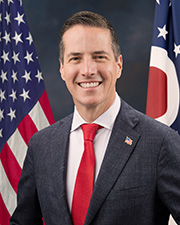
Bernie Moreno
Bernie Moreno Senate
R
Strong −
0% 3
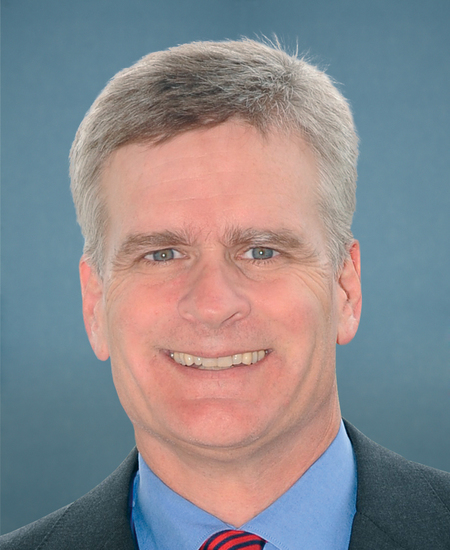
Bill Cassidy
Bill Cassidy Senate
R
Strong −
0% 3
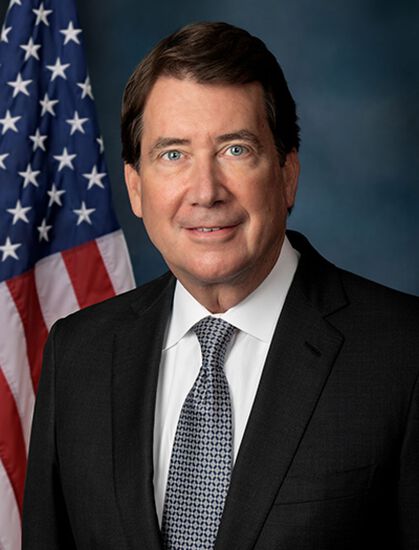
Bill Hagerty
Bill Hagerty Senate
R
Strong −
0% 3
Showing 141–150 of 213 bills

All environment bills

in committee · United States · House Nov 19, 2025

HR 6076: Save Our Seas 2.0 Marine Debris Infrastructure Programs Reauthorization Act

This bill reauthorizes the Environmental Protection Agency's (EPA) marine debris infrastructure programs through 2030, extending the previous expiration date of 2025. It directly affects the EPA and organizations receiving federal funding for projects targeting plastic waste and marine debris cleanup. The key provision is simply extending the program's authorization period by five years, allowing continued funding for initiatives that address plastic pollution in coastal and marine environments. The bill makes no new policy changes to the programs themselves, only prolonging their existing framework.
in committee · United States · Senate Sep 29, 2025

S 1433: Northwest Straits Marine Conservation Initiative Reauthorization Act of 2025

This bill reauthorizes the Northwest Straits Marine Conservation Initiative, focusing on protecting and restoring the marine ecosystem in Puget Sound and the Strait of Juan de Fuca (from the Canadian border to Snohomish County, Washington). It establishes a 14-member Commission - representing local counties, Tribal governments, and the State of Washington - to develop science-based restoration projects, monitor water quality and habitats, and coordinate with federal agencies like NOAA. The bill authorizes $10 million annually for fiscal years 2026-2031 to fund these efforts, including habitat restoration, marine debris removal, and community outreach. The Commission must submit annual reports to Congress tracking progress on specific benchmarks, such as improving water quality and restoring marine species populations.
in committee · United States · Senate Oct 27, 2025

S 1680: Virginia Wilderness Additions Act of 2025

This bill designates approximately 1,000 acres for addition to the Rough Mountain Wilderness and designates about 4,600 acres as a potential wilderness area that will become part of the Rich Hole Wilderness within Virginia's George Washington National Forest. The Rich Hole addition will be formally incorporated into the wilderness area within five years of the bill's enactment or after completing specific water quality projects. During the transition period, limited motorized equipment may be used for water quality improvement projects to minimize impact on wilderness character. The bill directly affects land management within the George Washington National Forest under the Wilderness Act.
in committee · United States · House Feb 2, 2026

HR 6464: Affordable Clean Water Infrastructure Act

This bill amends federal water pollution control funding rules to make wastewater services more affordable for low-income communities. It requires states to dedicate at least 20% of their annual federal capitalization grants toward additional subsidies for wastewater infrastructure, with an additional 10% specifically reserved for rural, small, and tribal publicly owned treatment works. States must use these funds to help ratepayers afford wastewater (including stormwater) services, excluding loans with 0% interest rates from counting toward subsidy calculations. The policy directly affects communities served by publicly owned treatment works, particularly in underserved rural and tribal areas, by mandating minimum subsidy levels from state water funds.
Sub-Topics Drinking Water Water Quality Tags Rural Communities Tribal Nations
in committee · United States · House Mar 28, 2025

HR 1858: Flooding Prevention, Assessment, and Restoration Act

HR 1858, the Flooding Prevention, Assessment, and Restoration Act, requires the Secretary of Agriculture to conduct a national study on flood risks to agricultural lands within two years, analyzing economic losses, downstream effects, and existing data on various flood types. The bill expands watershed restoration authority by allowing the Secretary to implement long-term protective measures beyond immediate repairs if they are cost-effective and benefit watershed health. It also increases federal funding for rehabilitating aging structural flood measures from 65% to 90% of project costs. This legislation directly affects agricultural producers and watershed management programs by mandating new assessments and modifying funding thresholds for flood prevention infrastructure.
in committee · United States · House Jun 13, 2025

HR 3902: Restoring Federalism in Clean Water Permitting Act

This bill directs the EPA to review and streamline regulations for states administering clean water permits under Section 404 of the Clean Water Act, aiming to encourage more states to run their own permitting programs. It adds specific rules for court challenges to state permit approvals, requiring lawsuits to be filed within 60 days and limiting them to issues raised during public comment periods. Courts cannot block state permits unless activities pose an imminent environmental danger with no other remedy. The bill primarily affects states managing clean water permits, the EPA, and entities challenging permit decisions in court. It changes the legal process for reviewing state programs without altering pollution standards or permitting requirements.
in committee · United States · House Jan 23, 2025

HR 644: Harmful Algal Bloom and Hypoxia Research and Control Amendments Act of 2025

This bill amends the Harmful Algal Bloom and Hypoxia Research and Control Act of 1998 to strengthen federal efforts addressing harmful algal blooms (HABs) and hypoxia events. It requires a federal Task Force to develop a comprehensive Action Strategy every five years examining causes, ecological impacts, and economic consequences of HABs across marine, estuarine, and freshwater systems, including the Great Lakes and coastal waters. The bill establishes a National-Level Incubator Program to fund innovative prevention and control strategies, with priority given to solutions protecting public health, biodiversity, and vulnerable communities. It mandates enhanced coordination among federal agencies, states, Indian tribes, and local communities to improve monitoring, forecasting, and response capabilities for HAB events. The bill authorizes $19.5 million annually for NOAA and $8 million annually for EPA to implement these provisions from 2026-2030.
in committee · United States · House Nov 21, 2025

HR 6256: Floodplain Enhancement and Recovery Act

HR 6256, the Floodplain Enhancement and Recovery Act, simplifies regulatory processes for communities and landowners undertaking projects to restore natural floodplain functions. It exempts such projects from standard flood insurance map change fees and allows limited increases in flood levels (up to 1 foot) in designated floodways, provided projects don’t harm critical infrastructure and communities submit post-completion analysis within 180 days. The bill amends existing flood insurance law to prioritize ecosystem restoration by adjusting fee and approval requirements, directly affecting local governments managing floodplains and developers working on restoration projects.
in committee · United States · Senate Mar 9, 2026

SJRES 120: A joint resolution providing for congressional disapproval under chapter 8 of title 5, United States Code, of the rule submitted by the Environmental Protection Agency relating to "Effluent Limitations Guidelines and Standards for the Steam Electric Power Generating Point Source Category-Deadline Extensions; Correction".

SJRES 120 is a joint resolution seeking to block an Environmental Protection Agency (EPA) rule that would have extended deadlines for steam electric power plants to meet water pollution standards. The rule, published in the Federal Register on January 30, 2026, aimed to delay compliance with existing effluent limitations (pollutant discharge rules) for power plants. This resolution uses a congressional disapproval process under title 5, U.S. Code, to prevent the EPA rule from taking effect. If enacted, it would maintain the original compliance deadlines for these power plants instead of implementing the extended timelines.
Sub-Topics Water Quality
in committee · United States · Senate Jun 5, 2025

S 1968: Working Waterfronts Act of 2025

The Working Waterfronts Act of 2025 provides financial support to coastal communities and industries through multiple programs. It creates a tax credit for hydroelectric facilities that improve fish passage and water quality, offers Department of Agriculture loans and grants for fishing and mariculture businesses, and establishes grants to support rural seafood processing infrastructure. The bill also includes a working waterfronts preservation grant program to protect areas used by commercial fishing, mariculture, and boatbuilding industries, and creates a maritime workforce grant program to support training and education. These provisions directly affect commercial fishing businesses, seafood processors, coastal communities, and maritime workers.
Showing 141 to 150 of 213 bills
Previous 1 14 15 16 22 Next