Issue · Environment

Environment (Public Lands)

Every environment bill, vote, and legislator stance in United States, automatically classified by Maddy, our AI policy reader.

Total bills
198
119th Congress
Top supporter
Adam B. Schiff
92% support rate
Top opponent
Alan Armstrong
0% support rate
Ranked legislators
10
5 support · 5 oppose
Key legislators

Who's moving public lands in United States

Legislators moving public lands in United States
Legislator Party Stance Support rate Votes
Adam B. Schiff
Adam B. Schiff Senate
D
Strong +
92% 12
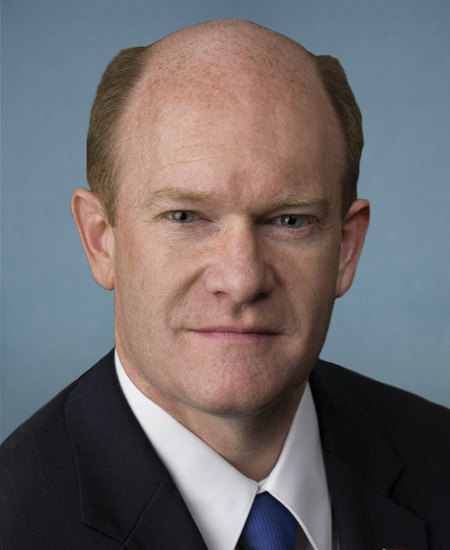
Christopher A. Coons
Christopher A. Coons Senate
D
Strong +
92% 12
Christopher Murphy
Christopher Murphy Senate
D
Strong +
92% 12
Jeanne Shaheen
Jeanne Shaheen Senate
D
Strong +
92% 12
Alex Padilla
Alex Padilla Senate
D
Strong +
85% 13
AA
Alan Armstrong Senate
R
Strong −
0% 3
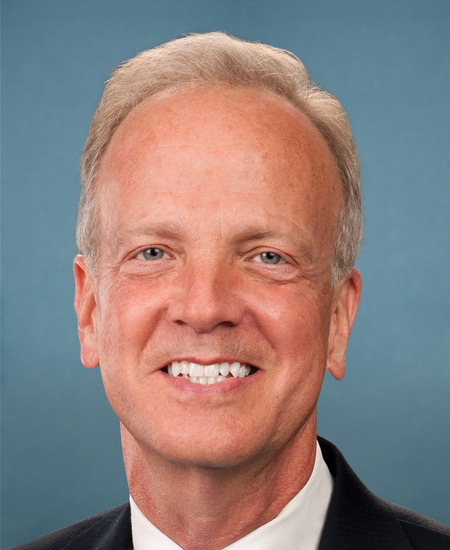
Jerry Moran
Jerry Moran Senate
R
Strong −
8% 12
Marsha Blackburn
Marsha Blackburn Senate
R
Strong −
8% 12
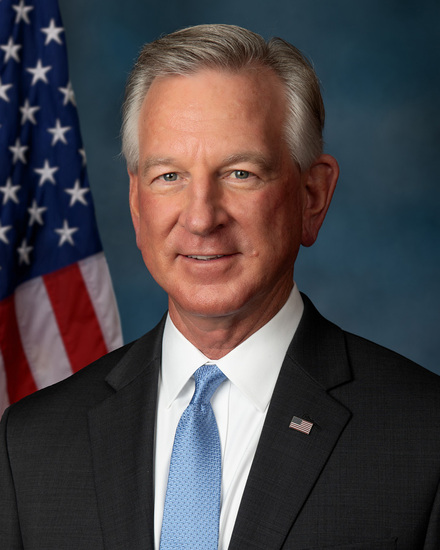
Tommy Tuberville
Tommy Tuberville Senate
R
Strong −
8% 12
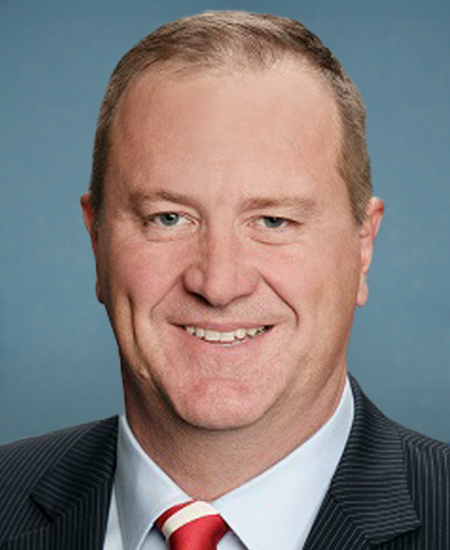
Eric Schmitt
Eric Schmitt Senate
R
Strong −
9% 11
Showing 141–150 of 198 bills

All environment bills

passed · United States · Senate Dec 15, 2025

S 719: Tribal Forest Protection Act Amendments Act of 2025

This bill amends the 2004 Tribal Forest Protection Act to expand protections for tribal lands and clarify restoration goals. It broadens the definition of "Indian forest land or rangeland" to include areas with historical forest cover capable of restoration and explicitly adds "restore" to the Act’s purpose (previously only "protect"). The changes directly affect federally recognized tribes, Alaska Native Corporations under the Alaska Native Claims Settlement Act, and federal agencies managing land. It also authorizes $15 million annually for fiscal years 2026-2031 to implement these provisions.
Sub-Topics Forestry Public Lands Tags Tribal Nations
in committee · United States · Senate Apr 29, 2025

S 1507: Agriculture Resilience Act of 2025

# Summary of the Agriculture Resilience Act of 2025 This proposed legislation contains comprehensive provisions to enhance agricultural resilience, reduce food waste, and promote sustainable farming practices. Key components include: 1. **Conservation Programs**: - Enhanced conservation reserve program with new "Grassland 30" contracts for long-term grassland protection - Private grazing land conservation assistance focusing on soil health, climate resilience, and advanced grazing management - Support for producers transitioning from confinement systems to managed grazing 2. **Food Waste Reduction**: - Standardized "quality date" (BEST If Used By) and "discard date" (USE By) labeling requirements - Mandatory food donation clauses for Federal contracts over $10,000 - School food waste reduction grant program for local educational agencies - National media campaigns to decrease food waste incidence 3. **Sustainable Agriculture Practices**: - Establishment of agrivoltaic systems (combining solar energy with agriculture) - Alternative manure management program to reduce methane emissions - Composting recognized as a conservation practice - Support for anaerobic digestion systems to reduce methane emissions 4. **Renewable Energy**: - Enhanced Rural Energy for America Program with carbon accounting requirements - New provisions for agrivoltaic systems research and demonstration - AgSTAR program transition to USDA for anaerobic digestion support 5. **Food Donation and Recovery**: - Amendments to the Federal Food Donation Act requiring donation of excess food - Grants for large-scale composting and anaerobic digestion food waste-to-energy projects - Food Waste Research Program to coordinate nationwide efforts The Act includes significant funding allocations for these programs (e.g., $50 million annually for grazing land conservation, $1.5 billion for alternative manure management, $100 million annually for composting/anaerobic digestion projects) with a focus on supporting beginning farmers, socially disadvantaged producers, and underserved communities.
in committee · United States · Senate Dec 2, 2025

S 902: Wildfire Response and Preparedness Act of 2025

S 902, the Wildfire Response and Preparedness Act of 2025, requires federal agencies managing public lands (like the Forest Service and Bureau of Land Management) to establish response time standards for wildfires on federal land within 90 days of enactment. It mandates that initial fire evaluation occur within 30 minutes and suppression assets deployed within 3 hours where practicable. The bill also requires annual reports to Congress detailing unified budget requests, performance metrics, fleet composition, and needed changes to improve dispatch systems and contract processes for firefighting resources. This legislation directly affects federal land management agencies and their wildfire response operations.
in committee · United States · House Aug 26, 2025

HR 5041: Smith River National Recreation Area Expansion Act

The Smith River National Recreation Area Expansion Act (HR 5041) adds approximately 555 acres of land, including the Cedar Creek Parcel in Oregon, to the existing recreation area, expanding its boundaries into Oregon for the first time. It designates 24 specific river segments in Oregon as "wild" or "recreational" under the Wild and Scenic Rivers Act, protecting their ecological values. The bill requires a 5-year study of ecological features (like wetlands, forests, and wildlife habitats) in the expanded area, followed by updated management plans to protect these values. It also ensures tribal access for cultural activities and maintains existing protections for tribal rights, wildfire management, and forest health projects within the recreation area.
in committee · United States · House Jan 8, 2026

HR 2405: The White Oak Resilience Act

HR 2405, the White Oak Resilience Act, establishes a voluntary coalition to coordinate federal, state, tribal, and private efforts for restoring white oak forests across the U.S. It creates pilot projects on public lands (including national forests and Department of the Interior sites), a non-regulatory grant program for landowners, and a strategy to address tree nursery shortages. The bill directly affects private landowners, tribes, state agencies, and federal land managers by providing technical assistance, funding for restoration, and research on white oak resilience. The program includes a 7-year sunset clause and emphasizes science-based restoration without mandating new regulations.
in committee · United States · House Apr 29, 2025

HR 3077: Agriculture Resilience Act of 2025

# Summary of the Agriculture Resilience Act of 2025 This comprehensive legislative proposal aims to transform U.S. agricultural systems to be more resilient, sustainable, and climate-smart while addressing food waste and improving food safety labeling. ## Key Provisions ### Conservation & Climate Resilience - **Conservation Reserve Program** (Section 504): Expands enrollment targets through 2030 and establishes a new "Grassland 30" contract option for long-term grassland conservation. - **Private Grazing Land Conservation** (Section 503): Focuses on soil health, climate resilience, and transitioning from confinement systems to managed grazing systems. - **Alternative Manure Management Program** (Section 505): Supports dairy and livestock producers in adopting practices that reduce methane emissions and improve carbon sequestration. ### Renewable Energy - **Rural Energy for America Program** (Section 601): Expands to support renewable energy development and greenhouse gas emissions reductions. - **Agrivoltaic Systems** (Section 602): Mandates research on integrated solar energy and agricultural production systems. - **AgSTAR Program** (Section 603): Maintains and expands the anaerobic digestion program to reduce methane emissions from livestock waste. ### Food Loss & Waste Reduction - **Standardized Food Date Labeling** (Section 701-705): Establishes uniform "BEST If Used By" (quality date) and "USE By" (discard date) phrases to reduce confusion and food waste. - **Composting as Conservation Practice** (Section 711): Officially recognizes composting as a conservation practice under USDA programs. - **Federal Food Donation Act Amendments** (Section 712): Requires federal contractors to donate excess food and report on food waste. - **School Food Waste Reduction** (Section 714): Creates grant program for schools to measure, prevent, and reduce food waste. - **Food Waste Research Program** (Section 716): Establishes regional research centers to study food waste reduction strategies. ### Funding - Multiple funding allocations for conservation programs ($50 million/year for grazing land conservation, $1.5 billion for alternative manure management program). - $20 million/year for meat processing system resilience grants (Section 502). - $100 million/year for food waste-to-energy projects (Section 713). This legislation represents a holistic approach to creating a more sustainable food system that addresses climate change, reduces food waste, supports farmers and ranchers, and improves consumer understanding of food labeling.
in committee · United States · Senate Feb 10, 2026

S 3820: Soil CARE Act of 2026

The Soil CARE Act of 2026 requires the Natural Resources Conservation Service (NRCS) to create a training program for its staff and third-party providers (like farming consultants and nonprofits) on soil health management practices. This training, delivered through online courses and in-person workshops twice yearly in each region, covers topics such as regenerative farming, soil biology, tribal considerations, and supporting small or underserved producers. The program must include specific curriculum units on soil health principles, organic production, diversified systems, and conservation practices that improve soil, water, and climate resilience. The law authorizes $10 million annually from 2027 to 2032 to fund this initiative, directly affecting how NRCS and its partners support agricultural producers.
in committee · United States · Senate Feb 12, 2026

S 1497: Cerro de la Olla Wilderness Establishment Act

This bill designates approximately 12,295 acres of federal land in Taos County, New Mexico (managed by the Bureau of Land Management) as the Cerro de la Olla Wilderness, using a specific map dated April 1, 2025. It modifies the boundary of the Río Grande del Norte National Monument to align with this new wilderness designation. The bill allows the maintenance of existing wildlife water structures (like guzzlers) if they enhance wilderness values and minimize visual impact, requiring a cooperative agreement with New Mexico within one year of enactment. This directly affects federal land management practices and wildlife conservation activities within the designated wilderness area.
in committee · United States · Senate Jul 15, 2026

S 1791: Gunnison Outdoor Resources Protection Act of 2025

The Gunnison Outdoor Resources Protection Act of 2025 designates approximately 600,000 acres of federal land in Gunnison County, Colorado, as Special Management Areas, Wildlife Conservation Areas, Protection Areas, Recreation Management Areas, and a Scientific Research Area. The bill limits off-highway vehicle and bicycle use to designated routes, requires winter travel management plans within three years, prohibits new road construction, and mandates ecological restoration projects prioritizing native vegetation and wildlife protection. It establishes seasonal closures in specific areas to protect wildlife habitat while allowing continued traditional tribal uses and limited recreational access. The legislation affects federal land managed by the Forest Service and Bureau of Land Management across these designated areas, with specific management requirements for each type of protected area.
in committee · United States · Senate Dec 2, 2025

S 764: Colorado Outdoor Recreation and Economy Act

The Colorado Outdoor Recreation and Economy Act designates new wilderness areas and conservation lands across Colorado, protecting approximately 50,000 acres of public land for conservation and recreation. The bill creates three Wildlife Conservation Areas (Porcupine Gulch, Williams Fork Mountains, and Spraddle Creek), adds several wilderness areas to the National Wilderness Preservation System, and establishes a pilot program to capture methane emissions from coal mines. It withdraws certain lands from mineral development, allows continued grazing under regulated conditions, and requires management plans for these protected areas. The bill affects federal land managers, local communities, tribal nations with traditional uses, and energy companies through the methane pilot program.
Showing 141 to 150 of 198 bills
Previous 1 14 15 16 20 Next