Issue · Environment

Environment (Conservation)

Every environment bill, vote, and legislator stance in United States, automatically classified by Maddy, our AI policy reader.

Total bills
385
119th Congress
Top supporter
Adam B. Schiff
100% support rate
Top opponent
Ashley Moody
0% support rate
Ranked legislators
10
5 support · 5 oppose
Key legislators

Who's moving conservation in United States

Legislators moving conservation in United States
Legislator Party Stance Support rate Votes
Adam B. Schiff
Adam B. Schiff Senate
D
Strong +
100% 9
Alex Padilla
Alex Padilla Senate
D
Strong +
100% 9
Amy Klobuchar
Amy Klobuchar Senate
D
Strong +
100% 9
Andy Kim
Andy Kim Senate
D
Strong +
100% 9
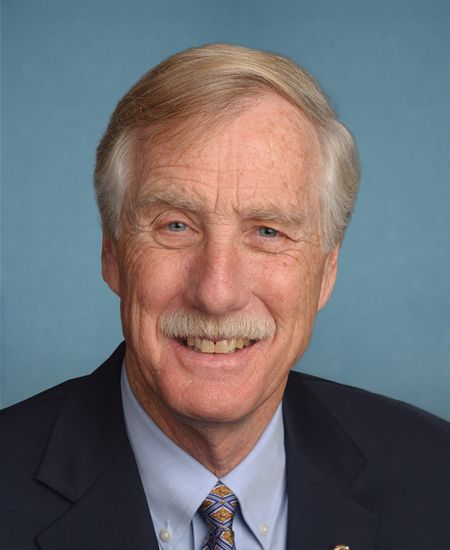
Angus S. King, Jr.
Angus S. King, Jr. Senate
I
Strong +
100% 9
Ashley Moody
Ashley Moody Senate
R
Strong −
0% 9
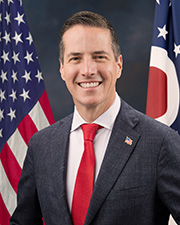
Bernie Moreno
Bernie Moreno Senate
R
Strong −
0% 9
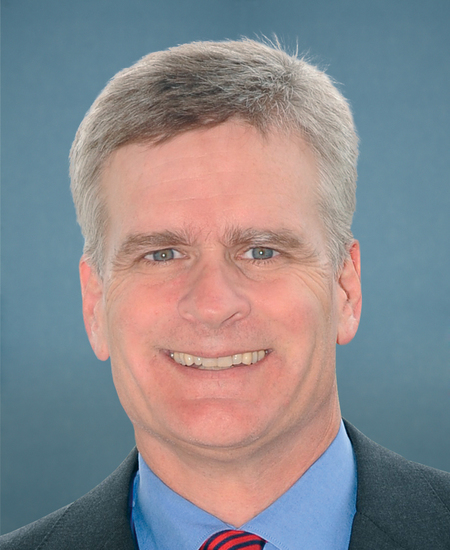
Bill Cassidy
Bill Cassidy Senate
R
Strong −
0% 9
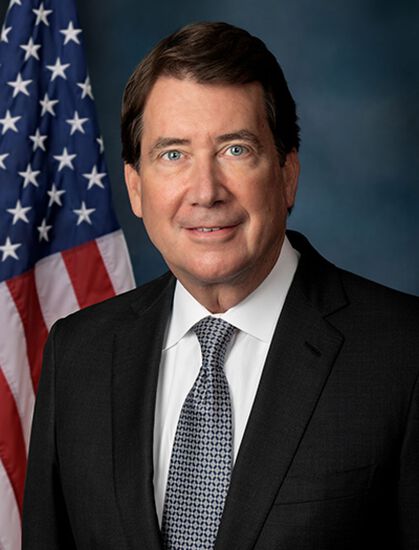
Bill Hagerty
Bill Hagerty Senate
R
Strong −
0% 9
Chuck Grassley
Chuck Grassley Senate
R
Strong −
0% 9
Showing 111–120 of 385 bills

All environment bills

in committee · United States · House Jan 31, 2025

HR 841: To amend title 54, United States Code, to prohibit the acquisition of land, water, or an interest in land or water from a private landowner using amounts made available under the Land and Water Conservation Fund.

HR 841 amends the Land and Water Conservation Fund (LWCF) provisions in U.S. law to prohibit states from using LWCF funds to purchase land, water, or related interests directly from private landowners. This restriction applies specifically to states receiving financial assistance under the LWCF program. The bill adds a new section (l) to 54 U.S.C. § 200305 and amends § 200306 to explicitly state that LWCF appropriations cannot fund acquisitions from private owners. The policy change directly affects state governments that administer LWCF funds for conservation projects.
in committee · United States · House Jan 20, 2025

HR 562: BLUE Pacific Act

The BLUE Pacific Act establishes a comprehensive U.S. strategy for engagement with Pacific Island nations, requiring the President to submit a detailed "Strategy for Pacific Islands Partnership" every four years to Congress. The bill authorizes $270 million annually from 2026 through 2033 to fund programs addressing public health, education, economic development, climate resilience, and security capacity building across 13 Pacific Island countries. Key provisions include creating a senior official to manage U.S. relations with the Freely Associated States (Marshall Islands, Federated States of Micronesia, and Palau), establishing an Ambassador's Self-Help Small Grants Program, and requiring coordination with regional organizations like the Pacific Islands Forum. The legislation also mandates annual reports on implementation progress, security challenges, diplomatic presence, and alignment with regional development goals. This comprehensive approach aims to strengthen U.S. partnerships with Pacific Island nations while supporting their priorities in areas such as disaster resilience, climate adaptation, and economic growth.
Sub-Topics Conservation
in committee · United States · House Oct 3, 2025

HR 281: Grizzly Bear State Management Act

HR 281, the Grizzly Bear State Management Act, directs the Secretary of the Interior to reissue a 2017 rule that removed the Greater Yellowstone Ecosystem grizzly bear population from the federal endangered species list. This reissuance must occur within 180 days of the bill's enactment, and the rule cannot be challenged in court. The bill directly affects grizzly bear management in the Greater Yellowstone Ecosystem by making the 2017 delisting permanent under federal law. It does not change hunting or conservation rules but ensures the prior federal delisting decision is finalized without judicial review.
Sub-Topics Conservation Wildlife
signed · United States · House May 19, 2026

HR 972: Sloan Canyon Conservation and Lateral Pipeline Act

Sloan Canyon Conservation and Lateral Pipeline Act This act expands the boundaries of the Sloan Canyon National Conservation Area in Clark County, Nevada, and grants rights-of-way through the conservation area and other land administered by the Bureau of Land Management (BLM) for the construction of a water transmission pipeline and related facilities. Specifically, the act requires the BLM to grant certain rights-of-way to the Southern Nevada Water Authority (SNWA) for the purposes of (1) performing geotechnical investigations within the rights-of-way, and (2) constructing and operating a water pipeline and related facilities.  The rights-of-way may not be located through or under areas designated as wilderness, and construction of the pipeline may not permanently adversely affect surface resources within the conservation area. The BLM may place other reasonable terms and conditions on the issuance of rights-of-way as necessary to protect the conservation area’s resources. In tunneling the water pipeline, SNWA may excavate and dispose of sand, gravel, minerals, and other materials as needed. The BLM must enter into a memorandum of understanding with SNWA to identify federal land on which SNWA may dispose of such materials.  The act also adds approximately 9,290 acres of land to the conservation area. This expansion of the conservation area is subject to valid existing rights (e.g., utility transmission rights), must not preclude authorized activities within existing rights-of-way or corridors, and must not preclude the BLM from authorizing new utility rights-of-way.
in committee · United States · House May 15, 2025

HR 3465: Civilian Conservation Center Enhancement Act of 2025

This bill establishes new training programs at Civilian Conservation Centers (CCCs) operated by the Interior or Agriculture Departments, focusing on wildfire firefighting, forestry, and conservation skills for underserved youth. It requires the Secretaries to hire 300 annual graduates into wildland firefighting roles, bypass standard hiring rules for qualified graduates, and use covered students (current trainees) for facility renovations and housing projects. Key provisions include specialized curricula like heavy equipment operation, forest restoration, and habitat monitoring, alongside housing pilots to improve federal housing for firefighters using CCC trainees. The bill directly affects CCC participants, federal agencies, and rural communities seeking conservation workforce development.
Sub-Topics Conservation Forestry
signed · United States · House Feb 11, 2026

HR 1043: La Paz County Solar Energy and Job Creation Act

La Paz County Solar Energy and Job Creation Act This act directs the Department of the Interior, after receiving a request from La Paz County, Arizona, to convey approximately 3,400 acres of identified land managed by the Bureau of Land Management to the county for fair market value. Interior must exclude from the conveyance any federal land that contains significant cultural, environmental, wildlife, or recreational resources. As a condition of the conveyance, La Paz County and any subsequent owner must make good faith efforts to avoid disturbing tribal artifacts; minimize impacts on tribal artifacts if they are disturbed; coordinate with the Colorado River Indian Tribes Tribal Historic Preservation Office to identify artifacts of cultural and historic significance; and allow tribal representatives to rebury unearthed artifacts at, or near, where they were discovered. The federal land is withdrawn from the operation of U.S. mining and mineral leasing laws, and thus the land is not available for new mining claims, new mineral or geothermal leases, nor sales of mineral materials. The county must pay all costs related to the conveyance.
in committee · United States · House Feb 11, 2025

HR 1192: To ensure that Big Cypress National Preserve may not be designated as wilderness or as a component of the National Wilderness Preservation System, and for other purposes.

This bill prohibits the Big Cypress National Preserve in Florida from being designated as wilderness or as a component of the National Wilderness Preservation System. The National Park Service currently manages Big Cypress National Preserve, which is a freshwater swamp ecosystem of 729,000 acres.  In general, development activities, commercial activities, permanent structures, and roads are prohibited in wilderness areas. In contrast, natural preserves typically allow some development activities, such as hunting or oil and gas exploration.
in committee · United States · House Sep 10, 2026

HR 2317: Northern Nevada Economic Development and Conservation Act of 2026

This bill authorizes the transfer of Federal lands in Nevada to local governments, tribes, and specific entities for public purposes including recreation, flood control, fire protection, and conservation. It designates several wilderness areas (Cain Mountain, Bluewing, Selenite Peak, etc.) as part of the National Wilderness Preservation System while establishing mechanisms for land transfers to cities like Douglas County, Carson City, Elko, Fernley, and Sparks. The bill creates special accounts to manage proceeds from land sales for conservation and public purposes, and includes provisions for managing checkerboard lands in Pershing County. It directly affects Nevada counties, local governments, and the Washoe Tribe by providing mechanisms for land transfers and wilderness designation.
in committee · United States · House Apr 18, 2025

HR 2301: To promote the development of renewable energy on public land, and for other purposes.

HR 2301 sets new national goals for renewable energy production on Federal land, increasing the target from 25% to 60% by 2030. The bill establishes "priority areas" for wind, solar, and geothermal projects on public land and streamlines permitting by allowing delegation to State Renewable Energy Coordination Offices. It creates a revenue-sharing system where 25% of project revenues go to the state, 25% to counties, and 35% (increasing to 40% after 2045) to a Renewable Energy Resource Conservation Fund that supports habitat restoration and recreational access. The bill affects renewable energy developers, Federal land managers, states, counties, and communities near renewable energy projects, while requiring updates to environmental impact statements and balancing development with conservation of wildlife, cultural resources, and other land uses.
in committee · United States · House Feb 21, 2025

HR 1472: Wyoming Public Lands Initiative Act of 2025

This bill designates five new wilderness areas in Wyoming (Encampment River Canyon, Prospect Mountain, Upper Sweetwater Canyon, Lower Sweetwater Canyon, and Bobcat Draw) and releases 17 wilderness study areas from study status. It establishes a Dubois Badlands National Conservation Area and seven Special Management Areas to protect natural resources while allowing for managed recreation. The bill includes provisions for fire management, grazing administration, and restrictions on motorized vehicle use in designated areas. It also requires studies on developing new motorized recreation areas in Fremont County and Hot Springs/Washakie Counties.
Showing 111 to 120 of 385 bills
Previous 1 11 12 13 39 Next