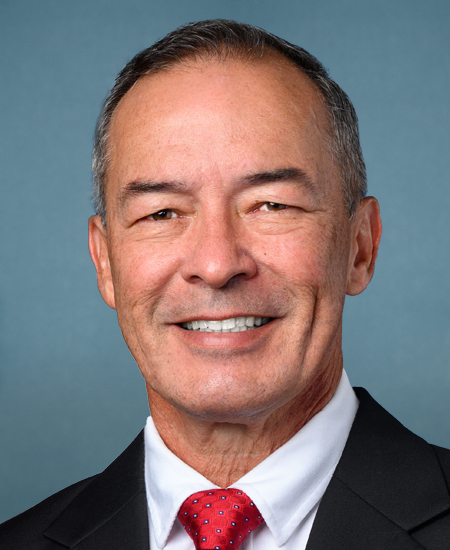
The Alaska's Right to Produce Act 2.0 mandates the continuation of oil and gas leasing in the Arctic National Wildlife Refuge Coastal Plain by invalidating any presidential or administrative moratoriums on these activities. The bill protects existing leases from cancellation unless a lessee violates terms, and it ratifies all environmental permits and biological opinions issued for the program to satisfy requirements under laws such as the Endangered Species Act. To streamline operations, the legislation restricts federal courts' ability to review agency actions related to leasing permits, while allowing lease holders to petition courts if agencies fail to act within 90 days. Additionally, the bill requires the Secretary of the Interior to establish a unit agreement system for shared infrastructure and grants authority to waive or reduce rental fees and royalties to encourage development.
This bill would modify how the Endangered Species Act applies to the National Flood Insurance Program by exempting certain flood insurance actions from endangered species protections. It directly affects the Federal Emergency Management Agency and property owners seeking flood insurance coverage, as well as wildlife agencies that currently review flood insurance decisions. The legislation requires the removal of existing biological opinions that evaluate the program's impact on endangered species and adds language to ensure flood management actions are designed solely for protecting property and human health. These changes would allow the National Flood Insurance Program to operate without the usual environmental review requirements that could delay or restrict flood insurance coverage in areas with endangered species.
This joint resolution allows off-road vehicles to be used in certain areas of the Glen Canyon National Recreation Area, which is in northern Arizona and southeastern Utah and contains Lake Powell. Specifically, the joint resolution nullifies the rule issued by the National Park Service (NPS) titled Glen Canyon National Recreation Area; Motor Vehicles and published on January 13, 2025. Under the rule, the NPS limited the use of off-road vehicles, such as off-highway vehicles and all-terrain vehicles, in certain areas. For instance, the rule prohibited the use of off-road vehicles on an 8-mile segment of the Poison Spring Loop located on Route 633 proceeding north to Route 730 in the Orange Cliffs Special Management Unit. The rule also eliminated the authority of the NPS to open the upper portion of the Flint Trail in that unit to off-road vehicles. Additionally, the rule limited off-road vehicle use from certain roads to the shoreline of the lake.
HR 2817, the Coastal Broadband Deployment Act, exempts certain broadband infrastructure projects in floodplains from standard federal environmental and historic preservation reviews. It directly affects telecom companies seeking to deploy or modify broadband facilities entirely within floodplains (as defined by federal regulations) and requiring Federal Communications Commission (FCC) permits. The bill removes the need for environmental reviews under the National Environmental Policy Act (NEPA) and historic preservation assessments under the National Historic Preservation Act (NHPA) for these specific projects. This change streamlines the approval process for broadband infrastructure in coastal floodplain areas without altering the underlying FCC permitting requirements.
HRES 879 is a procedural resolution that would allow the House to debate and vote on multiple specific legislative items. It enables consideration of three joint resolutions seeking to block Bureau of Land Management rules about oil and gas activities in Alaska (National Petroleum Reserve, Buffalo Field Office, and Coastal Plain areas), a concurrent resolution denouncing socialism, and three bills: one to remove natural gas export/import restrictions, one requiring an energy report on refineries, and two related to criminal justice reforms in Washington, D.C. The resolution waives debate rules and points of order to streamline votes on these items. It does not change policy itself but facilitates the House's review of the referenced bills and resolutions.
HR 2073, the Defending our Dams Act, prohibits federal funding for any study, planning, or technical assistance related to removing or altering the Lower Snake River dams in Washington State. It specifically blocks the use of federal funds for evaluating dam removal alternatives, including replacements for power, flood control, or navigation. The bill also restricts spillage operations at these dams without explicit approval from the Army Corps of Engineers and Bonneville Power Administration, requiring consideration of all Columbia River System operations. The law directly affects federal agencies' ability to fund or plan for changes to the four specific dams: Ice Harbor, Lower Monumental, Little Goose, and Lower Granite.
HR 674 prohibits new commercial offshore wind energy development in Lobster Management Area 1 (a specific fishing zone in the Gulf of Maine critical to the New England lobster and seafood industry). The bill directly affects commercial fishermen, seafood processors, and coastal communities dependent on this area’s fisheries, which support thousands of jobs and generate over $500 million annually in lobster harvest alone. Key provisions include banning new wind energy leases in the area and requiring a federal study within 120 days to evaluate how current environmental reviews for Gulf of Maine wind projects consider impacts on marine life, fishing industries, and coastal communities. The study will assess existing agency processes for reviewing wind projects, not change those processes.
This bill corrects the map for the John H. Chafee Coastal Barrier Resources System (CBRS) to exclude specific parcels in North Topsail Beach, North Carolina, that are zoned for non-conservation uses (like development) as of the bill's enactment date. It requires the Secretary of the Interior to remove these parcels from CBRS Unit L06 within 30 days of the bill becoming law. This change removes federal restrictions on federal spending and development in those parcels, directly affecting landowners and developers in North Topsail Beach. The amendment applies only to areas within the town's municipal boundaries, based on existing local zoning rules.
HR 1462 removes tax credits for offshore wind facilities located in the inland navigable waters or coastal waters of the United States. Specifically, it disallows the investment tax credit (Section 48) and production tax credits (Sections 45 and 45Y) for such facilities placed in service after December 31, 2025. This policy change directly affects developers building wind projects in these specific waterways, as they will no longer qualify for federal tax incentives. The bill modifies existing tax code provisions without altering the broader eligibility for offshore wind projects in open ocean waters.
HR 2187 amends U.S. tax law to disallow key federal tax credits for offshore wind facilities located in inland navigable waters or coastal waters of the United States. Specifically, it removes eligibility for the investment tax credit (Section 48), production tax credit (Section 45), and clean electricity production tax credit (Section 45Y) for projects in these water areas. The bill defines "disqualified offshore wind facilities" as those situated in the specified waters, preventing them from qualifying for these financial incentives. This change applies to energy produced and property placed in service after December 31, 2025, directly affecting developers planning offshore wind projects in U.S. coastal or inland waterways.