Issue · Energy

Energy

Every energy bill, vote, and legislator stance in United States, automatically classified by Maddy, our AI policy reader.

Total bills
603
119th Congress
Top supporter
Martin Heinrich
75% support rate
Top opponent
Marsha Blackburn
26% support rate
Ranked legislators
10
5 support · 5 oppose
Key legislators

Who's moving energy in United States

Legislators moving energy in United States
Legislator Party Stance Support rate Votes
Martin Heinrich
Martin Heinrich Senate
D
Support
75% 194
John W. Hickenlooper
John W. Hickenlooper Senate
D
Support
74% 212
Brendan F. Boyle
Brendan F. Boyle House · District 2
D
Support
73% 253
Frederica S. Wilson
Frederica S. Wilson House · District 24
D
Support
73% 188
Jacky Rosen
Jacky Rosen Senate
D
Support
72% 213
Marsha Blackburn
Marsha Blackburn Senate
R
Oppose
26% 186
Ted Budd
Ted Budd Senate
R
Oppose
27% 198
Chip Roy
Chip Roy House · District 21
R
Oppose
27% 251
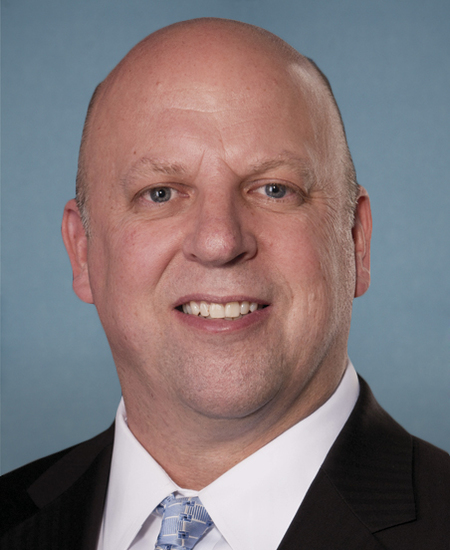
Scott DesJarlais
Scott DesJarlais House · District 4
R
Oppose
29% 256
Mike Johnson
Mike Johnson House · District 4
R
Oppose
29% 194
Showing 111–120 of 603 bills

All energy bills

in committee · United States · House May 20, 2026

HR 8947: Utility Hikes Transparency Act

This bill directs the Federal Energy Regulatory Commission to create a public online database called the National Utility Rate Change Tracker. The database will record approved rate increases for electric and gas utilities, providing details such as the utility name, location, customer count, and the specific reasons for the hike. It will also show how these changes impact average monthly bills and total utility revenue, with data updated quarterly and searchable by address or city. The goal is to make utility pricing information more accessible to consumers by standardizing how data is collected and presented.
Sub-Topics Utility Regulation
in committee · United States · House May 12, 2026

HR 8772: Diesel Prices Relief Act of 2026

The Diesel Prices Relief Act of 2026 eliminates the federal excise tax on diesel fuel for a period ending on January 1, 2027, directly affecting drivers and businesses that use diesel. To offset the lost revenue, the bill requires the Treasury Secretary to transfer money from the general fund to the Highway Trust Fund and the Leaking Underground Storage Tank Trust Fund. The legislation also mandates that fuel producers and dealers pass these savings immediately to consumers and gives the Treasury authority to enforce this requirement.
in committee · United States · House Mar 18, 2026

HR 7977: Energy Bills Relief Act

The Energy Bills Relief Act aims to lower household energy costs and accelerate the development of low-cost, clean energy by modifying federal tax credits, expanding weatherization programs, and streamlining permitting processes. Key provisions include restoring tax incentives for renewable energy projects, increasing funding for low-income heating assistance, and requiring federal agencies to treat wind, solar, and storage projects with the same procedural fairness as oil and gas projects. The bill also establishes new incentives for upgrading the electricity grid, such as tax credits for transmission lines and grants for wildfire prevention measures, while creating mechanisms to ensure utilities serve public interests and protect consumers from price volatility.
in committee · United States · House May 21, 2026

HRES 1315: Expressing support for the designation of May 2026 as "Renewable Fuels Month" to recognize the important role that renewable fuels play in lowering fuel prices for consumers, lessening reliance on foreign adversaries, supporting rural communities, and reducing carbon impacts.

This bill is a non-binding resolution that expresses support for designating May 2026 as 'Renewable Fuels Month.' It aims to highlight the economic and environmental benefits of renewable fuels, such as ethanol and biodiesel, which are used in vehicles and aviation. The resolution recognizes how these fuels help lower consumer prices, create jobs in rural areas, reduce reliance on foreign oil, and decrease greenhouse gas emissions. Because this is a symbolic gesture rather than a law with enforceable rules, it does not change any existing policies or regulations.
in committee · United States · House May 13, 2026

HR 8795: American Families Gas Tax Relief Act

The American Families Gas Tax Relief Act temporarily eliminates federal excise taxes on gasoline, diesel, and kerosene for a period of 120 days starting on the date of enactment. This tax break is intended to lower fuel prices for consumers, with provisions requiring producers and dealers to pass the savings directly to buyers. The President has the authority to extend this holiday by an additional 90 days if economic conditions warrant it. To maintain funding for infrastructure and environmental programs, the government will transfer the lost tax revenue from the general treasury to the Highway Trust Fund and the Leaking Underground Storage Tank Trust Fund.
in committee · United States · Senate Apr 28, 2026

S 4406: Next-Generation Geothermal Research and Development Act

This bill establishes a comprehensive research and development framework to advance next-generation geothermal technologies, specifically targeting enhanced geothermal systems, closed-loop systems, and supercritical geothermal energy. It directs the Department of Energy to create a new research program that awards milestone-based grants for deep drilling projects and establishes a center of excellence to coordinate efforts across universities, national laboratories, and private partners. Key provisions include updating federal data repositories to standardize subsurface information, commissioning deep exploration boreholes to map heat and rock properties, and funding innovations in drilling equipment, power generation efficiency, and water usage. The legislation also mandates periodic reports on the commercialization barriers of these technologies and authorizes $5 million annually through 2031 to support these initiatives.
Sub-Topics Oil & Gas
in committee · United States · House Apr 22, 2026

HR 8459: WISE Act

The WISE Act amends the Federal Water Pollution Control Act to require states receiving capitalization grants to allocate at least 20 percent of those funds toward specific sustainability projects. These designated projects must focus on green infrastructure, water or energy efficiency improvements, or other environmentally innovative activities, provided there are enough eligible applications and available funding. This change directly affects state governments by mandating a minimum spending threshold for these initiatives within the existing grant program. The legislation aims to ensure that a significant portion of federal water infrastructure money supports modern, eco-friendly solutions rather than traditional construction methods.
in committee · United States · House Apr 27, 2026

HR 8519: To require the Administrator of the Environmental Protection Agency to waive Reid Vapor Pressure requirements with respect to calendar year 2026, and for other purposes.

This bill directs the EPA Administrator to allow the sale and use of gasoline with higher vapor pressure than usual during the summer months of 2026. The exemption applies specifically to the period between May 1 and September 15, 2026, permitting fuel that would normally be prohibited under current Clean Air Act regulations. By temporarily lifting these restrictions, the legislation aims to ensure a steady supply of gasoline during that specific timeframe without altering the long-term standards for fuel quality.
Sub-Topics Air Quality
in committee · United States · House Apr 27, 2026

HR 8517: Clean Energy Workforce Act

The Clean Energy Workforce Act authorizes $100 million to help schools and colleges train students for jobs in clean energy, renewable energy, and climate change fields. The funding supports two main programs: grants for partnerships between schools and local businesses to create or expand educational courses that prepare students for these industries, and grants for educational facilities to become more energy-efficient and use renewable power. To ensure quality, the bill requires a review committee of educators and industry experts to evaluate grant applications, with priority given to programs that reach underserved students and share their methods with other schools.
in committee · United States · Senate Apr 15, 2026

S 4300: JOAN Act

The JOAN Act streamlines the approval process for natural gas projects by designating the Federal Energy Regulatory Commission as the sole lead agency for environmental reviews and establishing strict deadlines for all involved federal and state agencies to complete their permitting steps. To speed up legal challenges, the bill creates a single, exclusive court process for lawsuits against these projects, which must be resolved within 180 days and limits the ability of courts to issue long-term injunctions or order new evidence gathering. Additionally, the legislation allows project sponsors to continue construction on unaffected parts of a project while legal disputes are ongoing and requires agencies to accept data gathered through remote surveys like aerial photography.
Showing 111 to 120 of 603 bills
Previous 1 11 12 13 61 Next