Issue · Education

Education (K-12 Education)

Every education bill, vote, and legislator stance in United States, automatically classified by Maddy, our AI policy reader.

Total bills
167
119th Congress
Top supporter
Adam B. Schiff
100% support rate
Top opponent
Donald G. Davis
0% support rate
Ranked legislators
10
5 support · 5 oppose
Key legislators

Who's moving k-12 education in United States

Legislators moving k-12 education in United States
Legislator Party Stance Support rate Votes
Adam B. Schiff
Adam B. Schiff Senate
D
Strong +
100% 4
Amy Klobuchar
Amy Klobuchar Senate
D
Strong +
100% 4
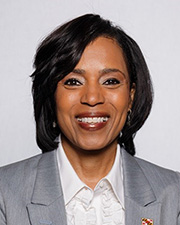
Angela D. Alsobrooks
Angela D. Alsobrooks Senate
D
Strong +
100% 4
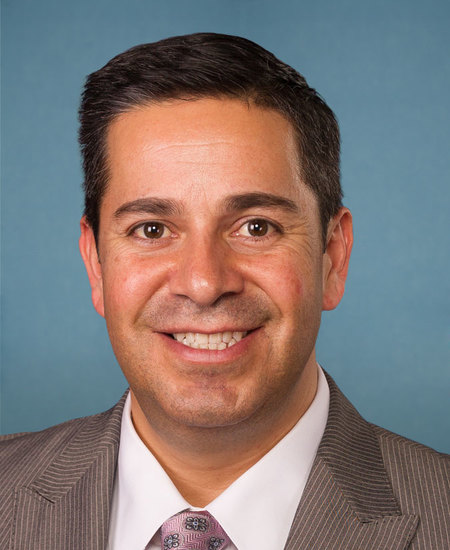
Ben Ray Luján
Ben Ray Luján Senate
D
Strong +
100% 4
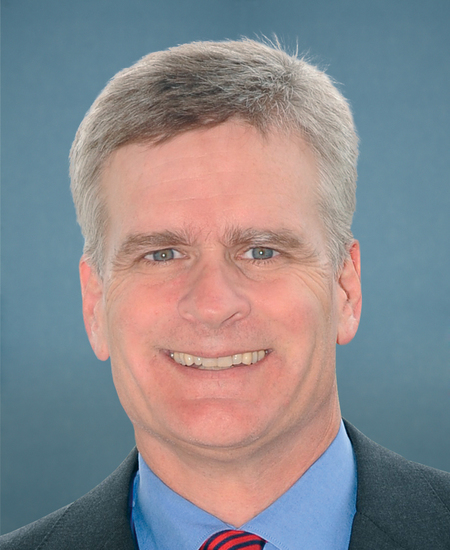
Bill Cassidy
Bill Cassidy Senate
R
Strong +
100% 4
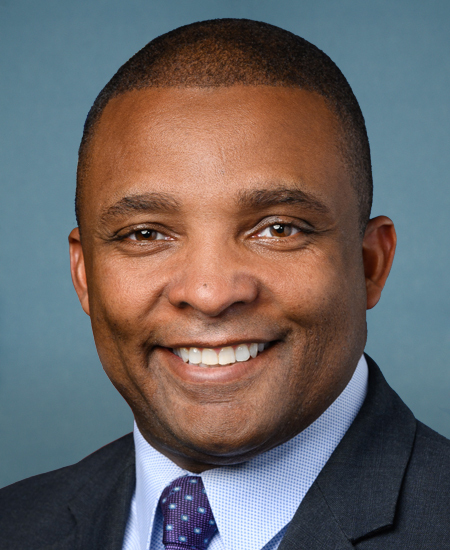
Donald G. Davis
Donald G. Davis House · District 1
D
Strong −
0% 3
Eugene Simon Vindman
Eugene Simon Vindman House · District 7
D
Strong −
0% 3
Henry Cuellar
Henry Cuellar House · District 28
D
Strong −
0% 3
Laura Gillen
Laura Gillen House · District 4
D
Strong −
0% 3
Marie Gluesenkamp Perez
Marie Gluesenkamp Perez House · District 3
D
Strong −
0% 3
Showing 61–70 of 167 bills

All education bills

in committee · United States · House Jun 17, 2025

HR 4020: To authorize the Secretary of Defense to enter into arrangements with institutions of higher education to provide dual or concurrent enrollment programs for students enrolled in schools operated by the Department of Defense Education Activity, and for other purposes.

HR 4020 authorizes the Department of Defense Education Activity (DODEA) to partner with colleges and universities, allowing students in DODEA schools (which serve military-connected children, including those overseas) to take college courses while still in high school. The bill enables dual enrollment programs where students earn both high school and college credits, with the government covering associated costs through financial assistance. Key provisions require formal agreements between DODEA and higher education institutions, ensuring courses align with both high school graduation requirements and college degree pathways. This directly affects DODEA students in 150+ schools globally, providing early college access without requiring prior high school graduation.
in committee · United States · House Jul 23, 2025

HR 4701: Charting My Path for Future Success Act

This bill reauthorizes an existing program supporting students with disabilities by requiring the Secretary of Education to reissue a contract for the "Charting My Path for Future Success" project within 90 days. The project trains educators to help students with disabilities set academic and life goals, create action plans, and track progress - directly affecting 1,600 high school students across 62 schools in 13 school districts. Key provisions include continuing the established training model (used by 61 educators since January 2025) and prohibiting contract cancellation without congressional approval. The bill does not create new funding or expand eligibility but ensures the existing initiative continues uninterrupted.
in committee · United States · Senate Mar 12, 2025

S 986: Safe Schools Improvement Act

Safe Schools Improvement Act This bill requires states to direct their local educational agencies (LEAs) to establish policies that prevent and prohibit bullying and harassment of elementary and secondary school students. In particular, these policies must prohibit bullying and harassment based on race, color, national origin, disability, religion, or sex. Sex includes sexual orientation, gender identity, and sex characteristics (including intersex traits). Further, LEAs must provide (1) students, parents, and educational professionals with annual notice of the conduct prohibited in their disciplinary policies; (2) students and parents with grievance procedures that target such conduct; and (3) the public with annual data on the incidence and frequency of that conduct at the school and LEA level. The Department of Education must conduct and report on an independent biennial evaluation of programs and policies to combat bullying and harassment in elementary and secondary schools. The National Center for Education Statistics must collect state data to determine the incidence and frequency of the conduct prohibited by LEA disciplinary policies.
in committee · United States · House Feb 4, 2026

HR 5658: Child Care for Every Community Act

HR 5658, the Child Care for Every Community Act, establishes a federal framework to create universal, high-quality child care and early learning programs available to all young children not yet required to attend school. The bill requires that covered children (children below compulsory school age) be entitled to participate in these programs, with no fees for low-income families and sliding-scale fees for others based on family income. Key provisions include requiring full-working-day, full-calendar-year care; setting national quality standards for staff qualifications and facilities; mandating comprehensive services including health, nutrition, and family support; and requiring coordination with schools to support children's transitions to kindergarten. The bill directly affects families seeking child care, child care providers, and local communities that would administer these programs through designated "prime sponsors."
Sub-Topics Early Childhood K-12 Education Tags Children
in committee · United States · House Sep 11, 2025

HR 5304: Departments of Labor, Health and Human Services, and Education, and Related Agencies Appropriations Act, 2026

# Summary of the Departments of Labor, Health and Human Services, and Education, and Related Agencies Appropriations Act, 2026 This is a comprehensive federal appropriations bill that allocates funding for multiple government agencies, with significant restrictions on how those funds may be used. The bill is structured into four main titles: ## Key Components 1. **Title I: Health and Human Services Appropriations** - Contains detailed funding allocations for: - Public health programs - Social Security Administration - Medicaid and CHIP programs - Various health research and services - Specific restrictions on abortion funding (sections 506-508) 2. **Title II: Department of Education Appropriations** - Funds for: - Higher education programs - K-12 education initiatives - Career and technical education - Student financial assistance - Prohibitions on certain gender-related policies (section 312) 3. **Title III: Related Agencies** - Includes funding for: - Corporation for National and Community Service ("America First Corps") - Committee for Purchase From People Who Are Blind or Severely Disabled - Federal Mediation and Conciliation Service - Various other independent agencies 4. **Title IV: General Provisions** - Contains numerous restrictions on fund usage, including: ## Notable Restrictions and Prohibitions - **Abortion restrictions** (sections 506-508): Prohibits funding for abortions except in cases of rape, incest, or life endangerment - **Research restrictions** (section 508): Bans funding for human embryo research - **Prohibitions on Critical Race Theory** (section 534): Bans funding for programs promoting Critical Race Theory - **Restrictions on diversity initiatives** (section 535): Prohibits funding for programs teaching concepts related to systemic racism - **Executive order prohibitions** (sections 532-533): Prohibits implementation of various climate-related executive orders - **Restrictions on transgender policies** (section 311): Prohibits funds for educational institutions allowing males to participate in women's athletic programs - **Restrictions on certain international collaborations** (sections 537, 540): Prohibits funding for certain Chinese research institutions - **Prohibitions on certain technology procurement** (section 541): Bans purchasing from companies with Chinese ownership stakes The bill also includes: - Rescission of $12.8 billion from the Child Enrollment Contingency Fund (section 528) - Rescission of $183 million from various American Rescue Plan Act funds (section 529) - Specific requirements for reporting on fund usage and contract awards - Restrictions on flag display at federal facilities (section 531) This appropriations bill represents a highly restrictive approach to federal funding, with numerous specific limitations on how money can be spent across multiple government agencies.
in committee · United States · Senate Mar 18, 2026

S 342: Purple Heart Veterans Education Act of 2025

This bill allows Purple Heart veterans who served after September 11, 2001, to transfer unused Post-9/11 GI Bill education benefits to family members. Specifically, veterans can transfer up to 36 months of benefits to eligible dependents (like spouses or children) without affecting their own remaining benefits. It sets rules for when dependents can use transferred benefits - children must complete high school or turn 18 first, and benefits expire by age 26 unless used for caregiving or due to school closures. The bill also ensures transferred benefits aren’t treated as marital property and includes special provisions for caregivers of injured veterans or emergency school closures.
in committee · United States · House Nov 25, 2025

HR 6305: High-skilled Immigration Reform for Employment Act

HR 6305, the High-skilled Immigration Reform for Employment Act, expands opportunities for U.S. employers to hire foreign workers in specialty occupations by increasing the annual H-1B visa cap from 65,000 to 130,000 and adjusting employer thresholds to make it easier for larger companies to qualify for H-1B visas. It also creates a new $25 million annual grant program (2026-2030) to fund states and schools that strengthen K-12 and higher education in science, math, engineering, and technology fields. The bill directly affects U.S. employers seeking H-1B workers and schools receiving STEM education grants. Key mechanisms include raising the H-1B cap, modifying employer size thresholds for H-1B-dependent status, and authorizing federal grants for STEM education programs.
Sub-Topics K-12 Education
in committee · United States · House Sep 23, 2025

HR 5557: Mental Health Services for Students Act of 2025

The Mental Health Services for Students Act of 2025 would establish a federal grant program to fund school-based mental health services for students in grades K-12, particularly those experiencing trauma, grief, suicide risk, or violence. It directly affects schools (including Bureau of Indian Education schools), students, and community mental health providers through partnerships that must include school districts and local mental health entities. Key provisions require services to be culturally appropriate, trauma-informed, and integrated with positive behavioral supports, with grants capped at $2 million per award for 5 years (renewable) and funded at $300 million annually for 2027-2028. Recipients must report annually on program outcomes, ensure equitable access across urban and rural areas, and comply with privacy laws like HIPAA and FERPA.
in committee · United States · House May 6, 2025

HR 3217: Stop Child Hunger Act of 2025

The Stop Child Hunger Act of 2025 expands the Summer Electronic Benefits Transfer (EBT) program to cover school closure periods (when schools operate remotely or hybrid for 5+ consecutive weekdays), not just summer months. It directly affects children in households qualifying for free school meals during these closures. Key provisions include updating program definitions, phasing down federal administrative funding from 100% in 2026 to 50% by 2031, and providing $50 million in grants to states for data system upgrades to implement the changes. The bill modifies existing school meal program rules without creating new eligibility criteria.
in committee · United States · House Jul 2, 2026

HR 7661: Stop the Sexualization of Children Act

This bill prohibits federal funding under the Elementary and Secondary Education Act for any program, activity, literature, or material provided to children under 18 that includes "sexually oriented material," defined as depictions of explicit conduct or content involving gender dysphoria or transgenderism. It exempts standard science courses (like biology and anatomy), religious texts, and specific "classic" works of literature and art listed in designated references (e.g., *Great Books of the Western World* and Smarthistory guides). The law directly affects federally funded K-12 educational programs, restricting how school districts can use federal dollars for curriculum materials. It does not ban teaching about human anatomy, art history, or literature, as those are explicitly excluded from the definition of prohibited material.
Showing 61 to 70 of 167 bills
Previous 1 6 7 8 17 Next