Issue · Education

Education (Early Childhood)

Every education bill, vote, and legislator stance in United States, automatically classified by Maddy, our AI policy reader.

Total bills
69
119th Congress
Top supporter
Adam B. Schiff
100% support rate
Top opponent
Alex Padilla
25% support rate
Ranked legislators
10
5 support · 5 oppose
Key legislators

Who's moving early childhood in United States

Legislators moving early childhood in United States
Legislator Party Stance Support rate Votes
Adam B. Schiff
Adam B. Schiff Senate
D
Strong +
100% 4
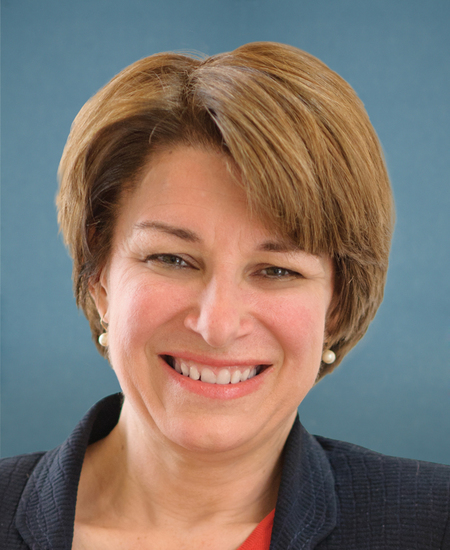
Amy Klobuchar
Amy Klobuchar Senate
D
Strong +
100% 4
Angela D. Alsobrooks
Angela D. Alsobrooks Senate
D
Strong +
100% 4
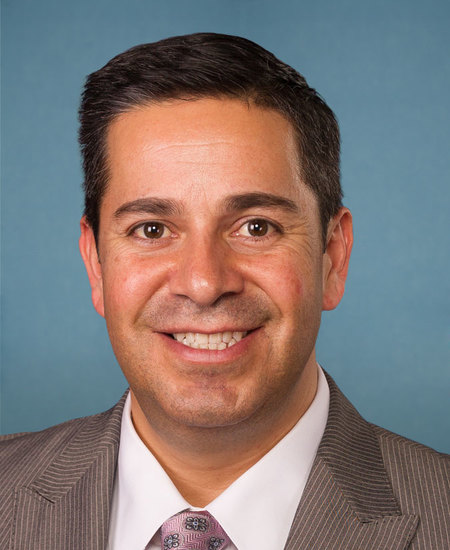
Ben Ray Luján
Ben Ray Luján Senate
D
Strong +
100% 4
Bill Cassidy
Bill Cassidy Senate
R
Strong +
100% 4
Alex Padilla
Alex Padilla Senate
D
Oppose
25% 4
Bernard Sanders
Bernard Sanders Senate
I
Oppose
25% 4
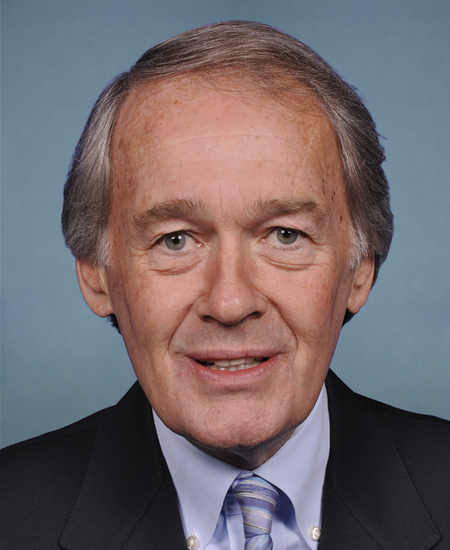
Edward J. Markey
Edward J. Markey Senate
D
Oppose
25% 4
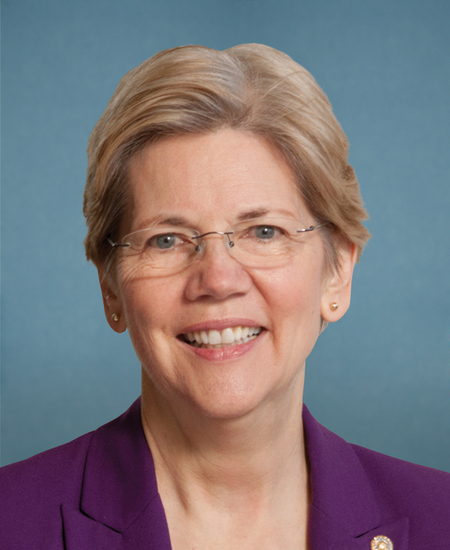
Elizabeth Warren
Elizabeth Warren Senate
D
Oppose
25% 4
Jon Ossoff
Jon Ossoff Senate
D
Oppose
25% 4
Showing 61–69 of 69 bills

All education bills

in committee · United States · House Jan 24, 2025

HR 728: Expanding Head Start Eligibility Act of 2025

HR 728, the Expanding Head Start Eligibility Act of 2025, would amend the Head Start Act to broaden eligibility criteria. It adds a new definition of "public assistance" to include benefits from programs like SNAP (food stamps), housing assistance under Section 8, and state-funded food programs with similar income standards. This change directly affects low-income families seeking Head Start enrollment, as children in households receiving these benefits would now qualify under the expanded definition. The bill modifies the Head Start Act’s eligibility rules to count these additional benefits, making it easier for more children to access early childhood education programs.
Sub-Topics Early Childhood
in committee · United States · House Dec 4, 2025

HR 6419: New Essential Education Discoveries Act of 2025

This bill establishes a National Center for Advanced Development in Education within the Institute to advance teaching and learning through research on effective practices, technology, and community-informed approaches. The Center will focus on developing innovative teaching methods, addressing achievement gaps, and promoting research on learning and development across all education levels from early childhood through adult education. It authorizes $500 million annually for 2026-2030 to support research, development, and improved statewide longitudinal data systems that connect educational data from early childhood through workforce outcomes while protecting student privacy. The bill also requires states to enhance their data systems to better track student progress and outcomes, with the goal of improving educational opportunities and closing achievement gaps.
Sub-Topics Early Childhood
in committee · United States · House May 8, 2025

HR 3273: Child Care Workforce Development Act

HR 3273, the Child Care Workforce Development Act, provides financial support to early childhood educators and students. It establishes a loan repayment program where educators serving 5 years with qualified childcare providers (like centers receiving Child Care Block Grant funds) can have up to $6,000 annually of their student loans repaid. Additionally, it creates grants of up to $4,000 per academic year for students enrolled in early childhood education programs, requiring them to work in licensed childcare settings for at least one year after graduation (with renewal options). The bill authorizes $25 million annually for loan repayment (2026-2031) and $10 million annually for grants (2026-2030), targeting workforce development in childcare.
in committee · United States · House May 8, 2025

HR 3308: RETAIN Act

The RETAIN Act creates a refundable tax credit for early childhood educators, teachers, school leaders, and mental health providers working in high-need schools or early childhood programs. The credit pays $5,800 to $11,600 annually based on continuous years of service (e.g., $5,800 for years 1-2, $11,600 for year 10), increasing with experience to address low pay and retention challenges. It directly affects educators in public elementary/secondary schools serving high-poverty communities and early childhood programs meeting specific quality standards. The credit supplements existing pay but cannot reduce state/local compensation or loan forgiveness programs for eligible workers.
in committee · United States · House Feb 13, 2025

HR 1331: Teacher and School Leader Quality Partnership Grants Act

HR 1331 establishes a federal grant program to improve teacher and school leader preparation in high-need schools. It funds partnerships between high-need local educational agencies, institutions of higher education, and other stakeholders to support teacher and school leader residency programs and professional development. The bill requires eligible partnerships to prepare educators who are "profession-ready" to teach diverse students, with specific training in comprehensive literacy instruction, working with English learners, and supporting students with disabilities. It also establishes accountability measures, including evaluation plans that track educator retention, certification pass rates, and the percentage of profession-ready educators hired in high-need schools.
in committee · United States · Senate May 21, 2025

SRES 240: A resolution affirming that diversity, equity, inclusion, and accessibility are fundamental values of the United States and emphasizing the ongoing need to address discrimination and inequality in the workplace, pre-K through 12th grade and higher education systems, government programs, the military, and our society.

This resolution (SRES 240) affirms that diversity, equity, inclusion, and accessibility are core U.S. values and emphasizes the need to address ongoing discrimination across multiple sectors. It directly affects workplaces, K-12 and higher education systems, healthcare, housing, government programs, and the military by citing data on persistent inequities - such as racial disparities in housing discrimination, wage gaps, and underrepresentation in leadership. The resolution does not create new laws but encourages federal, state, and local entities to adopt inclusive policies and remove barriers to opportunity. It references evidence from agencies like the Department of Housing and Urban Development and the Equal Employment Opportunity Commission to support its focus on systemic discrimination. The Senate calls for promoting environments where all individuals can achieve their full potential.
Sub-Topics Early Childhood K-12 Education Employment Discrimination Tags People with Disabilities
in committee · United States · Senate Sep 18, 2025

S 2862: CCAMPIS Reauthorization Act

Child Care Access Means Parents In Schools Reauthorization Act or the CCAMPIS Reauthorization Act This bill reauthorizes through FY2031 and revises the Child Care Access Means Parents in School Program. The program awards grants to support the participation of eligible low-income parents in postsecondary education through the provision of campus-based child care services. Among other revisions to the program, the bill increases the minimum and maximum grant amounts, allows grant funds to be used for additional purposes (e.g., child care subsidies and support services), and specifies additional grant application requirements.
in committee · United States · Senate May 8, 2025

S 1697: RAISE Act of 2025

The RAISE Act of 2025 creates a refundable tax credit for K-12 teachers and early childhood educators based on their school's student poverty rate, with a base $1,000 credit plus potential additional amounts up to $14,000 for K-12 teachers and $9,000 for early childhood educators without bachelor's degrees. It also increases the deductible expense limit for teachers from $250 to $500 per year and establishes mandatory funding for school districts that maintain or increase teacher salaries, reserving 20% of funds over $2.2 billion for teacher salary incentive grants. The bill includes provisions to prevent employers from using the tax credit in collective bargaining or changing teacher assignments to avoid providing the credit. Eligibility requires specific teaching credentials and employment in qualifying schools with high poverty rates. These changes would apply to taxable years beginning after the bill's enactment date.
passed · United States · Senate Oct 6, 2025

SRES 433: A resolution expressing support for the contributions and achievements of student parents in seeking and completing a postsecondary education and designating September 2025 as "National Student Parent Month".

SRES 433 is a symbolic Senate resolution expressing support for student parents - individuals with children enrolled in college - and designating September 2025 as "National Student Parent Month." It does not create new laws or provide funding but formally acknowledges the challenges these 3.14 million students face, including high rates of food/housing insecurity and balancing work, childcare, and studies. The resolution highlights that student parents (55% are people of color, 52% report food insecurity, and 51% attend community colleges) contribute significantly to higher education despite systemic barriers. This designation aims to raise awareness of their needs without enacting concrete policy changes.
Showing 61 to 69 of 69 bills
Previous 1 5 6 7