Issue · Education

Education (K-12 Education)

Every education bill, vote, and legislator stance in United States, automatically classified by Maddy, our AI policy reader.

Total bills
157
119th Congress
Top supporter
Adam B. Schiff
100% support rate
Top opponent
Jared Moskowitz
0% support rate
Ranked legislators
10
5 support · 5 oppose
Key legislators

Who's moving k-12 education in United States

Legislators moving k-12 education in United States
Legislator Party Stance Support rate Decisive votes
Adam B. Schiff
Adam B. Schiff Senate
D
Strong +
100% 4
Amy Klobuchar
Amy Klobuchar Senate
D
Strong +
100% 4
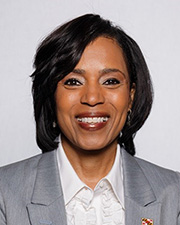
Angela D. Alsobrooks
Angela D. Alsobrooks Senate
D
Strong +
100% 4
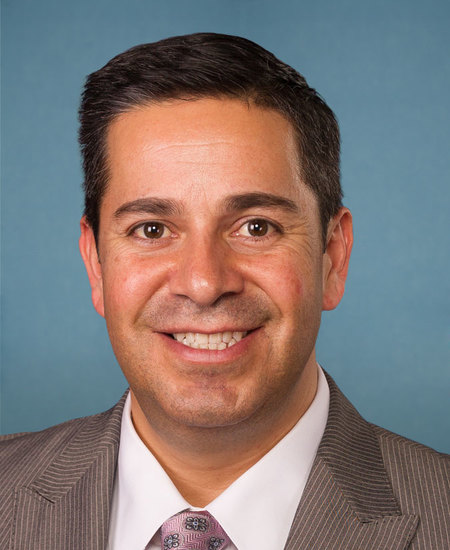
Ben Ray Luján
Ben Ray Luján Senate
D
Strong +
100% 4
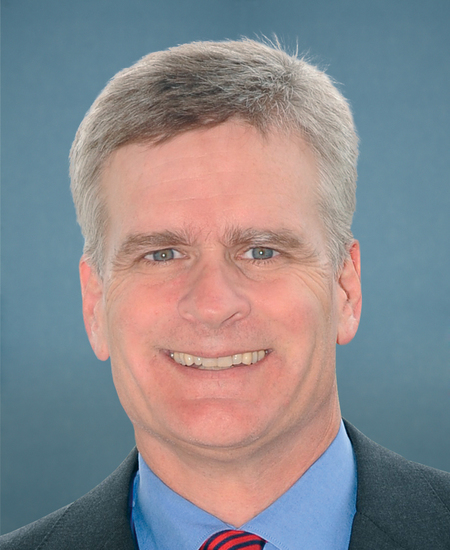
Bill Cassidy
Bill Cassidy Senate
R
Strong +
100% 4
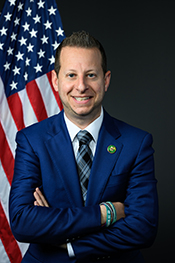
Jared Moskowitz
Jared Moskowitz House · District 23
D
Strong −
0% 3
Alex Padilla
Alex Padilla Senate
D
Oppose
25% 4
Andy Harris
Andy Harris House · District 1
R
Oppose
25% 4
Bernard Sanders
Bernard Sanders Senate
I
Oppose
25% 4
Chris Pappas
Chris Pappas House · District 1
D
Oppose
25% 4
Showing 101–110 of 157 bills

All education bills

in committee · United States · House Sep 10, 2025

HR 5181: SOAR Act Improvements Act

The SOAR Act Improvements Act (HR 5181) amends Washington, D.C.'s scholarship program to extend grant durations from 5 to 10 years without competitive renewal, expand eligibility to schools across the Washington metropolitan region (including parts of Maryland and Virginia), and update funding rules. It allows scholarship funds to cover pre-kindergarten, increases annual academic assistance funding from $2 million to $2.2 million, and requires participating schools to maintain accreditation. The bill also modifies evaluation requirements to include annual reporting on student outcomes like graduation rates and school safety comparisons, with evaluations mandated every seven years starting in 2027. These changes directly affect D.C. scholarship recipients, participating schools, and eligible entities administering the program.
in committee · United States · House Dec 3, 2025

HR 6375: 21st Century STEM for Girls and Underrepresented Minorities Act

This bill creates federal grants to support STEM education programs for girls and underrepresented minorities in K-12 schools. It directs $250,000 annually per grant to school districts serving high-poverty communities (with at least 40% students eligible for free/reduced lunch) to fund specific activities like after-school STEM programs, teacher training on reducing bias, mentorship, parental engagement, and summer camps. The grants require schools to track student participation and academic progress in STEM through annual evaluations. The program aims to increase opportunities for these students to develop skills and pursue STEM careers, while ensuring funds supplement - rather than replace - existing resources.
in committee · United States · Senate Sep 11, 2025

S 2782: Service Starts At Home Act

The Service Starts At Home Act (S 2782) creates two main programs: (1) grants to states and local governments for paid internships for high school students and college undergraduates in local government roles, and (2) scholarships for students based on volunteer service hours. It directly affects secondary and postsecondary students, local governments, and states by funding internships with educational value and awarding scholarships (ranging from $1,000 to $3,000 annually) to students who complete 100+ volunteer hours. Key mechanisms include competitive grant applications for internship programs, state-level scholarship administration with priority for renewal applicants, and requirements for volunteer work to be unpaid and non-religious. The bill authorizes $50 million annually for internships and $100 million annually for scholarships from fiscal years 2026-2030.
in committee · United States · House Feb 27, 2025

HR 1660: BEST Act

The BEST Act establishes a federal grant program to help states create or improve Seal of Biliteracy programs for K-12 students. It provides $10 million annually (2025-2029) for states to develop programs recognizing students who demonstrate speaking and writing proficiency in both English and a second language, including Native American languages and American Sign Language. States must ensure equitable access for English learners, students with disabilities, and heritage language learners, and provide free testing for low-income students. The program requires states to award permanent seals or documentation on diplomas/transcripts for qualifying students.
Sub-Topics K-12 Education
in committee · United States · House Jun 30, 2025

HR 4260: To ensure the appropriate administration of the Impact Aid program.

This bill (HR 4260) prevents the U.S. Department of Education from making significant changes to how the Impact Aid program is run. It requires the Education Secretary to maintain the program's administration as it existed on January 1, 2025, unless federal law or a court order mandates otherwise. The bill also mandates annual certification to Congress confirming compliance with this requirement. Impact Aid provides funding to school districts near federal properties (like military bases or national parks) that lose tax revenue, so this bill directly affects those districts by preserving current administrative practices. The key mechanism is a freeze on administrative changes plus annual reporting to Congress.
Sub-Topics K-12 Education
in committee · United States · Senate Jul 28, 2025

S 2481: Pay Teachers Act

The Pay Teachers Act requires states to ensure public school teachers earn a minimum starting salary of $60,000 that increases with experience, and paraprofessionals and education support staff earn at least $45,000 annually or $30 per hour. The bill provides mandatory federal funding to support these salary increases and requires states to develop implementation plans within 4 years (with possible extensions for states facing financial challenges). It also establishes career ladder programs that allow teachers to earn additional compensation for taking on leadership roles and responsibilities. This legislation directly affects all public school teachers, paraprofessionals, and education support staff nationwide, as well as state and local education agencies responsible for implementing the changes.
passed · United States · House Mar 25, 2025

HR 730: Mathematical and Statistical Modeling Education Act

This bill authorizes $10 million annually (2026-2030) for the National Science Foundation to fund grants supporting mathematical and statistical modeling education in K-12 schools. It requires funded projects to focus on engaging students from groups historically underrepresented in STEM, using real-world data and computational tools, and addressing transitions like middle school to high school. The bill also allocates $1 million to fund a National Academies study on best practices for integrating these skills across curricula. These efforts aim to address a projected STEM workforce shortage by better preparing students for data-driven careers in fields like technology, healthcare, and engineering.
Sub-Topics K-12 Education
signed · United States · House Sep 18, 2026

HR 5334: Lindsey O. Graham Sanctioning Russia and Iran Act of 2026

HR 5334, the SEED Act of 2025, expands the existing educator expense deduction under federal tax law to explicitly include early childhood educators. It revises the Internal Revenue Code to cover expenses for "early childhood educators" and broadens the educational levels affected to include "pre-kindergarten through grade 12." This change allows early childhood educators (such as preschool teachers) to deduct work-related expenses like classroom supplies and professional development costs, which they previously could not claim under the existing deduction for "kindergarten through grade 12" teachers. The amendment applies to expenses incurred in taxable years beginning after December 31, 2024.
in committee · United States · House Jun 9, 2025

HR 3852: Reimagining Inclusive Arts Education Act

The Reimagining Inclusive Arts Education Act establishes a federal grant program to improve arts education access for students with disabilities in K-12 schools. It provides competitive grants to eligible schools, school districts, or partnerships with colleges/nonprofits to develop inclusive curricula, adapt classroom materials, and integrate creative arts therapies (like art or music therapy) into arts education. Grants, capped at 3 years with potential renewal, prioritize schools serving students with disabilities and those receiving Title I funding, while requiring geographic and socioeconomic diversity in grant distribution. The program is funded with $15 million over five years (2026-2030) to support professional development for educators and therapeutic approaches that enhance inclusion.
in committee · United States · Senate Sep 11, 2025

S 2791: SEED Act

The SEED Act expands tax deductions for educators by including early childhood educators (such as preschool teachers) in the existing educator expense deduction. It modifies Section 62 of the Internal Revenue Code to replace "elementary and secondary" with "early childhood, elementary, and secondary" in the deduction's description and to explicitly add "early childhood" educators to the eligibility criteria. This change allows early childhood educators to deduct work-related expenses like classroom supplies on their federal tax returns, similar to K-12 teachers. The updated provisions apply to expenses incurred in taxable years beginning after December 31, 2025.
Showing 101 to 110 of 157 bills
Previous 1 … 10 11 12 … 16 Next