Issue · Education

Education (Student Financial Aid)

Every education bill, vote, and legislator stance in United States, automatically classified by Maddy, our AI policy reader.

Total bills
258
119th Congress
Top supporter
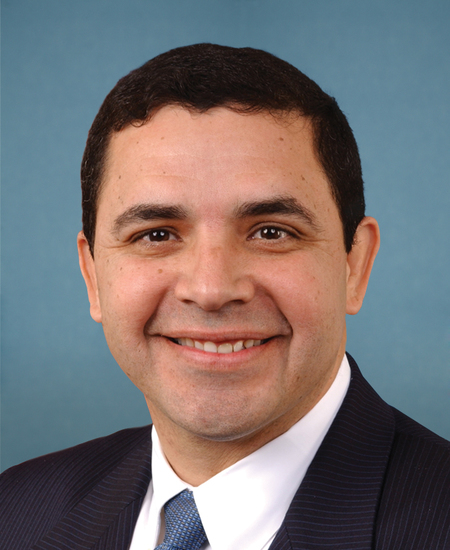
Henry Cuellar
100% support rate
Top opponent
Aaron Bean
33% support rate
Ranked legislators
10
5 support · 5 oppose
Key legislators

Who's moving student financial aid in United States

Legislators moving student financial aid in United States
Legislator Party Stance Support rate Decisive votes
Henry Cuellar
Henry Cuellar House · District 28
D
Strong +
100% 3
Abraham J. Hamadeh
Abraham J. Hamadeh House · District 8
R
Support
67% 3
Adam Gray
Adam Gray House · District 13
D
Support
67% 3
Adelita S. Grijalva
Adelita S. Grijalva House · District 7
D
Support
67% 3
Adrian Smith
Adrian Smith House · District 3
R
Support
67% 3
Aaron Bean
Aaron Bean House · District 4
R
Oppose
33% 3
Addison P. McDowell
Addison P. McDowell House · District 6
R
Oppose
33% 3
Andrew Ogles
Andrew Ogles House · District 5
R
Oppose
33% 3
Andrew S. Clyde
Andrew S. Clyde House · District 9
R
Oppose
33% 3
Andy Biggs
Andy Biggs House · District 5
R
Oppose
33% 3
Showing 91–100 of 258 bills

All education bills

in committee · United States · House Jul 29, 2025

HR 4797: EATS Act of 2025

This bill removes a barrier preventing most low-income students from accessing SNAP benefits. It amends the Food and Nutrition Act to explicitly allow students enrolled at least half-time in recognized higher education programs to qualify for SNAP, reversing a prior exclusion. The key change eliminates the previous requirement that students meet specific exceptions (now deleted) and adds a new eligibility category under Section 3(m)(5). This directly affects low-income undergraduate and graduate students at colleges and training programs who were previously ineligible. The changes take effect January 2, 2026.
in committee · United States · House Dec 2, 2025

HR 5468: Community College Agriculture Advancement Act of 2025

This bill creates federal grants to help community colleges expand agriculture and natural resources programs. It provides competitive funding to community colleges and college consortia to support workforce training, education, research, and outreach - especially when partnering with local agriculture businesses. Funds can be used for equipment, faculty development, apprenticeships, and programming on farm business management topics like accounting and finance. The bill authorizes $20 million annually from 2026-2031, requiring a 3-year evaluation report to Congress on program impacts.
in committee · United States · House May 29, 2025

HR 3655: STAR Plus Scholarship Act

HR 3655, the STAR Plus Scholarship Act, creates a federal scholarship program to address shortages in mental health and substance use disorder treatment workforces. It provides tuition and educational expense coverage to students enrolled in approved programs leading to careers as psychiatrists, social workers, addiction counselors, or other mental health professionals. In exchange, recipients must work full-time in designated mental health professional shortage areas or counties with high overdose death rates for one year per scholarship year. The program authorizes $75 million annually (2026-2030) and prioritizes applicants from underrepresented groups or those likely to continue serving in shortage areas after their obligation ends.
in committee · United States · House Feb 26, 2025

HR 1635: Pell to Grad Act

HR 1635, the Pell to Grad Act, extends the maximum eligibility period for Federal Pell Grants from 12 to 16 semesters. It specifically allows students who received Pell Grants for their first undergraduate degree (but completed fewer than 16 semesters of study) to continue using Pell Grants for a subsequent postbaccalaureate program at an eligible institution. This change directly affects undergraduate students who need additional study after their bachelor's degree, such as for certification or a second major, provided they met specific prior Pell Grant usage and eligibility criteria. The bill amends the Higher Education Act to adjust the duration limits for Pell Grant eligibility.
in committee · United States · House Sep 8, 2025

HR 1000: Cyber PIVOTT Act

The Cyber PIVOTT Act creates a program to build a skilled cyber workforce by providing full tuition scholarships to students in two-year cyber or cyber-relevant associate's degree programs at participating community colleges and technical schools. The program requires scholarship recipients to complete a two-year service obligation in a cyber role for federal, state, local, tribal, or territorial government, with exceptions for military service. It includes mandatory skills-based exercises, internships with government agencies or critical infrastructure sectors, and a database of cyber training resources mapped to job roles. The program aims to enroll 250 students in its first year, doubling annually until reaching 1,000 students per year, with a long-term goal of 10,000 students annually within ten years.
in committee · United States · House Jun 17, 2025

HR 4026: POST Act of 2025

The POST Act of 2025 requires for-profit colleges receiving federal student aid to generate at least 15% of their revenue from non-federal sources, such as tuition, fees, and approved job training contracts, to maintain eligibility for federal funding. It defines "non-federal revenue" to include tuition, campus-based student activities, and non-eligible program fees (e.g., courses not covered by federal aid), while excluding institutional loans, certain scholarships, and most federal funds. Institutions failing this 15% threshold would lose eligibility for at least two years and must demonstrate compliance for two consecutive fiscal years to regain it. The bill also mandates annual reports to Congress detailing each institution's revenue sources from federal and non-federal streams.
in committee · United States · House Jan 15, 2025

HR 423: Private Student Loan Bankruptcy Fairness Act of 2025

HR 423 would change bankruptcy law to allow private student loan debt to be discharged (forgiven) in bankruptcy cases. It amends a section of the Bankruptcy Code that currently makes most student loans non-dischargeable, specifically removing the exception for private loans by revising the language around loan programs. This change would directly affect borrowers with private student loans who file for bankruptcy after the law takes effect. The bill applies only to bankruptcy cases filed on or after its enactment date, not to existing cases.
in committee · United States · House Apr 7, 2025

HR 2664: To amend the Higher Education Act of 1965 to provide for additional uses of funds for grants to strengthen historically Black colleges and universities, and for other purposes.

HR 2664 amends the Higher Education Act to allow historically Black colleges and universities (HBCUs) to use federal grant funds for specific arts, arts education, and cultural programs. The bill adds new provisions enabling HBCUs to provide financial aid to arts students, establish outreach programs for arts departments, offer comprehensive support services (like mentorship and career advising), maintain Black art collections, and create paid internships through partnerships with arts organizations. It also authorizes HBCUs to partner with the National Endowment for the Arts to carry out these activities. This amendment directly affects HBCUs by expanding allowable grant uses to address historical underfunding and strengthen arts education.
in committee · United States · House Jan 15, 2026

HR 6713: Protect Veteran Students, Job Seekers, and Entrepreneurs Housing Act

This bill requires landlords to count VA educational benefits (like tuition assistance for veterans and their families) as income when evaluating rental applications, preventing discrimination against veterans using these benefits. It also limits lease terms to match the duration of the educational benefits and adds a 60-day grace period if veterans temporarily miss program requirements (e.g., missing a class or appointment), preventing immediate loss of benefits. Landlords violating these rules face penalties, including fines or exclusion from federal housing programs. The law directly affects veterans, students, and families receiving VA education benefits who seek housing.
in committee · United States · House Aug 27, 2026

HR 2555: Freedom of Association in Higher Education Act of 2026

HR 2555, the Freedom of Association in Higher Education Act of 2025, protects students who join or form single-sex social organizations (like fraternities or sororities) at colleges. It prohibits colleges receiving federal funds from taking negative actions against these students or organizations solely because they limit membership to one sex - such as denying housing, financial aid, leadership roles, or recognition. The bill ensures students can join such groups without coercion and stops colleges from imposing unfair recruitment rules on single-sex organizations compared to others. It does not require colleges to recognize single-sex groups, allow organizations to set their own membership rules, or override Title IX protections.
Showing 91 to 100 of 258 bills
Previous 1 … 9 10 11 … 26 Next