Issue · Criminal Justice

Criminal Justice

Every criminal justice bill, vote, and legislator stance in United States, automatically classified by Maddy, our AI policy reader.

Total bills
1,286
119th Congress
Top supporter
Alan Armstrong
86% support rate
Top opponent
Amy Klobuchar
13% support rate
Ranked legislators
10
5 support · 5 oppose
Key legislators

Who's moving criminal justice in United States

Legislators moving criminal justice in United States
Legislator Party Stance Support rate Decisive votes
AA
Alan Armstrong Senate
R
Strong +
86% 28
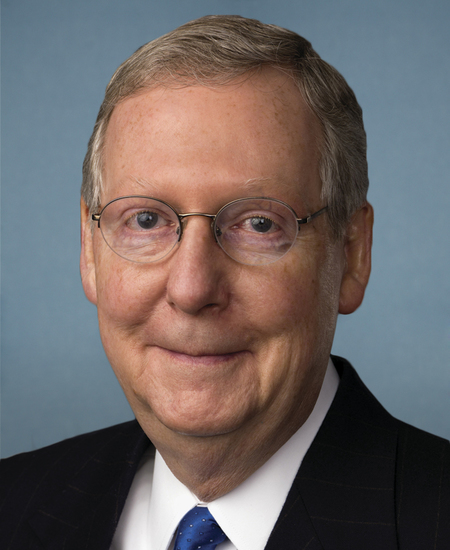
Mitch McConnell
Mitch McConnell Senate
R
Strong +
84% 31
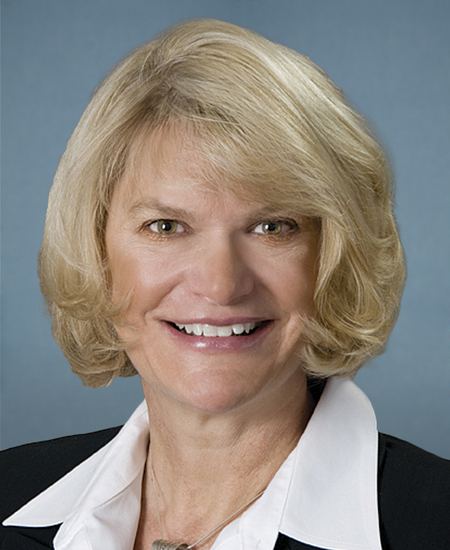
Cynthia M. Lummis
Cynthia M. Lummis Senate
R
Strong +
80% 30
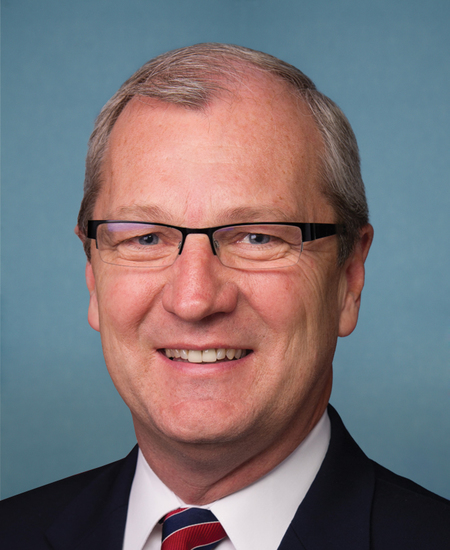
Kevin Cramer
Kevin Cramer Senate
R
Strong +
80% 30
Bernie Moreno
Bernie Moreno Senate
R
Support
77% 31
Amy Klobuchar
Amy Klobuchar Senate
D
Strong −
13% 31
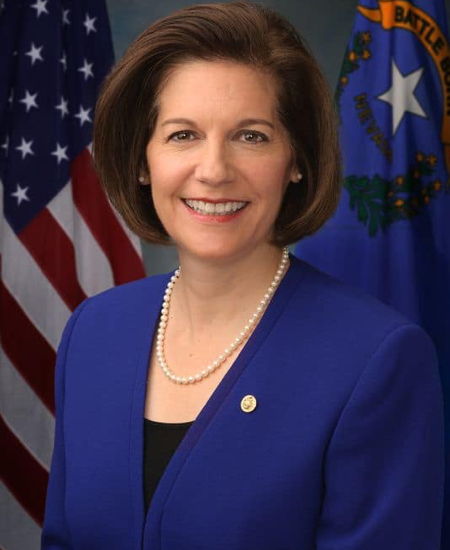
Catherine Cortez Masto
Catherine Cortez Masto Senate
D
Strong −
13% 31
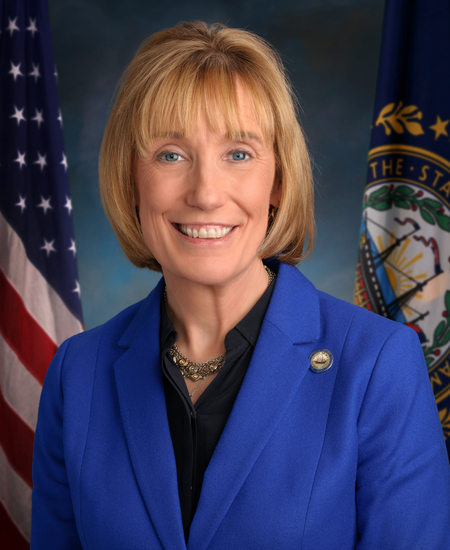
Margaret Wood Hassan
Margaret Wood Hassan Senate
D
Strong −
13% 31
Andy Kim
Andy Kim Senate
D
Strong −
16% 31
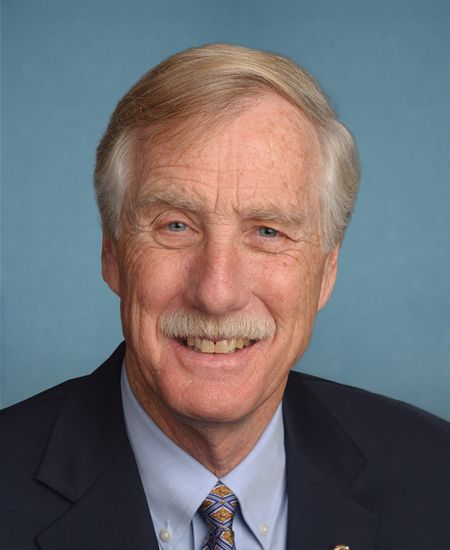
Angus S. King, Jr.
Angus S. King, Jr. Senate
I
Strong −
16% 31
Showing 871–880 of 1,286 bills

All criminal justice bills

in committee · United States · House Mar 5, 2025

HR 1856: CASE LOAD Act of 2025

The CASE LOAD Act of 2025 adds five new federal district judges to the Eastern District of California over six years (two in 2027, one in 2029, two in 2031) to address an unsustainable caseload. It directly affects the court serving approximately 8.4 million residents across 34 counties, where pending cases per judge reached 1,308 as of 2022 - over double the national average. The bill amends the judicial positions table in federal law to increase the Eastern District’s authorized judges from eight to eleven. This is a concrete staffing change aimed at reducing case backlogs, not a policy on substantive law.
Sub-Topics Courts Judges
in committee · United States · House Sep 8, 2025

HR 1510: Due Process Continuity of Care Act

HR 1510, the Due Process Continuity of Care Act, expands Medicaid eligibility to cover individuals in jail or custody while awaiting trial or disposition of charges, at a state's option. This allows states to provide Medicaid benefits to this population without requiring them to be convicted first. The bill provides $50 million in planning grants to states to develop implementation plans, including assessing healthcare needs, recruiting providers (especially for behavioral health and substance use treatment), and creating electronic billing systems for correctional facilities and outpatient providers. States must also consult with stakeholders like jails, providers, and Medicaid advocates before finalizing their plans.
passed · United States · House Sep 15, 2026

HR 309: National Law Enforcement Officers Remembrance, Support, and Community Outreach Act

National Law Enforcement Officers Remembrance, Support and Community Outreach Act. [ sic ] This bill temporarily directs the Department of the Interior to award a grant to the National Law Enforcement Officers Memorial Fund for the expenses associated with operating and enhancing the community outreach, public education, and officer safety and wellness programs of the National Law Enforcement Museum.
Sub-Topics Law Enforcement
in committee · United States · House Sep 16, 2025

HR 5372: DEMO Act

HR 5372, the DEMO Act, creates federal grants to fund 3-year demonstration projects helping low-income individuals (under 138% of the federal poverty level) with arrest or conviction records enter health professions careers. The bill requires participating states to have policies allowing health credentials despite records and mandates projects to provide legal assistance, job training, and post-employment support. Grants require applicants to demonstrate partnerships with organizations experienced in supporting people with criminal records and to target high-demand, well-paying health jobs. The legislation appropriates $10 million for fiscal year 2026 and mandates evaluations to measure outcomes like credential attainment and job placement.
in committee · United States · House Jul 15, 2025

HR 4387: People’s Response Act

HR 4387, the People's Response Act, establishes a new Division on Community Safety within the Department of Health and Human Services to fund evidence-based, nonpunitive approaches to community safety that reduce reliance on law enforcement and criminal legal systems. The bill creates four grant programs totaling $13.5 billion (2026-2030) to support community-based organizations ($4 billion), local governments ($3.5 billion), states ($3.5 billion), and first responder hiring ($2.5 billion), with specific requirements to prioritize communities disproportionately impacted by the criminal legal system. These grants mandate the use of "qualified approaches to community safety" including crisis intervention, violence prevention, community-led safety planning, and support for survivors of violence, while requiring at least 30% of funds to go to rural areas and staff hired with grant funds to earn at least $17 per hour. The bill requires recipients to submit regular reports on how funds are used and their impact on reducing criminal legal system involvement, with an emphasis on racial equity and community input. It aims to shift resources away from carceral systems toward community-driven safety solutions that address root causes of violence and support marginalized communities.
Sub-Topics Law Enforcement Tags Public Safety
in committee · United States · Senate Dec 11, 2025

S 3461: RISE from Trauma Act

The RISE from Trauma Act establishes grants for community coordinating bodies to address trauma and build resilience, particularly for children and youth affected by violence, substance use, or other traumatic experiences. These grants (up to $6 million each for 4 years) require diverse community stakeholders - including healthcare providers, schools, law enforcement, and community organizations - to collaborate on identifying local needs and developing trauma-informed strategies. The legislation prioritizes communities with high rates of overdose deaths, violence-related deaths, or involvement in child welfare and juvenile justice systems. It also expands existing programs like the National Child Traumatic Stress Network, creates hospital-based interventions to prevent readmissions after trauma events, and establishes training for schools, law enforcement, and healthcare providers in trauma-informed care. Funding is authorized at $600 million annually from 2026-2033 for these initiatives.
in committee · United States · Senate Jun 5, 2025

S 1967: PROTECT Act of 2025

Protection for Reservation Occupants against Trafficking and Evasive Communications Today Act of 2025 or the PROTECT Act of 2025 This bill expands special tribal criminal jurisdiction (STCJ) to include certain controlled substance-related offenses and firearms offenses. It also allows tribal courts to execute warrants for electronic material. STCJ allows participating tribes to investigate, prosecute, convict, and sentence both Indian and non-Indian offenders who commit covered crimes in Indian country against Indian victims. Covered crimes currently include assault of tribal justice personnel, child violence, dating violence, domestic violence, obstruction of justice, sexual violence, sex trafficking, stalking, and a violation of a protection order. The bill expands STCJ to allow participating tribes to prosecute individuals for controlled substance-related offenses (i.e., drug trafficking, unlawful drug possession, or unlawful possession of drug paraphernalia) and firearms offenses (i.e., use or possession of a firearm in furtherance of a covered crime or by a person who has been convicted of domestic violence). Additionally, the bill allows participating tribes to exercise STCJ over a controlled substance-related offense or a firearms offense if neither the defendant nor the alleged victim is an Indian. (Currently, this exception only applies in cases of obstruction of justice or assault of tribal justice personnel.) The bill allows offenders convicted pursuant to STCJ to be incarcerated through the Bureau of Prisons Tribal Prisoner Program. The bill gives tribal courts the same authority as state courts to compel service providers to disclose stored electronic communication information through court-issued warrants, court orders, or administrative subpoenas.
Sub-Topics Domestic Violence Firearms Human Trafficking Tags Tribal Nations
in committee · United States · Senate Jun 18, 2025

S 2124: Election Worker Protection Act of 2025

The Election Worker Protection Act of 2025 provides federal grants to states for election worker recruitment, training, and safety. It establishes new criminal penalties for threatening or harassing election workers, with fines up to $100,000 and up to 5 years in prison. The bill creates a grant program to protect election workers' personally identifiable information from public disclosure, including through redaction of personal data in public records. States would receive funding based on their voting age population, with requirements for diversity-focused recruitment and regular reporting on program outcomes.
in committee · United States · House Apr 8, 2025

HR 2738: Ending PUSHOUT Act of 2025

The Ending PUSHOUT Act of 2025 aims to address discriminatory school discipline practices that disproportionately push students of color, particularly Black, Brown, and Indigenous girls, out of school. It requires schools to collect and report detailed demographic data on discipline practices, including race, gender identity, disability status, and other factors. The bill provides grants to schools to implement trauma-informed alternatives to exclusionary discipline like suspensions and expulsions, while prohibiting certain practices such as out-of-school suspension for young students for minor offenses like grooming policy violations. It also establishes a joint task force with student, parent, and expert representation to study and recommend solutions to end school pushout of girls of color.
Sub-Topics School Safety
in committee · United States · Senate Jan 9, 2025

S 61: National Human Trafficking Database Act

S 61 establishes a national database to standardize human trafficking data collection across states. Covered state agencies (like law enforcement or public health departments) must collect anonymized data on prosecutions, hotline reports, survivor services, and anti-trafficking organizations, then report it annually to the Office for Victims of Crime. The database, published online by the Justice Department, will display county-level trafficking rates, organization details, and prosecution statistics while strictly protecting survivor confidentiality. The bill authorizes $50 million annually (2025-2028) for state grants and data management, requiring states to submit initial reports within one year of enactment.
Showing 871 to 880 of 1,286 bills
Previous 1 … 87 88 89 … 129 Next