Issue · Criminal Justice

Criminal Justice

Every criminal justice bill, vote, and legislator stance in United States, automatically classified by Maddy, our AI policy reader.

Total bills
985
119th Congress
Top supporter
Alan Armstrong
86% support rate
Top opponent
Amy Klobuchar
13% support rate
Ranked legislators
10
5 support · 5 oppose
Key legislators

Who's moving criminal justice in United States

Legislators moving criminal justice in United States
Legislator Party Stance Support rate Decisive votes
AA
Alan Armstrong Senate
R
Strong +
86% 28
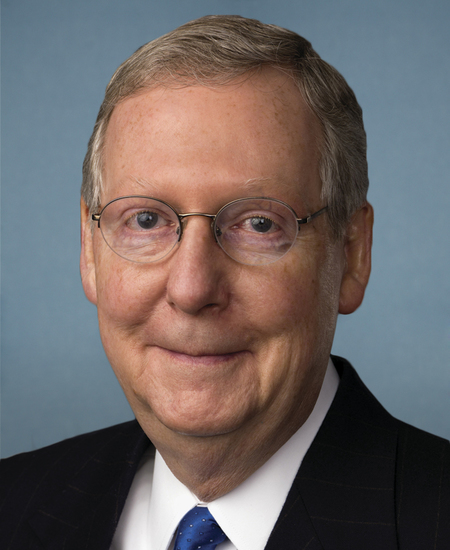
Mitch McConnell
Mitch McConnell Senate
R
Strong +
84% 31
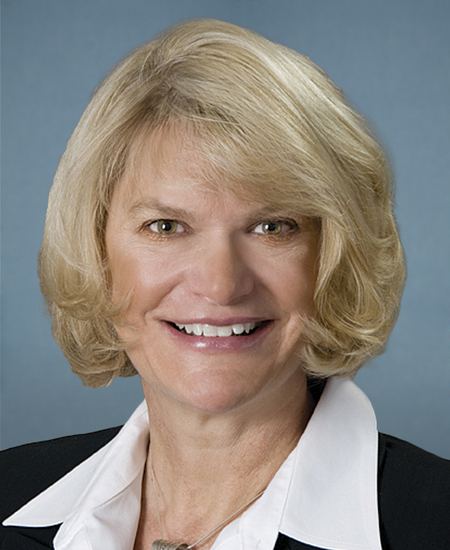
Cynthia M. Lummis
Cynthia M. Lummis Senate
R
Strong +
80% 30
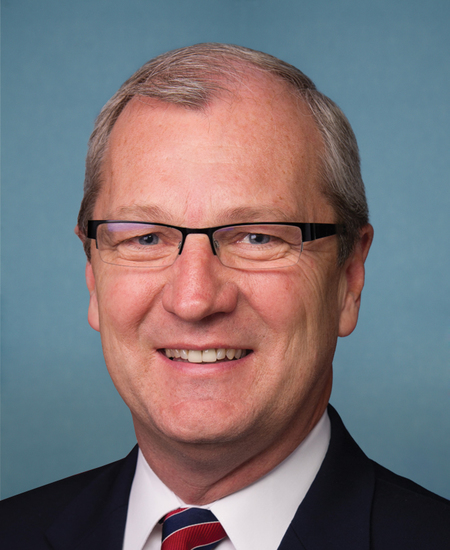
Kevin Cramer
Kevin Cramer Senate
R
Strong +
80% 30
Bernie Moreno
Bernie Moreno Senate
R
Support
77% 31
Amy Klobuchar
Amy Klobuchar Senate
D
Strong −
13% 31
Catherine Cortez Masto
Catherine Cortez Masto Senate
D
Strong −
13% 31
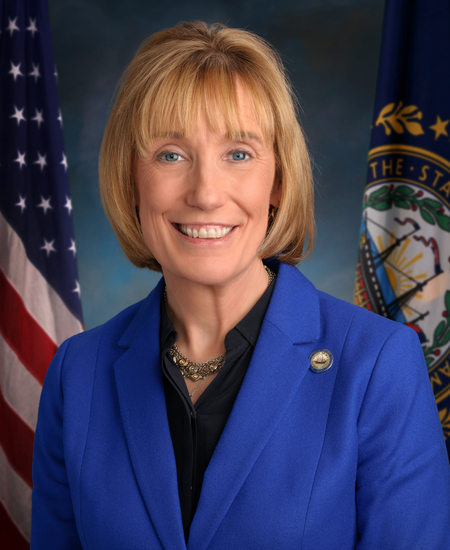
Margaret Wood Hassan
Margaret Wood Hassan Senate
D
Strong −
13% 31
Andy Kim
Andy Kim Senate
D
Strong −
16% 31
Angus S. King, Jr.
Angus S. King, Jr. Senate
I
Strong −
16% 31
Showing 481–490 of 985 bills

All criminal justice bills

in committee · United States · House Apr 9, 2025

HR 2790: GOSAFE Act

The GOSAFE Act prohibits the sale, manufacture, transfer, and possession of gas-operated semi-automatic firearms and large capacity ammunition feeding devices (those holding more than 10 rounds). It defines gas-operated firearms as those that use gas from fired cartridges to cycle the action, requiring the Attorney General to publish a list of prohibited firearms within 180 days. The bill establishes a process for manufacturers to seek approval for new firearm designs before selling to civilians and creates a "Firearm Safety Trust Fund" to cover related costs. Certain firearms are exempt, including single-shot, muzzle-loading, and firearms with permanently fixed magazines holding 10 or fewer rounds. Violations could result in fines up to $5,000 or up to 12 months in prison.
in committee · United States · House Feb 13, 2025

HR 1283: Protecting Our Children in an AI World Act of 2025

HR 1283, the "Protecting Our Children in an AI World Act of 2025," updates federal laws to address AI-generated child sexual abuse material. It eliminates a legal defense allowing defendants to claim AI-created content wasn't "real" child pornography (by amending 18 U.S.C. § 2252A(c)), and expands the definition of prohibited "sexually explicit conduct" to include simulated obscene exhibitions of certain body parts. This directly affects defendants in federal prosecutions involving AI-generated child pornography and ensures such material is treated as illegal under current laws. The bill makes clear that AI-generated content falls under existing prohibitions without requiring proof of real children.
in committee · United States · House Oct 28, 2025

HRES 837: Expressing the sense of the House of Representatives regarding the relationship between firearm violence and intimate partner violence and to honor the memory of Gladys Ricart and other victims of intimate partner homicide killed by firearms, and for other purposes.

HRES 837 is a non-binding House resolution expressing the House's recognition of the connection between firearm violence and intimate partner violence. It highlights statistics showing firearms are used in 66% of intimate partner homicides, disproportionately impact women (especially Black, American Indian/Alaska Native, and Hispanic women), and honors victims like Gladys Ricart. The resolution recommends Congress strengthen background checks, restrict firearm access for those under domestic violence restraining orders, fund research on this intersection, and prioritize related legislation like H.R. 4166. It does not create new law but urges action based on the documented risks. The resolution directly addresses congressional policy priorities, not affected individuals.
in committee · United States · House Apr 10, 2025

HR 2851: WISE Act

Working for Immigrant Safety and Empowerment Act or the WISE Act This bill expands eligibility for U nonimmigrant visas (victims of criminal activity) and prohibits immigration enforcement activities in specified areas. Generally, U visas are for victims of specified crimes (e.g., rape, trafficking, or domestic violence) who assist with the investigation or prosecution of the crime. The bill adds hate crimes, child abuse, and elder abuse as crimes that may qualify a victim for a U visa and removes criteria related to the victim's assistance with the investigation or prosecution of the crime.   Furthermore, the Department of Homeland Security (DHS) must provide work authorization to U visa applicants, whereas currently DHS may grant work authorization but is not required to do so. The bill also eliminates the annual numerical cap on U visas.  The bill establishes a rebuttable presumption that certain individuals, including U visa applicants and T visa (victims of human trafficking) applicants, shall not be detained while the application is pending. Additionally, the bill provides immigration-related protections, such as by extending the admission period and providing work authorization, to the spouse or child of a nonimmigrant visa holder who subjected that spouse or child to battery or extreme cruelty. Further, the bill prohibits, with some exceptions for exigent circumstances, U.S. Immigration and Customs Enforcement or U.S. Customs and Border Protection from conducting immigration enforcement actions within 1,000 feet of a school, health care facility, place of worship, or other location specified in the bill.
in committee · United States · House Mar 11, 2025

HR 2050: Homeland Heroes Pay Act

HR 2050, the Homeland Heroes Pay Act, ensures that U.S. Customs and Border Protection (CBP) agents and Immigration and Customs Enforcement (ICE) officers continue receiving pay during federal budget gaps. It directly affects CBP agents working at Southwest, Northern, and maritime border ports (preventing terrorism, drug trafficking, and illegal entry) and ICE officers handling immigration enforcement (detaining/removing individuals) and criminal investigations (drug trafficking, human smuggling). The bill automatically funds their salaries and expenses using existing Treasury money if discretionary appropriations lapse after the bill passes. This prevents pay interruptions for these frontline personnel during budget shutdowns while they perform critical border security and enforcement duties.
in committee · United States · House Mar 5, 2025

HR 1702: JUDGES Act of 2025

The JUDGES Act of 2025 authorizes the creation of new federal district court judgeships across multiple jurisdictions to address rising caseloads. It specifies adding 1-2 new judges to 11 federal districts in 2025, with additional judgeships phased in through 2035 across California, Texas, Florida, New York, and other states. The bill also establishes temporary judgeships for Oklahoma's eastern district with specific vacancy rules, authorizes funding for these positions through 2035, and requires GAO reports on judicial caseload methodologies and detention space needs. This legislation directly affects federal courts in 15 states by increasing judicial staffing to address a 30% rise in filings since 1990, as noted in the bill's findings.
Sub-Topics Courts Judges
in committee · United States · House Apr 29, 2025

HR 15: Equality Act

The Equality Act (HR 15) amends federal civil rights laws to explicitly prohibit discrimination based on sexual orientation and gender identity in employment, housing, public accommodations, credit, and jury service. It expands existing protections under the Civil Rights Act of 1964 by adding sexual orientation and gender identity as protected characteristics under sex discrimination prohibitions. The bill clarifies that discrimination against LGBTQ people is a form of sex discrimination, consistent with the Supreme Court's Bostock decision, and adds specific definitions for gender identity and sexual orientation. This legislation directly affects businesses, employers, housing providers, financial institutions, and government entities that serve the public. The bill creates a more comprehensive legal framework to address discrimination that LGBTQ people face in multiple aspects of daily life.
in committee · United States · House Mar 26, 2026

HR 3420: Words Matter Act of 2025

HR 3420, the Words Matter Act of 2025, updates federal law to replace the terms "mentally retarded" and "mental retardation" with "intellectual disability" across numerous statutes. It amends over 20 provisions in laws governing healthcare (like the Social Security Act and Indian Health Care Improvement Act), disability services, criminal justice, and federal programs to use more respectful and current terminology. The bill specifically targets definitions in areas such as medical care for families, nursing home regulations, legal sentencing, and grant programs, ensuring consistent language for individuals with intellectual disabilities. The legislation explicitly states this terminology change is purely linguistic and does not alter eligibility, coverage, or rights for affected individuals.
Sub-Topics Sentencing Long-Term Care Tags People with Disabilities
in committee · United States · House Jun 24, 2025

HR 4106: Prevent Illegal Gun Sales Act

HR 4106, the Prevent Illegal Gun Sales Act, strengthens gun dealer oversight by requiring three annual compliance inspections (up from one) and increasing penalties for violations to up to five years in prison. It imposes $10,000 civil penalties per violation for unsafe gun storage or failures to maintain records, and mandates physical inventory checks if a dealer unlawfully transfers firearms or 10+ crime guns are traced to them. The bill allows the Attorney General to suspend or revoke dealer licenses for serious violations, including felony convictions, and requires dealers to maintain secure storage. These changes directly affect licensed gun dealers, manufacturers, and importers by tightening accountability for compliance with federal gun laws.
Sub-Topics Corrections Firearms
in committee · United States · House Jun 6, 2025

HR 3811: Elder Pride Protection Act of 2025

The Elder Pride Protection Act of 2025 establishes a federal task force (the ELDER Task Force) within the Department of Justice to address elder abuse targeting LGBTQI+ individuals. The task force, created within 90 days of the bill’s passage, will study the rise in such abuse, develop national best practices for law enforcement, and create educational materials for prevention and response. It will coordinate efforts across local, state, and federal agencies and submit a report to Congress within one year. The bill directly affects older LGBTQI+ adults (aged 60+) facing abuse, which includes physical, sexual, emotional, or financial harm, but does not create new funding or penalties.
Sub-Topics Law Enforcement
Showing 481 to 490 of 985 bills
Previous 1 … 48 49 50 … 99 Next