Issue · Criminal Justice

Criminal Justice

Every criminal justice bill, vote, and legislator stance in United States, automatically classified by Maddy, our AI policy reader.

Total bills
301
119th Congress
Top supporter
Alan Armstrong
86% support rate
Top opponent
Amy Klobuchar
13% support rate
Ranked legislators
10
5 support · 5 oppose
Key legislators

Who's moving criminal justice in United States

Legislators moving criminal justice in United States
Legislator Party Stance Support rate Decisive votes
AA
Alan Armstrong Senate
R
Strong +
86% 28
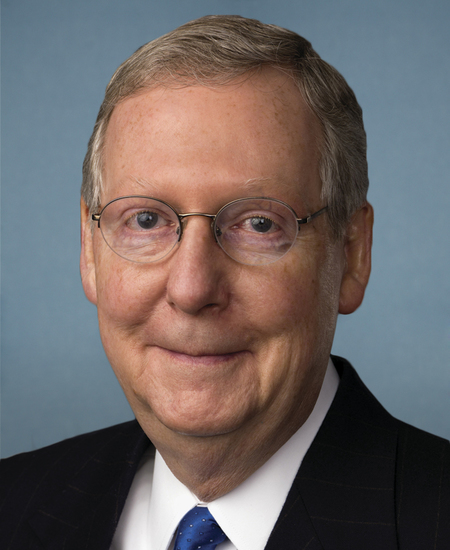
Mitch McConnell
Mitch McConnell Senate
R
Strong +
84% 31
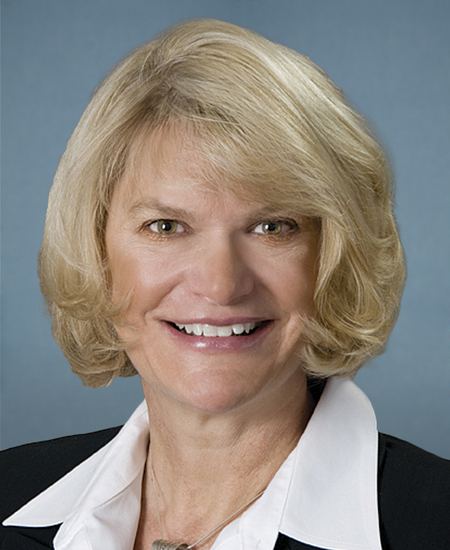
Cynthia M. Lummis
Cynthia M. Lummis Senate
R
Strong +
80% 30
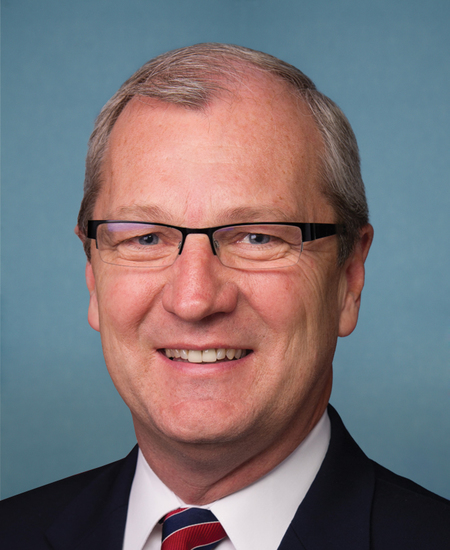
Kevin Cramer
Kevin Cramer Senate
R
Strong +
80% 30
Bernie Moreno
Bernie Moreno Senate
R
Support
77% 31
Amy Klobuchar
Amy Klobuchar Senate
D
Strong −
13% 31
Catherine Cortez Masto
Catherine Cortez Masto Senate
D
Strong −
13% 31
Margaret Wood Hassan
Margaret Wood Hassan Senate
D
Strong −
13% 31
Andy Kim
Andy Kim Senate
D
Strong −
16% 31
Angus S. King, Jr.
Angus S. King, Jr. Senate
I
Strong −
16% 31
Showing 171–180 of 301 bills

All criminal justice bills

in committee · United States · House Apr 8, 2025

HR 2726: Paula Bohovesky and Joan D’Alessandro Act

HR 2726, the Paula Bohovesky and Joan D’Alessandro Act, amends federal sentencing law to increase mandatory minimum prison time for certain sex crimes against children. It directly affects individuals convicted of sexual offenses where the victim was under 18 years old. The key provision adds a requirement that if the victim is a minor and the crime was a sexual offense, the mandatory minimum sentence becomes 14 years (previously applicable only to other cases). This change applies to federal prosecutions under Title 18, U.S. Code, Section 3559.
passed · United States · House Jan 13, 2026

HR 909: Crime Victims Fund Stabilization Act of 2025

HR 909, the Crime Victims Fund Stabilization Act of 2025, modifies how funds from the False Claims Act are deposited into the Crime Victims Fund. It specifies that from 2025 through 2029, certain False Claims Act proceeds (specifically those for qui tam plaintiff payments and government damage reimbursements) cannot be deposited into the fund. This change directly affects the composition of the Crime Victims Fund by excluding these specific revenue streams during the specified period. The bill does not create new benefits or alter victim services; it only adjusts fund allocation rules for existing False Claims Act revenues.
Sub-Topics Victims' Rights
in committee · United States · Senate Oct 30, 2025

S 3076: Nitazene Control Act

S 3076, the Nitazene Control Act, permanently classifies nitazenes and related 2-benzylbenzimidazole opioids as Schedule I controlled substances under the federal Controlled Substances Act. This affects anyone possessing, distributing, or researching these substances, as it bans them without specific exemptions. The bill broadly defines the prohibited substances to cover all structural analogs (including modifications to the molecular structure) and those that activate the mu-opioid receptor. It also removes temporary scheduling for these compounds, making their Schedule I status permanent upon enactment. This policy change aims to prevent new illicit analogs from entering the drug supply and reduce overdose risks linked to these potent synthetic opioids.
Sub-Topics Drug Policy
in committee · United States · Senate Jul 21, 2025

S 2366: SAFE Cities Act

S 2366, the SAFE Cities Act, defines an "anarchist jurisdiction" as a state or local government that fails to take reasonable steps to stop violence or property destruction. The bill requires the Attorney General to publish and update a list of such jurisdictions within 14 days of enactment and every 180 days thereafter, considering factors like policies restricting police intervention or refusing federal law enforcement assistance. It directs the Office of Management and Budget to issue guidance urging federal agencies to restrict or disfavor anarchist jurisdictions in federal grant programs where legally permitted. The bill directly affects states and local governments identified under this definition by potentially limiting their access to federal funding.
in committee · United States · House Sep 3, 2025

HR 5113: PRICE Act

The PRICE Act (HR 5113) increases penalties for assaulting, resisting, or obstructing U.S. Immigration and Customs Enforcement (ICE) officers or employees. It would double the maximum prison sentence and adjust fines for such offenses when the victim is an ICE officer or employee. This bill directly affects individuals who commit violent or obstructive acts against ICE personnel by imposing harsher punishments. The key provision amends federal law to add a specific penalty enhancement for ICE-related cases within existing assault provisions.
passed · United States · House Jun 11, 2025

HR 2096: Protecting Our Nation’s Capital Emergency Act

HR 2096, the "Protecting Our Nation’s Capital Emergency Act," aims to address rising crime in Washington, D.C., by reversing specific District of Columbia police policies. It directly affects Metropolitan Police Department officers and civilian employees by restoring two key provisions: (1) the right for officers to negotiate discipline matters through collective bargaining, and (2) the statute of limitations for claims against police personnel. The bill repeals related sections of the 2022 D.C. Comprehensive Policing and Justice Reform Act, which had previously limited these rights. These changes are intended to improve police recruitment and retention amid staffing shortages and rising crime rates.
in committee · United States · Senate Apr 29, 2025

S 1517: BE GONE Act

This bill amends the Immigration and Nationality Act to expand the definition of "aggravated felonies" by adding "sexual assault and aggravated sexual violence" to the list of crimes triggering mandatory deportation for non-citizens. It directly affects non-citizens convicted of these specific sexual offenses, making them subject to automatic deportation under immigration law. The key change is adding this provision to Section 101(a)(43) of the Immigration and Nationality Act, which defines aggravated felonies. This policy shift would expand the scope of offenses classified as deportation triggers without creating new enforcement procedures.
passed · United States · House Sep 17, 2025

HR 4922: D. C. Criminal Reforms to Immediately Make Everyone Safe Act of 2025

HR 4922, the DC Criminal Reforms to Immediately Make Everyone Safe Act of 2025 (DC CRIMES Act), modifies youth offender definitions and creates public transparency measures. It limits "youth offender" status to individuals 18 or younger (previously 24), removing provisions for 18-24 year olds in sentencing and facility planning. The bill requires the DC Attorney General to establish a public website publishing monthly juvenile crime statistics, including arrest data by age, race, sex, crime type, recidivism rates, and sentencing outcomes - without personally identifiable information. It also prohibits the DC Council from changing existing criminal sentencing laws. These provisions directly affect youth offenders aged 15-18 and DC government operations related to juvenile justice data.
in committee · United States · House Apr 29, 2025

HR 3064: BE GONE Act

The BE GONE Act (HR 3064) amends the Immigration and Nationality Act to expand the definition of "aggravated felonies" by adding sexual assault and aggravated sexual violence as a new category under immigration law. This change directly affects non-citizens convicted of these specific crimes, as it triggers mandatory deportation under current immigration enforcement rules. The bill modifies Section 101(a)(43) of the Immigration and Nationality Act to include these offenses as a new subsection (V) in the list of aggravated felonies. It does not alter criminal penalties for the offenses themselves but changes immigration consequences for convicted non-citizens.
in committee · United States · House Jul 23, 2025

HR 4697: Justice for American Victims of Illegal Aliens Act

HR 4697 would amend federal death penalty sentencing guidelines to add a new factor: if a defendant is an undocumented immigrant convicted of killing or attempting to kill a U.S. citizen. This directly affects non-citizens who entered the U.S. unlawfully and were convicted of murder or attempted murder against U.S. citizens. The key provision requires federal judges to consider the defendant's immigration status as an aggravating factor during sentencing hearings. The bill changes sentencing considerations for specific capital cases but does not alter the legal definitions of the underlying crimes.
Sub-Topics Sentencing Enforcement
Showing 171 to 180 of 301 bills
Previous 1 … 17 18 19 … 31 Next