Issue · Criminal Justice

Criminal Justice

Every criminal justice bill, vote, and legislator stance in United States, automatically classified by Maddy, our AI policy reader.

Total bills
1,270
119th Congress
Top supporter
Alan Armstrong
86% support rate
Top opponent
Amy Klobuchar
13% support rate
Ranked legislators
10
5 support · 5 oppose
Key legislators

Who's moving criminal justice in United States

Legislators moving criminal justice in United States
Legislator Party Stance Support rate Decisive votes
AA
Alan Armstrong Senate
R
Strong +
86% 28
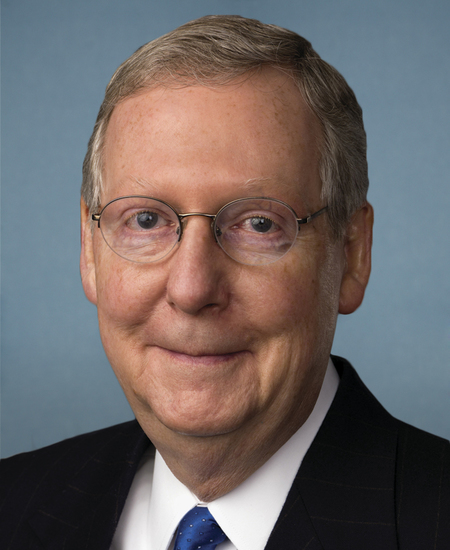
Mitch McConnell
Mitch McConnell Senate
R
Strong +
84% 31
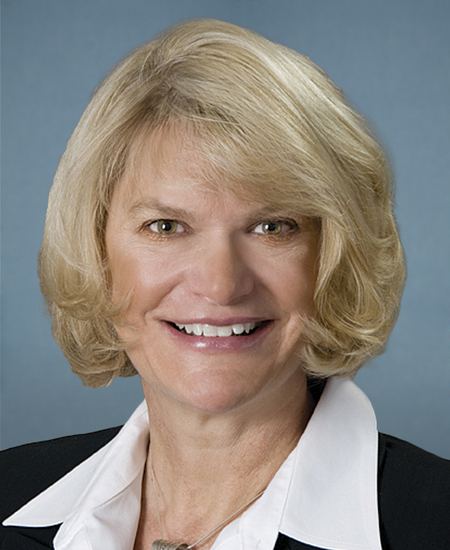
Cynthia M. Lummis
Cynthia M. Lummis Senate
R
Strong +
80% 30
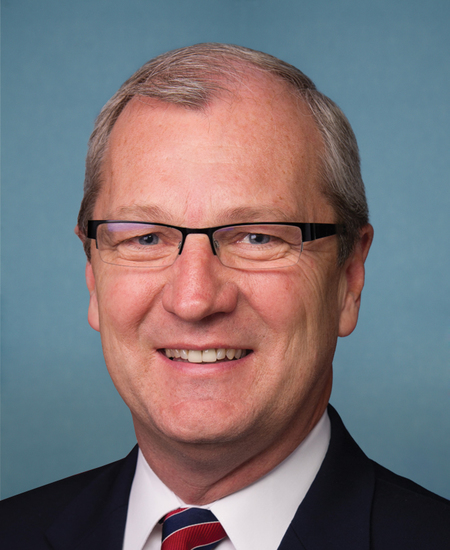
Kevin Cramer
Kevin Cramer Senate
R
Strong +
80% 30
Bernie Moreno
Bernie Moreno Senate
R
Support
77% 31
Amy Klobuchar
Amy Klobuchar Senate
D
Strong −
13% 31
Catherine Cortez Masto
Catherine Cortez Masto Senate
D
Strong −
13% 31
Margaret Wood Hassan
Margaret Wood Hassan Senate
D
Strong −
13% 31
Andy Kim
Andy Kim Senate
D
Strong −
16% 31
Angus S. King, Jr.
Angus S. King, Jr. Senate
I
Strong −
16% 31
Showing 1,011–1,020 of 1,270 bills

All criminal justice bills

in committee · United States · House Jul 2, 2025

HR 4287: Enhanced Penalties for Criminal Flag Burners Act

This bill adds a new penalty for using fire or incendiary devices during certain federal crimes. Specifically, it mandates an extra minimum of one year in prison for anyone who knowingly uses fire or such devices while committing federal offenses involving property damage, obstruction of government operations, or public endangerment - including burning the U.S. flag as part of that crime. The law explicitly excludes First Amendment-protected expressive conduct (like peaceful flag desecration not tied to criminal acts) from this penalty. It applies only to individuals already charged with federal crimes where fire use escalates the offense.
Sub-Topics Corrections
in committee · United States · House Jan 22, 2025

HR 636: Pregnancy Resource Center Defense Act

HR 636, the Pregnancy Resource Center Defense Act, strengthens legal protections for facilities offering abortion alternatives and religious worship spaces. It increases criminal penalties for attacks on these locations (up to 3 years imprisonment for first offenses) and raises civil penalties to $20,000 per violation for attacks on such facilities. The bill also expands property destruction penalties when buildings involved are specifically designated pregnancy resource centers or places of worship. These changes apply to offenses involving nonviolent physical obstruction, with higher fines for first violations.
Sub-Topics Corrections Sentencing
in committee · United States · Senate Jul 10, 2025

S 2255: Trafficking Survivors Relief Act of 2025

The Trafficking Survivors Relief Act of 2025 provides a legal process for survivors of human trafficking who were convicted of certain federal crimes to have their convictions vacated or arrests expunged. It allows survivors to file motions with courts to prove their crimes were directly related to their trafficking victimization, requiring courts to consider evidence from anti-human trafficking service providers. The law establishes a "human trafficking defense" in criminal cases, permitting survivors to argue they committed crimes under duress from trafficking. Additionally, it mandates reporting on implementation and tracks how many survivors access this relief through the courts.
Sub-Topics Human Trafficking
in committee · United States · Senate Jul 30, 2025

S 2553: Protect Our Communities from DUIs Act

This bill amends U.S. immigration law to make certain DUI convictions automatically lead to immigration consequences. Non-citizens convicted of driving while intoxicated or impaired (including DUI under state law) would be barred from entering the U.S. (inadmissible) or face deportation, regardless of whether their offense was classified as a misdemeanor or felony locally. The key mechanism adds new grounds for inadmissibility and deportability under the Immigration and Nationality Act, treating DUI offenses as serious immigration violations. It directly affects non-citizens with such convictions, expanding immigration enforcement to include these offenses. The bill does not change state DUI laws but links them to federal immigration outcomes.
in committee · United States · Senate Jun 26, 2025

S 2188: ATF DATA Act

This bill requires the ATF to publish annual reports on firearm trace data, breaking down details like which dealers sold firearms later recovered in crimes. The reports must include data on "time-to-crime" (how quickly firearms are used in crimes), firearm types, locations of recoveries, and whether sales involved multiple firearms. It specifically tracks firearms sold by licensees, privately made guns, and firearms reported lost or stolen, disaggregated by dealer type, state, and crime patterns. The data aims to improve transparency for law enforcement and the public without changing gun laws or regulations.
in committee · United States · Senate Jun 18, 2025

S 2115: Safe and Open Streets Act

The Safe and Open Streets Act creates a new federal crime for intentionally blocking public roads or highways to disrupt the movement of goods and services. It makes it unlawful to purposefully obstruct, delay, or interfere with commerce by blocking a public road, with penalties including fines and up to five years in prison. The bill also updates related federal laws to remove outdated references to "threats or violence" that previously appeared in the same legal section. This law would directly affect individuals who block public roads in ways that interfere with commercial traffic, such as during protests or roadblocks.
in committee · United States · House May 23, 2025

HR 3591: Carla Walker Act

The Carla Walker Act (HR 3591) creates federal grants to fund forensic DNA analysis using genetic genealogy databases for law enforcement. It authorizes $5 million annually (2024-2028) for two programs: (1) grants to eligible entities like police departments and medical examiners for whole genome sequencing (100,000+ markers) to solve unsolved cases or identify human remains when standard DNA databases fail, and (2) grants to purchase forensic equipment for genetic genealogy analysis. Funds cannot cover staffing or travel, with only 10% allowed for administrative costs. Recipients must report on case outcomes, testing methods, and results, including how often identifications led to arrests. The bill directly affects state/local law enforcement, forensic labs, and medical examiner offices handling unresolved criminal cases.
in committee · United States · House Aug 8, 2025

HR 4929: Enduring Justice for Victims of Trafficking Act

This bill amends a provision in U.S. law to make a $5,000 special assessment permanent for non-indigent individuals or entities convicted of trafficking offenses. It removes the previous expiration date (September 30, 2025) from the assessment, which was added under the 2015 Justice for Victims of Trafficking Act. The key change requires courts to impose this $5,000 fee on all qualifying convicted traffickers going forward, without a set end date. This directly affects convicted traffickers (not victims) by adding a permanent financial penalty to their sentencing.
in committee · United States · House Mar 11, 2025

HR 2065: Unmasking Hamas Act of 2025

HR 2065, the Unmasking Hamas Act of 2025, would make it a federal crime to injure, threaten, or intimidate someone while wearing a disguise (including a mask) in order to interfere with their exercise of constitutional or legal rights. It would impose fines or up to 15 years in prison for such acts, and add a mandatory 2-year prison term for property destruction committed while masked. The bill directly affects individuals who wear masks during protests or demonstrations that disrupt protected rights or damage property, applying to all locations under federal jurisdiction. The law focuses on criminalizing masked conduct that interferes with rights or property, not on the specific content of protests.
Sub-Topics Corrections
in committee · United States · Senate Jul 29, 2025

S 2522: Cell-Site Simulator Warrant Act of 2025

The Cell-Site Simulator Warrant Act of 2025 requires law enforcement agencies to obtain a court-issued warrant before using cell-site simulators (devices that mimic cell towers to track or intercept phone communications), with specific requirements to limit surveillance scope. Agencies must demonstrate other investigative methods have failed or would be too dangerous, specify the narrowest possible area and time frame for use, and disclose potential disruptions to emergency services like 911 calls. Exceptions exist for emergencies (requiring 48-hour warrant applications), certain research, and protective services, but information about people not under investigation must be minimized and destroyed. The bill also mandates annual reports to Congress on usage patterns and requires third-party testing of devices to verify accuracy before deployment.
Sub-Topics Courts Law Enforcement
Showing 1,011 to 1,020 of 1,270 bills