Issue · Budget & Taxes

Budget & Taxes (Appropriations)

Every budget & taxes bill, vote, and legislator stance in United States, automatically classified by Maddy, our AI policy reader.

Total bills
134
119th Congress
Top supporter
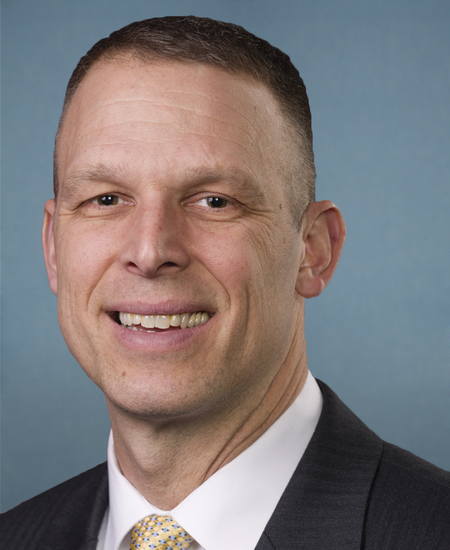
Scott Perry
90% support rate
Top opponent
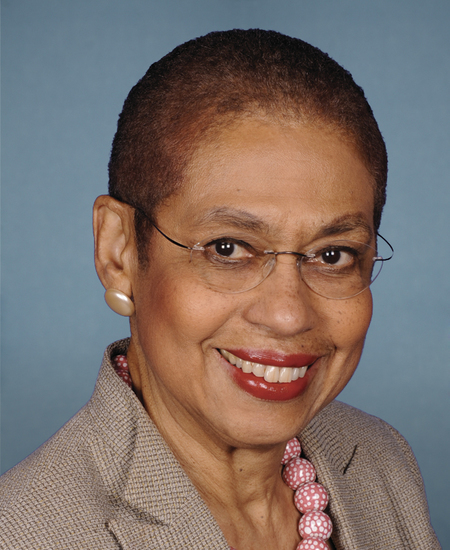
Eleanor Holmes Norton
0% support rate
Ranked legislators
10
5 support · 5 oppose
Key legislators

Who's moving appropriations in United States

Legislators moving appropriations in United States
Legislator Party Stance Support rate Votes
Scott Perry
Scott Perry House · District 10
R
Strong +
90% 40
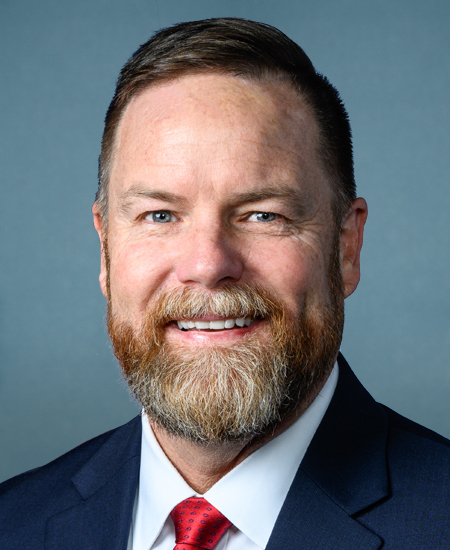
Aaron Bean
Aaron Bean House · District 4
R
Strong +
89% 46
Ben Cline
Ben Cline House · District 6
R
Strong +
89% 46
Diana Harshbarger
Diana Harshbarger House · District 1
R
Strong +
89% 46
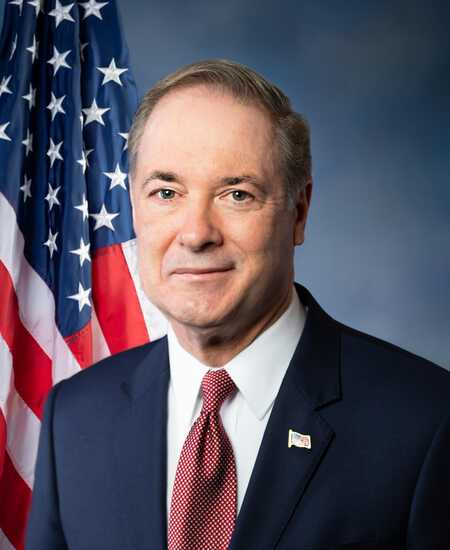
John Joyce
John Joyce House · District 13
R
Strong +
89% 46
Eleanor Holmes Norton
Eleanor Holmes Norton House · District At-Large
D
Strong −
0% 26
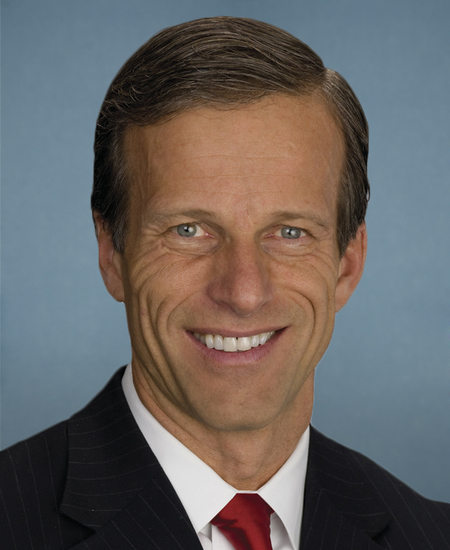
John Thune
John Thune Senate
R
Strong −
0% 10
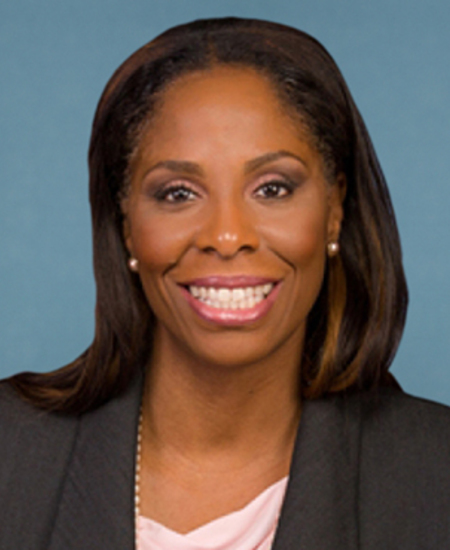
Stacey E. Plaskett
Stacey E. Plaskett House · District At-Large
D
Strong −
0% 4
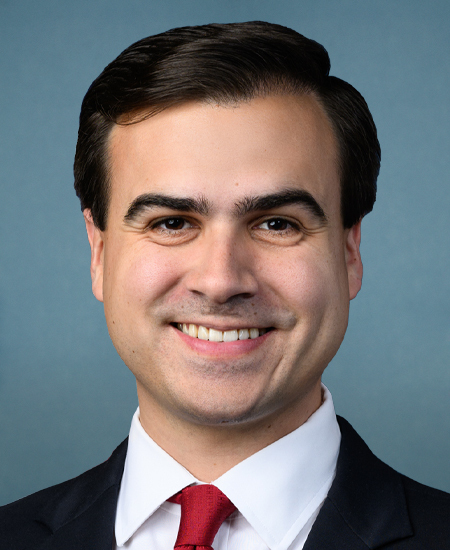
Pablo José Hernández
Pablo José Hernández House · District At-Large
D
Strong −
7% 28
Raja Krishnamoorthi
Raja Krishnamoorthi House · District 8
D
Strong −
9% 45
Showing 1–10 of 134 bills

All budget & taxes bills

in committee · United States · Senate Aug 7, 2026

S 5377: A bill to amend the Congressional Budget and Impoundment Control Act of 1974 to establish certain procedures for consideration of appropriation bills, and for other purposes.

This bill amends the Congressional Budget and Impoundment Control Act of 1974 to impose stricter time limits on the legislative process for annual spending bills. In the Senate, debate on any annual appropriation bill is capped at 20 hours, including all related amendments and motions. In the House of Representatives, members are prohibited from voting to adjourn for more than three days during July until all new budget authority for the upcoming fiscal year has been approved. These provisions directly affect the scheduling and procedural rules governing how Congress passes its annual spending legislation.
in committee · United States · House Aug 3, 2026

HR 10014: Restoring Accountability in Appropriations Act

This bill, titled the Restoring Accountability in Appropriations Act, modifies the Impoundment Control Act of 1974 to allow private citizens and specific congressional leaders to sue the federal government if budget funds are improperly withheld. It grants individuals who are negatively affected by these withholdings the right to file civil lawsuits in federal court to force the release of the money. Additionally, the legislation empowers designated House leaders to request reports from the Comptroller General and, if those reports confirm violations, to introduce resolutions that mandate the House initiate or join these lawsuits. The bill also establishes a special, expedited process within the House of Representatives to quickly pass these litigation resolutions without standard debate or committee delays.
passed · United States · House Jul 23, 2026

HCONRES 113: Establishing the congressional budget for the United States Government for fiscal year 2027 and setting forth the appropriate budgetary levels for fiscal years 2028 through 2036.

This concurrent resolution establishes the congressional budget for the federal government for FY2027, sets forth budgetary levels for FY2028-FY2036, and provides reconciliation instructions for legislation that increases the deficit.  The resolution recommends levels and amounts for FY2027-FY2036 for federal revenues, new budget authority, budget outlays, deficits (on-budget), debt subject to limit, debt held by the public, and the major functional categories of spending. The resolution includes reconciliation instructions that direct the House Agriculture Committee, the House Armed Services Committee, the House Permanent Select Committee on Intelligence, and the House Administration Committee to submit recommendations for legislation that will increase the deficit over FY2027-FY2036 by not more than specified amounts. Each committee must submit the recommendations to the House Budget Committee by September 11, 2026.  (Under current law, reconciliation bills are considered by Congress using expedited legislative procedures that prevent a filibuster and restrict amendments in the Senate.) In addition, the resolution establishes a reserve fund that allows certain adjustments to committee allocations and other budgetary levels to accommodate reconciliation legislation. Finally, the resolution sets forth budget enforcement procedures that address issues such as adjustments to committee allocations and other budgetary levels; the budgetary treatment of the discretionary administrative expenses for the Social Security Administration and the U.S. Postal Service; emergency spending; and additional adjustments for disaster relief, wildfire suppression, health care fraud and abuse control, continuing disability reviews and redeterminations, and reemployment services and eligibility assessments.
passed · United States · House Jul 22, 2026

HR 9770: Continuing Appropriations Act, 2027

Continuing Appropriations Act, 2027 This bill provides continuing FY2027 appropriations for federal agencies and extends various expiring programs and authorities. Specifically, the bill provides continuing FY2027 appropriations to federal agencies through the earlier of December 4, 2026, or the enactment of the applicable appropriations act. It is known as a continuing resolution (CR) and prevents a government shutdown that would otherwise occur if the FY2027 appropriations bills have not been enacted when FY2027 begins on October 1, 2026. The CR funds most programs and activities at the FY2026 levels with several exceptions that provide funding flexibility or additional appropriations for various programs. For example, the bill includes exceptions for the Special Supplemental Nutrition Program for Women, Infants, and Children (WIC); Small Business Administration loan programs; the Federal Emergency Management Agency’s Disaster Relief Fund; the Indian Health Service; and wildfire suppression activities. In addition, the bill extends several expiring programs, authorities, and restrictions, including the Department of Agriculture’s livestock mandatory price reporting program, the National Flood Insurance Program, limits on pay increases for the Vice President and certain senior political appointees, the Temporary Assistance for Needy Families (TANF) program, the authority to waive certain pay limitations that apply to wildland firefighters and other wildland fire personnel,  the authority for the District of Columbia to spend local funds, and the freeze on cost-of-living adjustments for Members of Congress.  The bill also provides the customary payments to the beneficiaries of the late Representative David Scott and the late Senator Lindsey Graham.
Sub-Topics Appropriations
passed · United States · House Jul 21, 2026

HRES 1438: Providing for consideration of the bill (H.R. 8800) to authorize appropriations for fiscal year 2027 for military activities of the Department of Defense, for military construction, and for defense activities of the Department of Energy, to prescribe military personnel strengths for such fiscal year, and for other purposes; providing for consideration of the bill (H.R. 8884) to amend title II of the Social Security Act to reauthorize demonstration authority for the disability insurance program; providing for consideration of the concurrent resolution (H. Con. Res. 113) establishing the congressional budget for the United States Government for fiscal year 2027 and setting forth the appropriate budgetary levels for fiscal years 2028 through 2036; providing for consideration of the bill (H.R. 7008) to amend chapter 131 of title 5 to require certain restrictions on stocks for Members of Congress and their spouses and dependents, and for other purposes; providing for consideration of the bill (H.R. 6955) to make improvements to the Federal banking laws, and for other purposes; providing for consideration of the bill (H.R. 9770) making continuing appropriations for fiscal year 2027, and for other purposes; and for other purposes.

This resolution provides for the consideration of the bill (H.R. 8800) to authorize appropriations for fiscal year 2027 for military activities of the Department of Defense, for military construction, and for defense activities of the Department of Energy, to prescribe military personnel strengths for such fiscal year, and for other purposes; providing for consideration of the bill (H.R. 8884) to amend title II of the Social Security Act to reauthorize demonstration authority for the disability insurance program; providing for consideration of the concurrent resolution (H. Con. Res. 113) establishing the congressional budget for the United States Government for fiscal year 2027 and setting forth the appropriate budgetary levels for fiscal years 2028 through 2036; providing for consideration of the bill (H.R. 7008) to amend chapter 131 of title 5 to require certain restrictions on stocks for Members of Congress and their spouses and dependents, and for other purposes; providing for consideration of the bill (H.R. 6955) to make improvements to the Federal banking laws, and for other purposes; providing for consideration of the bill (H.R. 9770) making continuing appropriations for fiscal year 2027, and for other purposes; and for other purposes.
Sub-Topics Appropriations
in committee · United States · House Jul 16, 2026

HR 9736: Stop CHEATERS Act

The Stop CHEATERS Act directs the Internal Revenue Service to increase its enforcement efforts against high-income individuals and large corporations by allocating billions of dollars in additional funding for tax audits, criminal investigations, and taxpayer services through fiscal year 2031. A significant portion of this funding is designated for modernizing the IRS's technology and business systems to improve its ability to detect fraud and noncompliance. The legislation also requires the IRS Commissioner to submit regular reports to Congress detailing plans to shift auditing resources toward wealthy taxpayers and analyzing how much unpaid tax is owed by different income groups.
in committee · United States · Senate Oct 28, 2025

S 3066: Pay the People Act

This bill ensures federal employees, including contractors and active-duty military personnel, continue receiving regular pay during government funding gaps. It automatically appropriates funds for agencies when regular annual or continuing appropriations are not in place, covering standard pay, benefits, and allowances. These funds remain available until Congress passes full-year funding or a continuing resolution that explicitly excludes such payments. The bill applies retroactively from September 30, 2025, to address past payment disruptions.
Sub-Topics Appropriations
in committee · United States · House Jun 26, 2026

HR 9495: Department of Defense Appropriations Act, 2027

This bill appropriates funding for the Department of Defense for fiscal year 2027 to cover military personnel pay, operation and maintenance costs, procurement of weapons and equipment, and research and development activities. It directly affects active duty and reserve members of the Army, Navy, Marine Corps, Air Force, and Space Force, as well as their respective National Guard units, by providing specific dollar amounts for salaries, benefits, training, and the purchase of new hardware like ships, aircraft, and missiles. The legislation also includes numerous provisions that restrict how these funds can be used, such as prohibiting support for certain foreign entities, limiting the procurement of foreign-made steel and supercomputers, and banning the use of funds for specific research topics or social initiatives. Additionally, the bill contains a unique provision that amends federal law to rename the Department of Defense as the Department of War and the Secretary of Defense as the Secretary of War.
in committee · United States · House Jun 25, 2026

HR 9485: Supporting Older Foster Youth Act

The Supporting Older Foster Youth Act increases federal funding for foster care programs to $163 million annually, effective October 1, 2026. This change directly impacts the administration of foster care services by providing additional resources to states and agencies managing these programs. The bill achieves this by amending the Social Security Act to raise the specific appropriation amount previously set for fiscal years 2020 and beyond. No new programs or eligibility rules are created; the legislation solely adjusts the existing budget allocation for older foster youth support.
Sub-Topics Appropriations Tags Children
failed · United States · House Jul 13, 2026

HRES 1398: Providing for consideration of the bill (H.R. 8800) to authorize appropriations for fiscal year 2027 for military activities of the Department of Defense, for military construction, and for defense activities of the Department of Energy, to prescribe military personnel strengths for such fiscal year, and for other purposes; providing for consideration of the bill (H.R. 8595) making appropriations for national security, Department of State, and related programs for the fiscal year ending September 30, 2027, and for other purposes; providing for consideration of the bill (H.R. 8884) to amend title II of the Social Security Act to reauthorize demonstration authority for the disability insurance program; providing for consideration of the resolution (H. Res. 1383) commemorating the one-year anniversary of the enactment of the Working Families Tax Cuts; and for other purposes.

This House resolution sets the procedural rules for debating and passing four separate pieces of legislation: two major budgets for the 2027 fiscal year, a Social Security update, and a commemorative resolution. The first budget allocates funds for the Department of Defense and military construction, while the second provides funding for national security and the Department of State. The resolution also establishes specific time limits and debate structures for each bill, ensuring that points of order are waived to streamline the legislative process. Additionally, it mandates that the Social Security bill adopt a specific substitute text and that a resolution honoring the Working Families Tax Cuts be considered without intervention.
Sub-Topics Appropriations
Showing 1 to 10 of 134 bills
1 2 3 14 Next