Issue · Budget & Taxes

Budget & Taxes (Government Spending)

Every budget & taxes bill, vote, and legislator stance in United States, automatically classified by Maddy, our AI policy reader.

Total bills
56
119th Congress
Top supporter
Anna Paulina Luna
100% support rate
Top opponent
Henry Cuellar
0% support rate
Ranked legislators
10
5 support · 5 oppose
Key legislators

Who's moving government spending in United States

Legislators moving government spending in United States
Legislator Party Stance Support rate Votes
Anna Paulina Luna
Anna Paulina Luna House · District 13
R
Strong +
100% 5
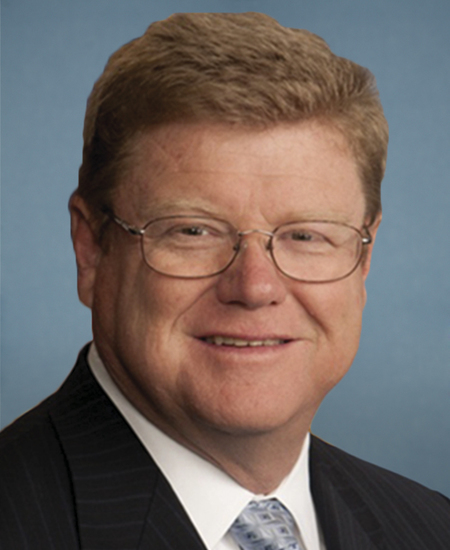
Mark E. Amodei
Mark E. Amodei House · District 2
R
Strong +
100% 5
Mike Carey
Mike Carey House · District 15
R
Strong +
100% 5
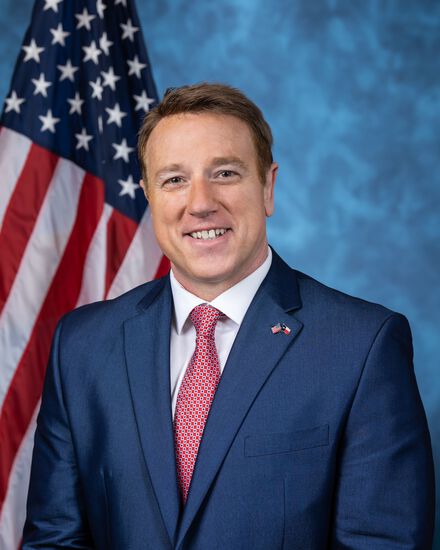
Pat Fallon
Pat Fallon House · District 4
R
Strong +
100% 5
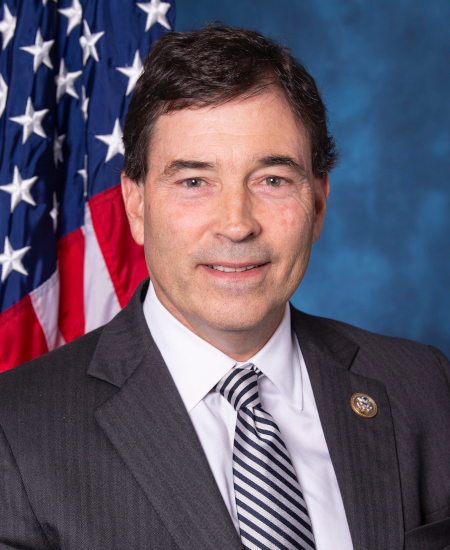
Troy Balderson
Troy Balderson House · District 12
R
Strong +
100% 5
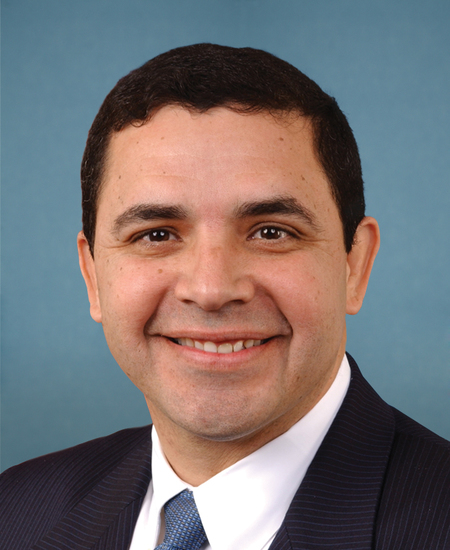
Henry Cuellar
Henry Cuellar House · District 28
D
Strong −
0% 6
Jake Auchincloss
Jake Auchincloss House · District 4
D
Strong −
0% 5
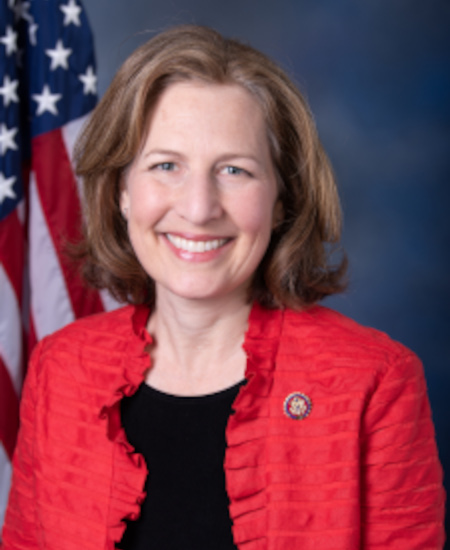
Kim Schrier
Kim Schrier House · District 8
D
Strong −
0% 5
Raja Krishnamoorthi
Raja Krishnamoorthi House · District 8
D
Strong −
0% 5
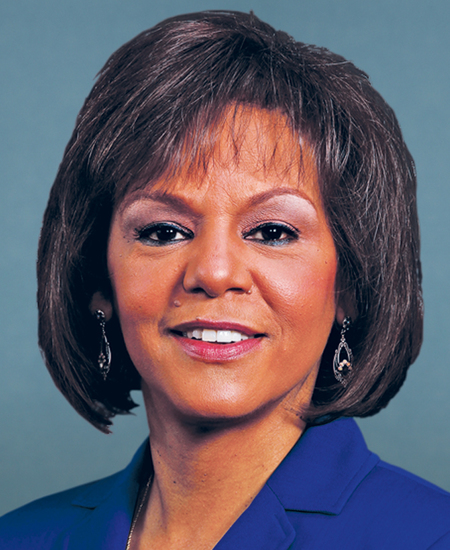
Robin L. Kelly
Robin L. Kelly House · District 2
D
Strong −
0% 5
Showing 31–40 of 56 bills

All budget & taxes bills

in committee · United States · House Jan 15, 2026

HR 7088: NO NATO for Purchase Act

The NO NATO for Purchase Act bans federal agencies from using government funds to buy land or assets in NATO member countries. It directly affects all federal departments and agencies by prohibiting such acquisitions as defined in the 1949 North Atlantic Treaty. The key provision blocks any action or expenditure related to purchasing territory within NATO nations. This prevents U.S. government purchases of foreign territory belonging to NATO member countries.
in committee · United States · Senate Feb 11, 2025

S 515: A bill to repeal the Impoundment Control Act of 1974.

S 515 would repeal the Impoundment Control Act of 1974, a federal law that restricted the president's ability to withhold funds Congress had appropriated. This bill directly affects the executive branch (the president) and Congress by removing requirements for the president to seek congressional approval before deferring or reducing spending on specific programs. The key mechanism is the complete removal of the legal framework established by the 1974 Act, which previously mandated that the president notify Congress and obtain its consent to withhold funds. This change would allow the president greater unilateral authority over budget execution without congressional approval for deferrals.
in committee · United States · Senate Feb 3, 2025

S 358: RETIREES FIRST Act

This bill raises the income threshold at which Social Security benefits become taxable for retirees. Starting in 2026, single filers with income below $34,000 (adjusted for inflation) and joint filers below $68,000 (adjusted for inflation) will pay tax on less of their Social Security benefits. It ensures Social Security trust funds won't lose revenue by redirecting some non-security discretionary spending to offset the tax change. The bill also requires annual reports on how funds are redirected.
Sub-Topics Government Spending
passed · United States · Senate Mar 18, 2025

S 1077: District of Columbia Local Funds Act, 2025

This bill authorizes the District of Columbia to use local funds from its General Fund for fiscal year 2025, matching the programs and spending levels set in the District's Fiscal Year 2025 Local Budget Act (D.C. Law 25-218). It sets a strict spending cap, limiting total operating expenses to either the budgeted amount or the District's total projected revenues for 2025, whichever is lower. The bill allows limited one-time increases for emergencies or unexpected needs, but only if approved by local law and following reserve rules. It also prohibits reprogramming funds from bond proceeds (used for capital projects) to cover regular operating costs, requiring the Chief Financial Officer to manage fund distribution accordingly.
in committee · United States · Senate Feb 27, 2025

S 786: Public Health Funding Restoration Act

S 786, the Public Health Funding Restoration Act, restores annual funding for the Prevention and Public Health Fund under the Affordable Care Act to $2 billion starting in fiscal year 2026. This bill directly affects federal health programs at the Department of Health and Human Services (HHS), as well as state, local, tribal, and territorial health departments. The key provision amends the Affordable Care Act to set this specific funding level, reversing prior cuts and ensuring resources for evidence-based prevention programs like immunizations, tobacco cessation, chronic disease prevention, and pandemic preparedness. The restored funding aims to support community health initiatives that have demonstrated cost savings - such as $16.50 saved per $1 spent on childhood vaccines - while strengthening public health infrastructure nationwide.
in committee · United States · Senate Mar 26, 2025

S 1160: LEDGER Act

The LEDGER Act (S 1160) requires the Treasury Department to create a system tracking every federal government disbursement within 180 days of enactment. It mandates that all departments, agencies, and offices across the executive, legislative, and judicial branches report spending details, including the availability period of each funding source. This affects all federal entities that receive or spend government funds by requiring granular tracking of where money comes from and how it’s used. The law aims to improve transparency in federal spending by making expenditure data systematically accessible.
in committee · United States · House Mar 21, 2025

HR 2266: RETIREES FIRST Act

This bill raises the income threshold at which Social Security benefits become taxable for retirees. It increases the base amount from $32,000 to $34,000 for single filers (and $68,000 for joint filers), with annual inflation adjustments starting in 2026. Retirees with combined income below these new thresholds will no longer have 85% of their Social Security benefits included in taxable income. The bill funds this tax relief by reallocating non-security discretionary spending, excluding security-related appropriations, and requires annual reports on these reallocations. The changes apply to taxable years beginning after December 31, 2025.
Sub-Topics Government Spending
in committee · United States · House Jan 3, 2025

HR 199: Implementing DOGE Act

This bill requires automatic, across-the-board spending cuts to nonsecurity federal programs for fiscal years 2026 and beyond. It targets nonsecurity discretionary spending (like education, transportation, and environmental programs) by rescinding the percentage of growth above 1% compared to the previous year's funding. The cuts apply proportionally to all nonsecurity programs after appropriations are made available for the fiscal year (by September 30). Security-related spending (such as defense) is excluded from these reductions.
in committee · United States · House Jan 3, 2025

HJRES 11: .Proposing a balanced budget amendment to the Constitution requiring that each agency and department's funding is justified.

HJRES 11 proposes a constitutional amendment requiring the federal government to maintain a balanced budget by ensuring annual spending does not exceed revenue, with specific spending limits tied to gross domestic product (GDP). It mandates that every federal agency and department must justify each line item in its budget request, including how funding supports its mission and its impact on GDP, and provide a reduced funding alternative for critical functions. The amendment includes exceptions for declared wars, military conflicts, or major natural disasters, requiring a two-thirds congressional vote for waivers. This would directly affect all federal agencies by imposing new budget justification requirements and spending caps, though it remains a proposed amendment awaiting state ratification.
failed · United States · House Mar 18, 2026

HJRES 139: Proposing an amendment to the Constitution of the United States requiring a balanced budget for the Federal Government.

This joint resolution proposes a constitutional amendment prohibiting total federal expenditures for a year from exceeding the average annual federal receipts collected in the three prior years, adjusted for changes in the population of U.S. citizens and inflation. Expenditures for payment of debt and receipts derived from borrowing are excluded. Under the amendment, Congress may authorize specific expenditures in excess of the limit with (1) a roll call vote of two-thirds of each chamber, or (2) a roll call vote for any year in which a declaration of war is in effect. The amendment also prohibits any bill to levy a new tax or increase the rate of any tax from becoming law unless it has been approved by a roll call vote of two-thirds of the whole number of each chamber of Congress. The requirements take effect in the fifth year beginning after ratification of the amendment.
Showing 31 to 40 of 56 bills
Previous 1 3 4 5 6 Next