Issue · Budget & Taxes

Budget & Taxes

Every budget & taxes bill, vote, and legislator stance in United States, automatically classified by Maddy, our AI policy reader.

Total bills
305
119th Congress
Top supporter
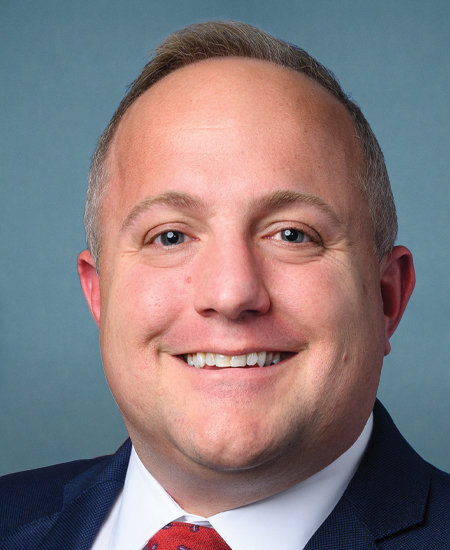
Clay Fuller
86% support rate
Top opponent
Eleanor Holmes Norton
0% support rate
Ranked legislators
10
5 support · 5 oppose
Key legislators

Who's moving budget & taxes in United States

Legislators moving budget & taxes in United States
Legislator Party Stance Support rate Votes
Clay Fuller
Clay Fuller House · District 14
R
Strong +
86% 55
Tina Smith
Tina Smith Senate
D
Strong +
83% 251
Andrew Ogles
Andrew Ogles House · District 5
R
Strong +
83% 175
Russell Fry
Russell Fry House · District 7
R
Strong +
82% 186
John Joyce
John Joyce House · District 13
R
Strong +
82% 185
Eleanor Holmes Norton
Eleanor Holmes Norton House · District At-Large
D
Strong −
0% 46
Pablo José Hernández
Pablo José Hernández House · District At-Large
D
Strong −
7% 46
George Latimer
George Latimer House · District 16
D
Strong −
14% 181
Analilia Mejia
Analilia Mejia House · District 11
D
Strong −
14% 52
Gregory W. Meeks
Gregory W. Meeks House · District 5
D
Strong −
14% 181
Showing 231–240 of 305 bills

All budget & taxes bills

in committee · United States · House Feb 13, 2025

HR 1347: AIMM Act

HR 1347, the AIMM Act, permanently extends a tax provision allowing businesses to deduct depreciation, amortization, or depletion when calculating their business interest expense limit. This change directly affects manufacturers and other businesses that use these deductions for tax purposes. The bill amends the tax code to remove the previous expiration date (which applied only to years before 2022), making the deduction rule permanent for all future taxable years. The key change is eliminating a temporary provision, providing ongoing certainty for business tax calculations.
Sub-Topics Business Taxes
in committee · United States · House Oct 17, 2025

HRES 812: Condemning the United Nations and International Maritime Organization for proposing a global tax on shipping emissions, threatening United States sovereignty, trade, and economic interests.

HRES 812 is a non-binding House resolution condemning the International Maritime Organization (IMO) and United Nations for proposing a global tax on shipping emissions. It opposes the plan to require vessels to pay into a centralized international fund based on carbon emissions, arguing this would threaten U.S. sovereignty, raise costs for American exporters, and harm trade competitiveness. The resolution demands that U.S. representatives at the IMO vote against the proposal and asserts that no American shipping company can be taxed by international bodies without Congressional approval. It also calls for reciprocal measures against nations enforcing such a tax, though the resolution itself has no legal effect.
Sub-Topics Climate Change Ports
in committee · United States · House May 5, 2025

HR 3205: No Subsidies for Gender Transition Procedures Act

This bill would deny federal tax deductions for gender transition procedures and prohibit Medicaid, Medicare, and Children's Health Insurance Program (CHIP) funding for such procedures. It defines gender transition procedures broadly to include hormonal treatments, surgeries, and cosmetic procedures intended to align physical appearance with gender identity, with limited exceptions for medically necessary treatments related to disorders of sex development or life-threatening conditions. The legislation would also require health insurance plans to exclude gender transition procedures from essential health benefits under the Affordable Care Act. This would directly affect individuals seeking gender transition care who rely on federal health programs or tax deductions for medical expenses.
in committee · United States · Senate Jun 25, 2025

S 2174: NATO Act

S 2174 (NATO Act) would withdraw the United States from NATO by requiring the President to notify the treaty organization of denunciation within 30 days of enactment. It prohibits federal funds from supporting any U.S. contributions to NATO's budgets, including military and civil programs. This bill satisfies a legal requirement for congressional authorization regarding NATO withdrawal, as specified in the National Defense Authorization Act for Fiscal Year 2024. The legislation directly affects U.S. foreign policy and military funding obligations.
in committee · United States · House Apr 7, 2025

HJRES 14: Proposing an amendment to the Constitution of the United States to repeal the sixteenth article of amendment.

HJRES 14 proposes repealing the 16th Amendment to the U.S. Constitution, which currently authorizes Congress to levy income taxes. If enacted, this would eliminate the federal government's power to collect income taxes from all sources, except during a formally declared war by Congress. The bill includes a two-year implementation period after ratification and requires the Treasury Secretary to submit a report on necessary legislative changes within 180 days of ratification. This proposal directly affects all U.S. taxpayers and the federal tax system, but remains a formal constitutional amendment proposal pending ratification by 38 states.
Sub-Topics Income Tax
in committee · United States · House Nov 21, 2025

HR 6246: Save American Healthcare Act

This bill extends health insurance premium tax credits for taxpayers with household incomes above 400% of the poverty line, temporarily allowing credits for those who would otherwise lose eligibility. It modifies the Internal Revenue Code to apply this extension without a fixed end date, instead tying it to budget estimates that must balance increased federal costs against tariff revenue gains. The key provision adjusts how the credit amount is calculated for tax years beginning after December 31, 2025, using a temporary rule based on projected federal budget impacts. It directly affects middle- and higher-income individuals who rely on these subsidies to afford health insurance coverage. The bill does not change eligibility thresholds but extends current subsidy rules under specific fiscal constraints.
Sub-Topics Tax Credits Insurance
failed · United States · House Mar 18, 2026

HJRES 139: Proposing an amendment to the Constitution of the United States requiring a balanced budget for the Federal Government.

This joint resolution proposes a constitutional amendment prohibiting total federal expenditures for a year from exceeding the average annual federal receipts collected in the three prior years, adjusted for changes in the population of U.S. citizens and inflation. Expenditures for payment of debt and receipts derived from borrowing are excluded. Under the amendment, Congress may authorize specific expenditures in excess of the limit with (1) a roll call vote of two-thirds of each chamber, or (2) a roll call vote for any year in which a declaration of war is in effect. The amendment also prohibits any bill to levy a new tax or increase the rate of any tax from becoming law unless it has been approved by a roll call vote of two-thirds of the whole number of each chamber of Congress. The requirements take effect in the fifth year beginning after ratification of the amendment.
in committee · United States · House Feb 18, 2025

HR 1440: Discriminatory Gaming Tax Repeal Act of 2025

HR 1440, the Discriminatory Gaming Tax Repeal Act of 2025, repeals Chapter 35 of the Internal Revenue Code, which imposed excise taxes on wagering activities. This repeal directly affects gambling businesses and individuals subject to these taxes, removing the federal tax obligation. The change takes effect for taxable years beginning after December 31, 2024, eliminating the tax requirement for future reporting periods. The bill focuses solely on repealing the existing tax provision without altering other gambling regulations.
Sub-Topics Sales Tax
in committee · United States · House Mar 6, 2025

HR 1911: To amend the Internal Revenue Code of 1986 to provide that certain payments to foreign related parties subject to sufficient foreign tax are not treated as base erosion payments.

This bill modifies U.S. tax rules to exclude certain payments made to foreign subsidiaries or affiliates from being classified as "base erosion payments" (payments that reduce U.S. tax revenue). It applies specifically to multinational corporations making cross-border payments to foreign entities that pay at least 15% effective foreign income tax. To qualify, companies must prove the foreign entity’s tax rate meets the threshold using standard financial statements with adjustments for items like dividends or currency gains. The policy change aims to prevent double taxation on such payments while maintaining anti-avoidance safeguards.
Sub-Topics Income Tax Revenue
in committee · United States · House Jun 9, 2025

HR 3844: Texas is the New Hollywood Act of 2025

This bill extends a 100% tax deduction for film and television productions (replacing the standard bonus depreciation) through 2035, increasing the tax benefit for qualifying productions. It requires productions to spend at least $500,000 in one state (or $100,000 for educational content) to qualify. The policy directly affects producers who meet these spending thresholds and choose to film in any U.S. state. The bill applies nationwide, though its title references Texas as a marketing concept, not a geographic requirement.
Sub-Topics Tax Incentives
Showing 231 to 240 of 305 bills
Previous 1 23 24 25 31 Next