Issue · Budget & Taxes

Budget & Taxes

Every budget & taxes bill, vote, and legislator stance in United States, automatically classified by Maddy, our AI policy reader.

Total bills
307
119th Congress
Top supporter
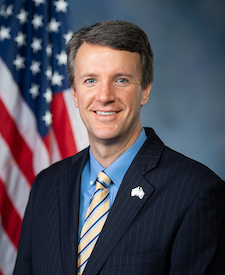
Clay Fuller
87% support rate
Top opponent
Eleanor Holmes Norton
0% support rate
Ranked legislators
10
5 support · 5 oppose
Key legislators

Who's moving budget & taxes in United States

Legislators moving budget & taxes in United States
Legislator Party Stance Support rate Decisive votes
Clay Fuller
Clay Fuller House · District 14
R
Strong +
87% 46
Tina Smith
Tina Smith Senate
D
Strong +
83% 77
Andrew Ogles
Andrew Ogles House · District 5
R
Strong +
83% 65
Aaron Bean
Aaron Bean House · District 4
R
Strong +
83% 69
Ben Cline
Ben Cline House · District 6
R
Strong +
83% 69
Eleanor Holmes Norton
Eleanor Holmes Norton House · District At-Large
D
Strong −
0% 26
Pablo José Hernández
Pablo José Hernández House · District At-Large
D
Strong −
7% 28
Analilia Mejia
Analilia Mejia House · District 11
D
Strong −
13% 45
George Latimer
George Latimer House · District 16
D
Strong −
13% 67
Gregory W. Meeks
Gregory W. Meeks House · District 5
D
Strong −
14% 66
Showing 141–150 of 307 bills

All budget & taxes bills

in committee · United States · House Apr 14, 2025

HR 2909: You Earned It, You Keep It Act

The "You Earned It, You Keep It Act" (HR 2909) would exempt wages above $250,000 from Social Security taxes after 2025 and include income over $250,000 in Social Security benefit calculations. It applies to high-wage earners and self-employed individuals whose income exceeds this threshold, with special provisions for those receiving wages from multiple employers. The bill modifies how Social Security taxes are calculated by removing the tax on income above $250,000 and adjusts benefit formulas to count that income toward future payments. These changes would affect how Social Security taxes are paid and benefits are determined for high earners beginning in 2026.
in committee · United States · House May 5, 2025

HR 3204: BASIC ACT

HR 3204, the BASIC ACT, increases tax incentives for semiconductor manufacturing. It raises the advanced manufacturing investment credit from 25% to 35% for qualifying semiconductor production facilities and extends the deadline for claiming the credit from 2026 to 2030. The bill directly affects companies building or expanding semiconductor manufacturing plants in the U.S. The changes apply to property placed in service after the bill's enactment date. This provides longer-term financial support for domestic semiconductor investment.
in committee · United States · House Apr 10, 2025

HR 2871: Safeguarding U.S. Supply Chains Act

HR 2871, the Safeguarding U.S. Supply Chains Act, blocks tax credits for manufacturers using components made by certain foreign entities deemed security risks. It specifically prohibits the advanced manufacturing production tax credit (Section 45X of the tax code) for components produced by "foreign entities of concern" as defined in a 2021 defense law. The bill also extends this restriction to qualifying battery components made using technology from those same entities. This directly affects manufacturers seeking the tax credit who rely on supply chains involving designated foreign entities. The changes apply to components produced and sold after the bill's enactment date.
in committee · United States · House Apr 9, 2025

HR 2761: HAPPY BIRTHDAY Budget Act

This bill prohibits federal funding for military parades in Washington D.C. primarily intended to celebrate a person's birthday, specifically referencing President Trump's 79th birthday on June 14, 2025 (coinciding with Army Day). It cites concerns about excessive costs ($92 million to military, $21 million in public safety expenses), potential damage to city infrastructure, and the lack of reimbursement for local costs. The bill encourages alternative birthday celebrations (like cake or golf) and humorously notes Congress extends birthday wishes via USPS, while affirming public funds should serve national well-being, not personal glorification.
in committee · United States · House May 8, 2025

HR 3291: Certainty for Our Energy Future Act

The Certainty for Our Energy Future Act ends tax credits for new wind and solar energy projects that begin construction after December 31, 2030, effective January 1, 2026. It also denies clean energy tax benefits to companies controlled by governments of China, Russia, Iran, or North Korea. The bill uses existing IRS guidelines to define when construction begins for projects, avoiding new bureaucratic rules. Treasury must issue implementation guidance within 180 days, with country-related restrictions taking effect 180 days after that guidance is published.
in committee · United States · House Apr 10, 2025

HR 2814: Transportation Freedom Act

Transportation Freedom Act This bill reduces taxes on auto companies and repeals specified environmental regulations on cars and trucks. The bill establishes a new tax deduction equal to 200% of eligible wages paid or incurred by domestic producers of automobiles or automobile components, subject to limitations. It also allows an entity to reduce (and adjust) its financial statement income (for purposes of calculating liability for the alternative minimum tax) by the amount of eligible wages it elects to deduct. The bill nullifies the 2024 rules of the Environmental Protection Agency (EPA) regarding (1) the finalization of specified greenhouse gas (GHG) programs and the reduction of emissions from certain light-duty and medium-duty vehicles (e.g., cars and trucks that are under a certain weight) starting with model year 2027, and (2) phase three of GHG emission standards for heavy-duty vehicles (e.g., school buses and tractor-trailer trucks). It also repeals the 2024 rules of the National Highway Traffic Safety Administration (NHTSA) regarding corporate average fuel economy (CAFE) standards for certain cars, trucks, and vans.  Additionally, the bill eliminates (1) the option given to California to set standards for car emissions that are more stringent than those set under the Clean Air Act, and (2) the option for other states to adopt California's standards.  NHTSA and the EPA must establish new CAFE and GHG standards, respectively, for vehicles that are economically practicable and technologically feasible. The GHG standards may not require the production or sale of electric vehicles.
in committee · United States · House Apr 10, 2025

HR 2838: Ending Intermittent Energy Subsidies Act of 2025

This bill phases out federal tax credits for electricity generated from wind and solar power over a four-year period. It reduces the clean electricity production credit to 80% in the first year after enactment, 60% in the second, 40% in the third, and 20% in the fourth, ending at 0% after that. Similarly, it phases out the clean electricity investment credit for qualifying solar and wind facilities based on when they begin operation. These changes directly affect renewable energy producers and developers who currently claim these tax credits under the Internal Revenue Code. The bill takes effect for electricity produced or facilities placed in service after enactment.
in committee · United States · House May 8, 2025

HR 3313: Protecting American Farmland Act

HR 3313, the Protecting American Farmland Act, prohibits federal agencies from using taxpayer funds to support solar energy projects that convert prime farmland. It also excludes solar installations on prime farmland from multiple federal tax credits, including the residential clean energy credit, production tax credits, and investment tax credits. The bill defines "prime farmland" using existing standards from the Farmland Protection Policy Act, directly affecting solar developers seeking federal funding or tax incentives for projects on such land. These provisions aim to prevent agricultural land conversion for solar energy development by restricting financial incentives.
in committee · United States · House Apr 30, 2025

HR 3113: Uniform School Mapping Act

This bill (HR 3113) prohibits federal funding for most emergency response maps after fiscal year 2026, requiring any funded map to meet specific digital and accessibility standards. It directly affects federal agencies and public safety agencies (like police or fire departments) that use these maps for emergencies at government-owned sites (e.g., buildings or campuses). Key provisions mandate maps must be digital, stored in the U.S., integrate with safety software, display precise features (like exits, hazards, and utility points), and be verifiable via site inspections. The bill also requires the Secretary of Homeland Security to develop a strategy for procuring compliant maps for federal sites within one year. Note: The bill’s title ("Uniform School Mapping Act") appears inconsistent with its actual focus on federal emergency response maps, not school mapping.
Tags Public Safety
in committee · United States · House Apr 14, 2025

HR 2919: PARADE Act

HR 2919, the PARADE Act, prohibits using federal funds from the Department of Defense, White House, or Executive Office of the President to sponsor parades specifically commemorating or paying tribute to the current President. The bill directly affects federal agencies by blocking budget allocations for such events. Its key provision bans the use of appropriated money for "covered parades" as defined in the bill. This is a procedural restriction on federal spending, not a change to substantive policy. The summary focuses solely on the funding prohibition described in the bill text.
Showing 141 to 150 of 307 bills
Previous 1 14 15 16 31 Next