

Protecting Domestic Violence and Stalking Victims Act of 2021 This bill establishes new federal firearms restrictions for individuals who are convicted of misdemeanor stalking offenses. The bill expands the categories of persons who are prohibited from receiving, possessing, shipping, or transporting a firearm or ammunition. Specifically, it adds a new category of prohibited persons: persons convicted of a misdemeanor crime of stalking. The term misdemeanor crime of stalking means a misdemeanor stalking offense under federal, state, tribal, or municipal law and a course of harassment, intimidation, or surveillance of another person that (1) places such person in reasonable fear of harm to themselves, an immediate family member, a household member, or a spouse or intimate partner (including a current or former dating partner); or (2) causes emotional distress to such person. The bill also specifically prohibits dating partners who are convicted of a misdemeanor crime of domestic violence or who are subject to certain restraining orders from receiving, possessing, shipping, or transporting a firearm or ammunition. Currently, such restrictions generally only apply to spouses, co-parents, and cohabitants.
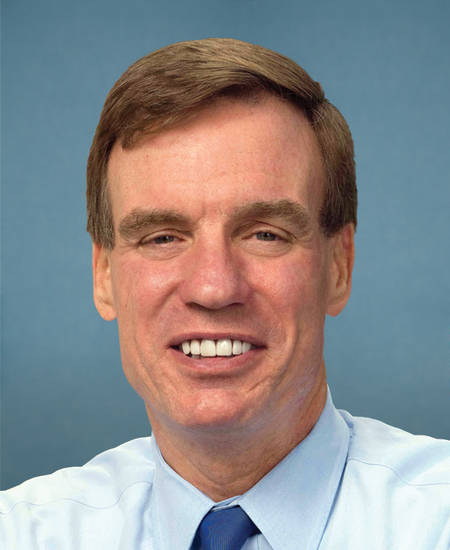
Sen. Mark R. Warner
Sponsored bills
Butch Lewis Emergency Pension Plan Relief Act of 2021 This bill modifies the funding rules and provides financial assistance for certain pension plans that are underfunded or insolvent. First, the bill expands the authority of, and provides funding for, the Pension Benefit Guaranty Corporation (PBGC) to provide special partition assistance to a multiemployer pension plan that is insolvent or at risk of insolvency. The bill expands eligibility for partition assistance, provides funding for a plan to reach a projected funded ratio of 80% over a 30-year period, and does not require a plan to repay such assistance. The bill further permits a multiemployer pension plan to elect to retain its funding zone status from the previous year for either (1) the first plan year beginning during the period from March 1, 2020, through February 28, 2021; or (2) the next succeeding plan year, as designated by the plan sponsor. A plan may also extend by five years the funding improvement or rehabilitation period if the plan is designated as in endangered or critical status for a plan year beginning in 2020 or 2021. A plan in critical and declining status may not suspend payment of plan benefits. Additionally, the bill adjusts the minimum funding standards for a multiemployer pension plan to account for investment losses and other losses related to the COVID-19 pandemic and modifies the PBGC guarantee formula to increase the maximum potential benefits under a multiemployer pension plan.
Background Check Expansion Act This bill establishes new background check requirements for firearm transfers between private parties (i.e., unlicensed individuals). Specifically, it prohibits a firearm transfer between private parties unless a licensed gun dealer, manufacturer, or importer first takes possession of the firearm to conduct a background check. The prohibition does not apply to certain firearm transfers, such as a gift between spouses in good faith.
This concurrent resolution commends the service and professionalism of the U.S. Capitol personnel who ensured Congress was able to continue operating in the wake of the security breach on January 6, 2021, and it expresses appreciation for the members of the news media reporting on the work of Congress despite the risk to their own safety.
Unemployment Insurance Technology Modernization Act of 2021 This bill requires the Department of Labor to study and report on the technology needs of federal and state unemployment compensation programs. Based on this study, Labor must develop, operate, and maintain a modular set of technology capabilities to modernize the delivery of unemployment compensation. Before the deployment of the technology capabilities to all states, Labor must select at least four states to participate in a pilot program to test the technology capabilities and demonstrate that they meet requirements. The bill establishes accessibility requirements for filing online unemployment compensation claims. In addition, it prohibits the technology capabilities from relying solely on a high-risk automated decision system to (1) deny a claim for unemployment compensation, (2) reduce the amount of unemployment compensation for which a claimant is eligible, or (3) deny a claimant's right to appeal an unemployment compensation decision.
This resolution congratulates and honors the National Active and Retired Federal Employees Association on the celebration of its 100th anniversary.
This resolution designates the week of February 22-February 26, 2021, as Public Schools Week.
This bill extends the authority for federal agencies to reimburse federal contractors for paid leave provided to employees unable to perform work due to the COVID-19 (i.e., coronavirus disease 2019) pandemic from March 31, 2021, to September 30, 2021.
Coronavirus Medicaid Response Act This bill increases the Medicaid federal matching rate, also known as the Federal Medical Assistance Percentage (FMAP), for states and U.S. territories that experience economic downturns (i.e., high unemployment) beginning on or after January 1, 2020, in accordance with specified requirements and limitations. The bill's increase is in addition to previously enacted FMAP increases relating to COVID-19 (i.e., coronavirus disease 2019) but may not result in an FMAP greater than 95%.
Great Dismal Swamp National Heritage Area Act This bill directs the Department of the Interior to assess the suitability and feasibility of designating a study area comprised of cities and counties in Virginia and counties in North Carolina as a National Heritage Area to be known as the Great Dismal Swamp National Heritage Area. The study shall include analysis, documentation, and determinations on whether the study area (1) has an assemblage of natural, historic, and cultural resources that represent distinctive aspects of the people and culture of the United States; and (2) are worthy of recognition, conservation, interpretation, and continuing use.