

Maddy summaryThe "Yes in God's Backyard Act" (S 2720) creates a new program to help faith-based organizations, colleges, and local governments build or preserve affordable rental housing on their properties. It provides technical assistance to address local policy barriers and offers competitive grants to communities with existing policies supporting such housing development. The grants specifically prioritize housing for families earning up to 60% of local median income, homeless individuals, veterans, people with disabilities, and other vulnerable groups. The bill authorizes $25 million annually for technical assistance and $50 million yearly for grants from 2026 to 2031.
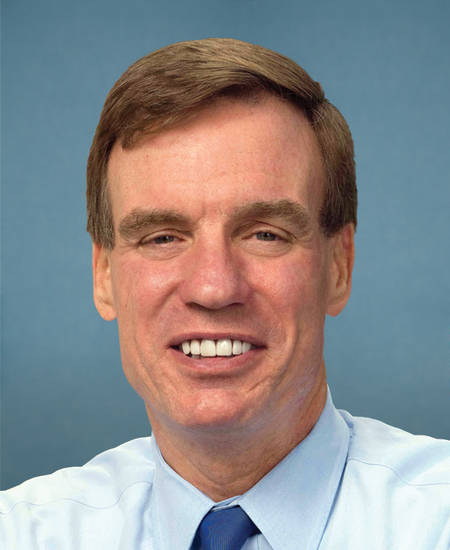
Sen. Mark R. Warner
Sponsored bills
Maddy summaryThis bill (SJRES 75) terminates the President's emergency declaration from August 11, 2025, which had allowed federal use of the Metropolitan Police Department in Washington, D.C., under an "emergency" related to crime. It directly affects the District of Columbia's local governance by ending a federal emergency status that had been in place since 2025. The resolution cites declining violent crime (at a 30-year low) and the federal government's prevention of D.C. from spending $1 billion in locally raised funds for public safety and emergency services. It formally ends the emergency under Section 740(b) of the District of Columbia Home Rule Act, without creating new policies or altering funding mechanisms.
Maddy summaryS 2688, the District of Columbia National Guard Home Rule Act, transfers authority over the District of Columbia National Guard from federal officials to the Mayor of Washington D.C. It updates federal and local laws by replacing all references to "President of the United States" or "Commanding General of the District of Columbia National Guard" with "Mayor of the District of Columbia" in provisions governing command, appointments, and operations. This procedural bill directly affects the District's National Guard structure and the Mayor's role in its management. The changes align DC's National Guard governance with its home rule status under the District of Columbia Home Rule Act.
ACES Act of 2025 This act requires the Department of Veterans Affairs to enter into an agreement with the National Academies of Sciences, Engineering, and Medicine to study and report on the prevalence and mortality of cancers among veterans who served on active duty as aircrew members and regularly flew in fixed-wing aircraft.
Bankruptcy Administration Improvement Act of 2025 This bill makes several changes to the administration of bankruptcy cases, particularly by increasing certain fees, extending the sunset date of various fees, and extending the term of specified bankruptcy judgeships. The bill increases the fees paid to the trustee in Chapter 7 (liquidation) cases. The bill extends for an additional five years the fees paid quarterly to the U.S. trustee in Chapter 11 (reorganization) cases. The bill also increases the fee percentage for cases with large disbursements, subject to limitations. Finally, temporary bankruptcy judgeships in various districts are extended for an additional five years.
Maddy summaryThe Lowering Electric Bills Act extends federal tax credits for clean energy adoption through 2034, directly affecting homeowners installing solar panels or heat pumps and businesses producing clean electricity. It modifies three key tax provisions: (1) extends the residential clean energy credit deadline from 2025 to 2034, (2) adjusts the clean electricity production credit to expire based on U.S. emissions reaching 25% of 2022 levels or 2032 (whichever comes later), and (3) simplifies the clean electricity investment credit rules. These changes aim to maintain financial incentives for clean energy projects beyond current law, reducing administrative complexity. The bill does not create new programs but prolongs existing tax benefits to support ongoing adoption.
Maddy summaryThe West Bank Violence Prevention Act of 2025 imposes U.S. sanctions on foreign individuals or entities responsible for specific actions threatening peace in the West Bank. It targets those who commit violence against civilians, threaten violence to force relocation, destroy private property without consent, or engage in terrorism. Sanctions include freezing U.S. assets, banning visas, and restricting entry for designated individuals. Exceptions cover humanitarian aid (food, medicine, agricultural commodities) and activities required for U.S. intelligence or international obligations. The law requires regular reports to Congress on implementation and West Bank violence assessments.
Maddy summaryThe Access to Birth Control Act (S 2302) requires pharmacies to provide contraception without delay when available and to help customers obtain it if out of stock - either by referring to another pharmacy or expediting an order. It prohibits pharmacies from intimidating customers, misrepresenting availability, breaching confidentiality, or refusing to return valid prescriptions for contraception. Exceptions allow pharmacists to decline service only if a prescription is missing, the customer cannot pay, or they use professional clinical judgment. Violations may result in civil penalties of up to $1,000 per day or private lawsuits by affected individuals.
Maddy summaryThis bill reauthorizes funding for state-level maternal mortality review committees, which analyze pregnancy-related deaths to identify preventable causes. It requires the Health and Human Services Secretary to share annual best practices for preventing maternal mortality with hospitals, medical societies, and maternity care groups. The bill increases annual funding for these programs from $58 million to $100 million, extending support through fiscal years 2026-2030. These changes directly affect state health agencies, hospitals, and medical professionals working on maternal health. The focus is on improving death record accuracy and implementing proven prevention strategies.
Maddy summaryThe IEIS Act requires U.S. Customs and Border Protection, Immigration and Customs Enforcement, and other authorized immigration enforcement personnel to visibly display their last name, a unique identifier, agency name, and face during public immigration enforcement activities like stops, arrests, or raids. This applies to officers performing "immigration enforcement functions" but excludes undercover operations, high-risk tactical situations (e.g., active shooter responses), or mandated face coverings. The bill also allows federal agencies to reimburse covered employees - defined as immigration officers and their immediate family members living with them - for privacy-enhancing services (e.g., software masking personal information) up to 100% of costs. It directly affects immigration enforcement staff and their families by mandating transparency during public duties while providing tools to protect their personal data.