

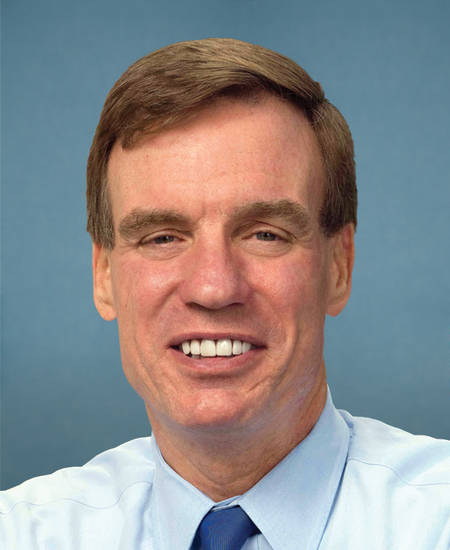
Photo of Mark R. Warner
D United States Senate · Virginia On the 2026 ballot

Sen. Mark R. Warner

Compare
Total votes
1,037
all sessions
Attendance
97%
30 missed
Lower than 93% of chamber peers
With party
96%
of cast votes
Lower than 79% of chamber peers
Bipartisan score
2%
crosses aisle rarely
Higher than 77% of chamber peers
Sponsored
1,019
bills & resolutions
Near the chamber average
Committees
11
assignments
1,019 bills and resolutions

Sponsored bills

Total
1,019
Primary
158
Co-sponsor
861
This page
1,019
matching current filters
Co-sponsor S 2963
In committee · Texas Senate · Co-sponsor
Fair Pay for Federal Contractors Act of 2025

Maddy summaryThis bill requires federal agencies to adjust contract prices for contractors affected by government funding lapses (like shutdowns), ensuring contractors can cover costs for employees who were furloughed, laid off, or had reduced hours. It mandates that contractors receive reimbursement for paying employees at their standard rate during the lapse or restoring paid leave used instead of work. The reimbursement is capped at $1,442 per week (pro-rated for part-time workers), and contractors must provide proof of costs to the agency. Agencies must report to Congress within a year on how many contractor employees were impacted and how compensation was handled.

In committee Oct 1, 2025 1 co-sponsor
Co-sponsor S 2966
In committee · Texas Senate · Co-sponsor
Emergency Relief for Federal Workers Act of 2025

Maddy summaryThis bill provides emergency financial relief for federal employees affected by government shutdowns. It allows workers on furlough or working without pay during a shutdown lasting at least two weeks to withdraw up to $30,000 (adjusted annually for inflation) from their Thrift Savings Plan (TSP) retirement accounts without the usual 10% tax penalty. The bill also prevents missed TSP loan payments during shutdowns from being treated as taxable distributions, protecting employees from unexpected tax bills. These provisions apply to withdrawals and loan payments made after September 30, 2025, directly supporting federal workers facing income disruption during funding lapses.

In committee Oct 1, 2025 1 co-sponsor
Co-sponsor SRES 428
Passed · Texas Senate · Co-sponsor
A resolution recognizing Hispanic Heritage Month and celebrating the heritage and culture of Latinos in the United States and the immense contributions of Latinos to the United States.

Maddy summarySRES 428 is a Senate resolution recognizing Hispanic Heritage Month from September 15 to October 15, 2025. It formally acknowledges the cultural heritage, historical contributions, and economic impact of Latino communities across the United States. The resolution urges all Americans to observe the month through programs and activities celebrating Latino achievements. It does not create new laws, funding, or obligations but serves as a symbolic recognition of Latino contributions to U.S. society.

Passed Sep 30, 2025 1 co-sponsor
Co-sponsor SRES 423
In committee · Texas Senate · Co-sponsor
A resolution recognizing the month of October 2025 as Filipino American History Month and celebrating the history and culture of Filipino Americans and their immense contributions to the United States.

Maddy summarySRES 423 is a Senate resolution recognizing October 2025 as Filipino American History Month. It celebrates the history, culture, and contributions of Filipino Americans to the United States, building on prior congressional recognition that began in 2009. The resolution encourages public observance through educational programs and activities, highlighting Filipino Americans' roles in U.S. history, military service, and fields like healthcare and the arts. It does not create new laws or policies but serves as a symbolic acknowledgment of their enduring impact.

In committee Sep 30, 2025 1 co-sponsor
Co-sponsor S 2948
In committee · Texas Senate · Co-sponsor
Help FEDS Act

Maddy summaryThis bill requires states to allow federal employees who must work during government shutdowns (called "excepted employees") to receive unemployment benefits for those weeks in 2026-2027. If an employee later receives pay from the government for the same period, they must repay the state unemployment fund. The federal government will reimburse states 100% of the unemployment benefits paid to these employees plus related administrative costs. The bill directly affects federal workers required to work during shutdowns and state unemployment systems managing these claims. It creates a clear process for benefits and repayment during shutdowns in 2026-2027.

In committee Sep 30, 2025 1 co-sponsor
Co-sponsor SRES 418
Passed · Texas Senate · Co-sponsor
A resolution expressing support for the designation of the week of September 20 through September 27, 2025, as "National Estuaries Week".

Maddy summaryThis resolution (SRES 418) expresses the U.S. Senate's support for designating September 20-27, 2025, as "National Estuaries Week." It does not create new laws or funding but aims to raise public awareness about the ecological and economic importance of estuaries. The resolution highlights estuaries' role in supporting jobs, economic output, and coastal protection, while acknowledging ongoing threats like pollution and habitat loss. It is a symbolic gesture directed at the public, government officials, and organizations working to protect estuaries.

Passed Sep 29, 2025 1 co-sponsor
Co-sponsor SRES 417
Passed · Texas Senate · Co-sponsor
A resolution supporting the designation of the week of September 14 through September 20, 2025, as "Telehealth Awareness Week".

Maddy summaryThis resolution designates the week of September 14-20, 2025, as "Telehealth Awareness Week" to highlight the role of telehealth in expanding access to healthcare. It recognizes telehealth's importance for rural communities, seniors, and patients with mobility barriers, noting its increased use in Medicare programs. The Senate urges stakeholders to raise awareness about telehealth benefits, share resources for providers and patients, and promote continued access to telehealth services. As a symbolic resolution, it does not create new laws or alter healthcare policies but aims to foster broader recognition of telehealth’s value.

Passed Sep 19, 2025 1 co-sponsor
Co-sponsor S 2906
In committee · Texas Senate · Co-sponsor
Expanding American Entrepreneurship Act

Maddy summaryThis bill amends the Investment Company Act of 1940 to ease regulatory requirements for certain investment companies. It increases the maximum number of investors allowed under a key exemption from 250 to 500 people and raises the asset threshold from $10 million to $50 million. These changes directly affect smaller investment firms seeking to operate under the "private fund" exemption. By raising these thresholds, the bill reduces the regulatory burden for qualifying firms, allowing them to manage larger pools of capital without full SEC registration. The policy change focuses on streamlining compliance for investment vehicles that support entrepreneurship.

In committee Sep 18, 2025 1 co-sponsor
Primary S 2865
In committee · Texas Senate · Lead sponsor
Improving Access to Advance Care Planning Act

Maddy summaryThis bill expands Medicare coverage for advance care planning services, which help patients discuss future healthcare wishes with providers. It requires Medicare to pay 100% for these services (starting January 2027) without patient cost-sharing, directly affecting Medicare beneficiaries and eligible providers like doctors, nurse practitioners, and clinical social workers. Key provisions include removing barriers like requiring annual wellness visits first, allowing telehealth for these discussions, and updating billing codes. The law also mandates HHS outreach to providers about new coverage and requires a 2027 report analyzing how these services are delivered and billed.

In committee Sep 18, 2025 0 co-sponsors
Primary S 2837
In committee · Texas Senate · Lead sponsor
Protect America’s Workforce Act

Maddy summaryThe Protect America’s Workforce Act (S 2837) directly affects federal employees and their labor unions by reversing two executive orders that limited their collective bargaining rights. It nullifies Executive Orders 14251 and 14343, which had excluded certain federal workers from labor-management programs, and prohibits federal funding for any efforts to implement those orders. The bill ensures that all existing collective bargaining agreements between federal agencies and employee unions remain fully enforceable through their original terms, as long as they were in effect as of March 26, 2025. This preserves current workplace agreements without creating new obligations or altering existing labor-management processes.

In committee Sep 17, 2025 0 co-sponsors
Showing 171 to 180 of 1,019 bills
Previous 1 17 18 19 102 Next