

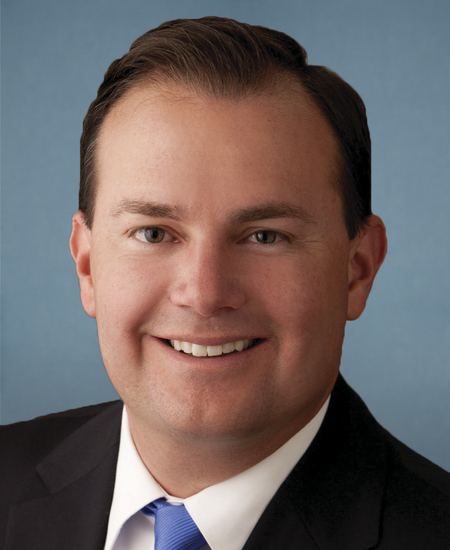
Maddy summaryThis bill increases the tax exclusion for capital gains when selling a primary residence. It doubles the exclusion amount from $250,000 (for single filers) to $500,000 and from $500,000 (for married couples) to $1,000,000. The bill also adds an inflation adjustment for amounts after 2025, tying future increases to the cost-of-living adjustment. It directly affects homeowners who sell their primary residence and would otherwise owe tax on profits exceeding the previous limits. The changes apply to sales after the bill's enactment date.
Sponsored bills
Maddy summaryThis bill directs the United States Postal Service (USPS) to create a single, unique ZIP Code exclusively for Highland City, Utah. Within 270 days of the bill becoming law, the USPS must assign this new ZIP Code to cover only Highland City's boundaries, separating it from adjacent areas. The change would directly affect Highland City residents and local mail delivery operations by providing a dedicated postal code. This is a procedural adjustment to improve mail sorting accuracy for the city, with no other policy changes or funding involved.
Maddy summaryThis bill repeals the D.C. Human Rights Sanctuary Amendment Act of 2022 (D.C. Law 24-257), restoring the District of Columbia's prior legal framework regarding immigration enforcement. It directly affects D.C. residents and local government operations by eliminating the 2022 law's restrictions on cooperating with federal immigration authorities. The key mechanism is a straightforward repeal, meaning all provisions of the 2022 law are removed and previous laws governing immigration enforcement in D.C. are reinstated as if the amendment never existed.
Maddy summaryThis bill requires the Veterans Health Administration to expand its existing informed consent directive (currently covering long-term opioid therapy) to include written consent for five additional medication categories: antipsychotics, stimulants, antidepressants, anxiolytics, and narcotics. It directly affects Veterans receiving VA care for these specific medications, mandating that providers obtain written informed consent before prescribing them. The key mechanism is updating VA Directive 1005 to explicitly apply to these new medication types, ensuring consistent consent processes across VA treatment. This change applies only to VA healthcare settings, not to civilian medical practices.
Maddy summaryThis bill reorganizes procedural rules for Inspector General (IG) investigations within the Department of Justice (DOJ). It removes specific language that previously restricted IG access to certain allegations involving DOJ personnel, streamlining the investigation process. The key change eliminates an exception clause in existing law, allowing IGs to investigate all DOJ personnel allegations without that prior limitation. This affects how DOJ investigations are conducted but does not create new policies or change substantive rights. (Procedural bill; summary focuses on specific legal reorganization.)
Maddy summaryS 3284, the Streamline Transit Projects Act, allows large urban transit agencies (with populations over 200,000) that prove capacity to handle environmental reviews for certain transit projects. Eligible agencies would assume responsibility for determining which projects qualify as "categorical exclusions" (projects not requiring full environmental impact studies), replacing federal oversight for these specific activities. Agencies must follow public disclosure rules, sign agreements with the Transportation Secretary, and become legally liable for compliance, while the federal government monitors performance and can terminate agreements for poor execution. This bill directly affects major transit authorities in large cities, shifting a key federal review process to local agencies.
Maddy summarySRES 517 is a Senate resolution opposing congressional spending on earmarks - special spending projects directed by lawmakers for specific local projects. It condemns the use of earmarks to allocate taxpayer funds, reaffirms previous bans on such spending (including a 2019 permanent ban), and urges Congress to focus on reducing the national debt instead. The resolution does not change current spending rules but expresses the Senate’s position against earmarks as a way to curb deficit spending and debt growth. It directly affects how Congress manages federal budget allocations, emphasizing fiscal responsibility over targeted project funding.
Maddy summaryThe RECAPTURE Act (S 3259) changes how leftover federal broadband funding is handled under the Infrastructure Investment and Jobs Act. It requires that any unspent funds from the Broadband Equity, Access, and Deployment (BEAD) program not specifically designated for a project must be deposited into the federal Treasury to reduce the deficit, while funds designated for specific projects remain available to the grant recipient. This applies directly to states and local governments that received BEAD grants but have unused funds. The bill ensures unallocated broadband funds are redirected toward deficit reduction rather than remaining unspent.
Maddy summaryThis bill establishes a "Health Freedom Waiver Program" that would allow states to opt out of certain Affordable Care Act requirements for health insurance starting in 2026. States choosing this option would need to maintain a high-risk insurance pool, and the federal government would instead fund "Trump Health Freedom Accounts" for eligible residents, replacing premium tax credits and cost-sharing reductions. These accounts would provide funds for health insurance but restrict coverage for gender transition procedures and abortion services. The bill also includes modified tax credits for small businesses in waiver states and requires better price transparency in health care through updated reporting requirements.
Maddy summaryThis bill prohibits the United Nations or its affiliated bodies from levying any tax, tariff, fee, or penalty on U.S. citizens or U.S. entities without a Senate-approved treaty. It specifically blocks U.S. funding for any United Nations activities related to implementing or enforcing a global carbon tax, defined as a tax on vessel emissions under a global fuel regime. The bill directly affects U.S. citizens and businesses by preventing the UN from imposing such taxes or using U.S. funds to support global carbon tax systems. It establishes a clear legal barrier requiring Senate approval for any UN tax affecting U.S. interests.