This resolution condemns the acts of gun violence that led to the tragic loss of eight lives in Georgia on March 16, 2021.
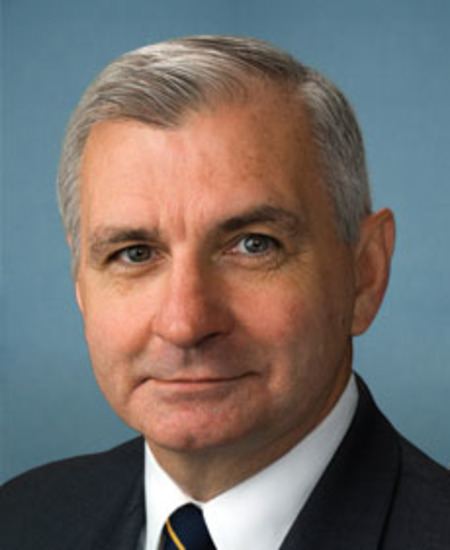
Sen. Jack Reed
Sponsored bills
Respect for Workers Act This bill requires at least one member of the Board of Governors of the Federal Reserve System to have experience supporting or protecting the rights of workers. This member is in charge of developing policy recommendations regarding the board's goal of maximum employment. (The board is made up of seven members that are nominated by the President and confirmed by the Senate. Members serve 14-year terms, with one term beginning every two years.) The bill also requires the board to discuss in their semiannual report the distributional effect of monetary policy.
USTR Inspector General Act of 2021 This bill requires the President to appoint an Inspector General of the Office of the U.S. Trade Representative (USTR). Among other responsibilities, the Inspector General shall (1) conduct and supervise audits and investigations relating to the programs and operations of the USTR, (2) recommend policies for preventing and detecting fraud and abuse in those programs, and (3) provide a means for keeping the USTR and Congress informed about problems and deficiencies in those programs and operations.
Stop Corporate Inversions Act of 2021 This bill revises rules for the taxation of inverted corporations (i.e., U.S. corporations that acquire foreign companies to reincorporate in a foreign jurisdiction with income tax rates lower than the United States). The bill provides that a foreign corporation that acquires the properties of a U.S. corporation or partnership after May 8, 2014, shall be treated as an inverted corporation and thus subject to U.S. taxation if, after such acquisition (1) it holds more than 50% of the stock of the new entity (expanded affiliated group), or (2) the management or control of the new entity occurs primarily within the United States and the new entity has significant domestic business activities.
Recognizing Military Service in PSLF Act This bill requires the Department of Education to count each month for which a borrower's federal student loan payment was in deferment or forbearance during a period of active duty, including certain National Guard duty, as a qualifying payment for the purpose of the Public Service Loan Forgiveness (PSLF) program. Under current law, a borrower who is a service member is eligible to receive student loan forgiveness under the PSLF program; however, if the borrower places their loan into deferment or forbearance while they are on active duty, that period of time does not count as a qualifying payment for the PSLF program.
Coronavirus Housing Counseling Improvement Act This bill authorizes additional housing counseling services provided through the Neighborhood Reinvestment Corporation. Funding priority is given to counseling organizations that target low-income and minority homeowners, renters, individuals experiencing homelessness, and individuals at risk of homelessness.
Presumptive Benefits for War Fighters Exposed to Burn Pits and Other Toxins Act of 2021 This bill establishes a presumption of service-connection for specified diseases associated with exposure to burn pits (an area used for burning solid waste in open air without equipment) and other toxins by veterans who were awarded specified medals on or after August 2, 1990. Under a presumption of service-connection, specific conditions diagnosed in certain veterans are presumed to have been caused by the circumstances of their military service. Health care benefits and disability compensation may then be awarded. Under the bill, if the Department of Veterans Affairs (VA) receives a written petition to add a disease to the list, the VA must request a determination by the National Academies of Sciences, Engineering, and Medicine with respect to whether there is a positive association between the exposure of humans to a covered toxin and the occurrence of the disease in humans. The bill makes disability or death of certain employees from specified diseases compensable as a work injury. Specifically, such employees are those who were employees of the Department of State, the Department of Defense, or an element of the intelligence community on or after August 2, 1990, and carried out job responsibilities for at least 30 days during a contingency operation.
Veterans Claim Transparency Act of 2021 This bill requires the Department of Veterans Affairs (VA) to provide the representative of a veteran with an opportunity to review a proposed determination regarding a claim for compensation or benefits before such determination becomes final. The VA must notify the representative in writing that a proposed determination is ready for review and may not make a final determination until the review period has ended. Under the bill, a representative has up to 48 hours to review the proposed determination.
Puppy Protection Act of 2021 This bill requires the Department of Agriculture to expand standards that govern the humane handling, care, treatment, and transportation of animals to include new requirements for commercial dog dealers. Specifically, the standards must require dog dealers to provide to dogs adequate housing, exercise, and veterinary care; appropriate and nutritious food; continuous access to potable water; and meaningful socialization with humans and compatible dogs for at least 30 minutes each day. The standards must also include requirements for breeders to use safe breeding practices and make all reasonable efforts to find humane placement for retired breeding dogs.
Combating Sexual Harassment in Science Act This bill addresses sexual harassment in the science, technology, engineering, and mathematics (STEM) fields by supporting research regarding sexual harassment and efforts to prevent and respond to sexual harassment. This bill directs the National Science Foundation (NSF) to award grants to institutions of higher education or nonprofit organizations (or their consortia) to expand research into the factors contributing to, and consequences of, sexual harassment affecting individuals in the STEM workforce, including students and trainees; and examine interventions for reducing the incidence and negative consequences of sexual harassment. The NSF must convene a working group to gather national data on the prevalence, nature, and implications of such harassment in institutions of higher education. The NSF shall enter into agreements with the National Academies of Sciences, Engineering, and Medicine to (1) update a responsible conduct guide issued by the National Academies to include, among other things, evidence-based practices for fostering a climate that is intolerant of sexual harassment; and (2) study the influence of sexual harassment in institutions of higher education on the career advancement of individuals in the STEM workforce. The National Science and Technology Council shall establish an interagency working group to coordinate the federal science agencies' efforts to reduce the prevalence of sexual harassment involving grant personnel. The Office of Science and Technology Policy must develop policy guidelines for such agencies to prevent and respond to reports of sexual harassment and gender harassment.